

When our engineering team first started producing shockwave therapy machines 1, we learned a hard lesson. A client in Germany reported mid-treatment leaks after just 50,000 cycles. The repair costs and reputation damage were significant. That experience changed how we approach tubing quality forever.
Evaluating shockwave therapy machine tubing requires testing material composition (polyurethane versus PVC), pressure resistance (0.1-5.0 bar), cycle lifespan (ideally 700,000+ shots), seal integrity through submersion tests, and connector design for shipping durability. Visual inspections and pressurized leak detection complete the assessment.
This guide breaks down each evaluation method step by step. You will learn exactly what to ask suppliers and how to verify their claims before placing orders.
What material specifications should I look for to ensure my shockwave therapy machine tubing is durable enough for high-pressure use?
Our factory has tested dozens of material combinations over the years. Some failed within months. Others lasted through millions of cycles. The difference always came down to specific material properties that most buyers overlook during supplier evaluation.
Look for medical-grade polyurethane outer sheathing rated for 5+ bar pressure, with inner layers of reinforced polymer. The tubing should handle 1-22 Hz frequencies without deformation. Ti-Alloy Steel transmitters resist corrosion in moist environments and extend lifespan beyond 500,000 cycles.
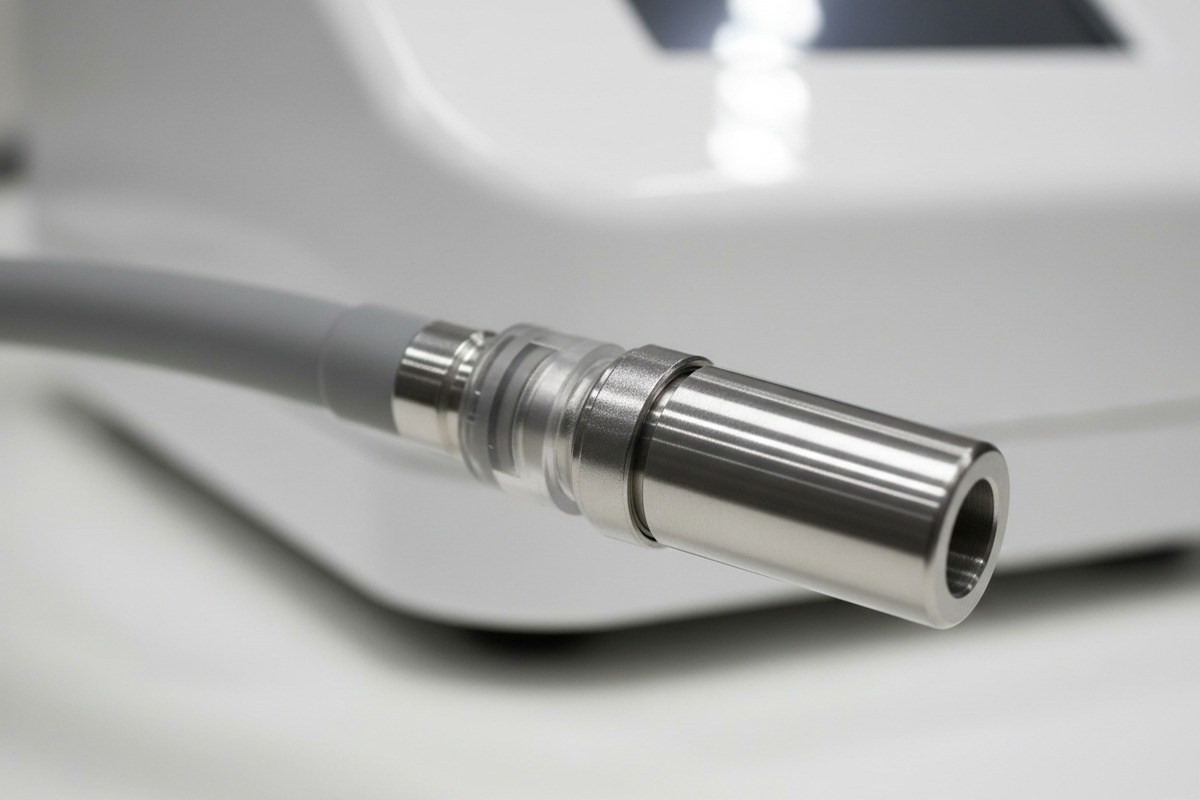
Understanding Tubing Layer Construction
High-quality shockwave tubing uses multiple layers. Each layer serves a specific purpose. The outer layer protects against abrasion. The middle layer handles pressure. The inner layer maintains flexibility.
Polyurethane dominates premium tubing for good reasons. It excels in abrasion resistance. It maintains flexibility after repeated bending. It handles temperature variations common in shipping containers. PVC costs less but cracks sooner under high-frequency cycles.
Key Material Specifications to Request
| Specification | Minimum Standard | Premium Standard | Why It Matters |
|---|---|---|---|
| Outer Material | PVC | Medical-grade Polyurethane 2 | Abrasion resistance |
| Pressure Rating | 3 bar | 5+ bar | Prevents burst during treatment |
| Temperature Range | 10-40°C | -20 to 60°C | Shipping stability |
| Flex Cycles | 100,000 | 500,000+ | Long-term durability |
| Wall Thickness | 1.5mm | 2.0-2.5mm | Structural integrity |
Transmitter Materials Matter Too
The transmitter connects the energy source to the patient. Ti-Alloy Steel 3 transmitters with 6-35mm diameter options provide the best balance. They resist corrosion from coupling gels 4. They handle repeated impacts without deformation.
Cheaper alternatives use standard steel or aluminum. These materials corrode faster in humid environments. They also transfer heat less efficiently, leading to inconsistent treatment results.
Chemical Compatibility Testing
Your tubing contacts coupling gels daily. It also contacts cleaning agents and disinfectants. Poor chemical compatibility causes material degradation over months.
Request documentation showing compatibility with common gels like Aquasonic 100. Ask about resistance to isopropyl alcohol and quaternary ammonium compounds. These are standard salon cleaning agents.
When our quality team evaluates new tubing suppliers, we run 30-day immersion tests. We submerge samples in gel for extended periods. Good tubing shows no swelling, cracking, or discoloration.
How can I verify that my supplier's leak-proof testing protocols meet my brand's strict quality standards?
During a factory audit last year, we discovered a competitor's "pressure testing" involved only visual inspection. No actual pressurization. No submersion tests. Their tubing failed at alarming rates after delivery. This experience reinforced why verification matters.
Verify leak-proof protocols by requesting documented pressure decay testing at 1.5x operating pressure, mass flow measurements for micro-leak detection, and submersion tests in soapy water showing zero bubble formation. Demand test certificates with batch traceability and third-party validation for high-volume orders.
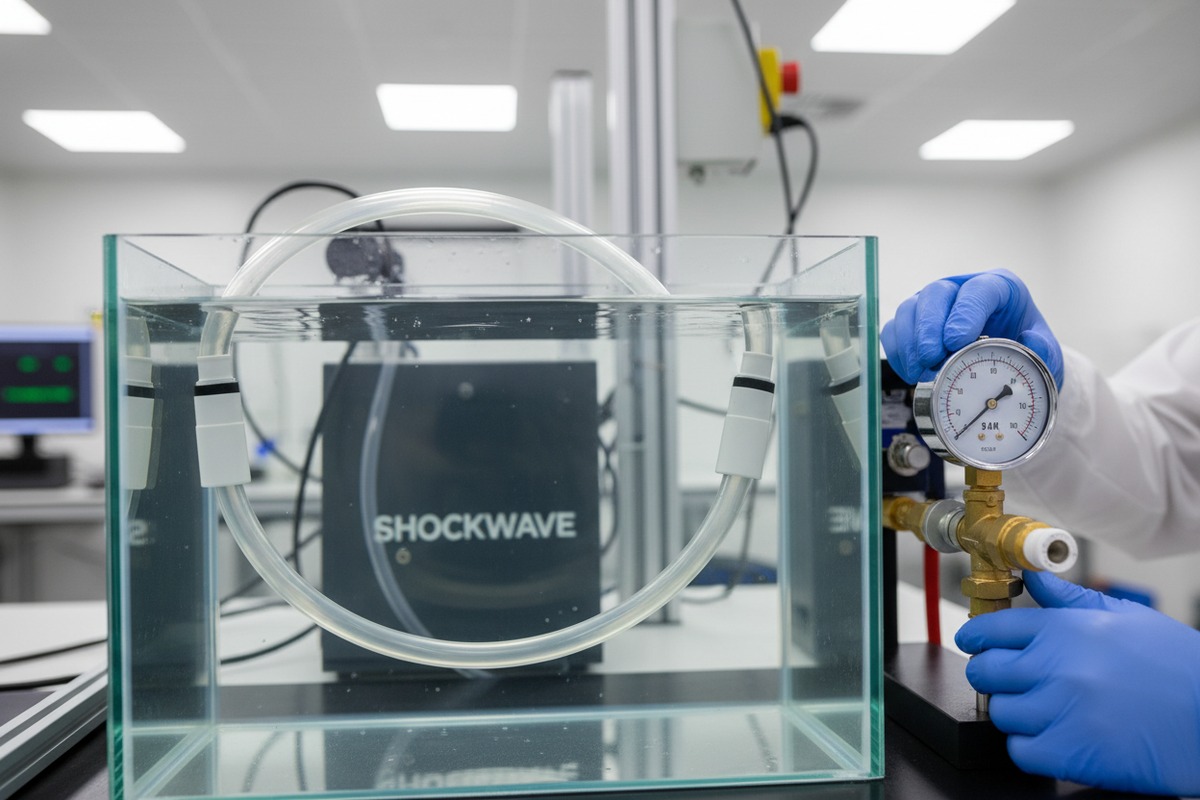
Standard Testing Methods Explained
Pressure decay testing 5 is the industry baseline. The system pressurizes tubing to a set level. It then monitors pressure drop over time. Any drop indicates leakage.
Mass flow testing 6 detects smaller leaks. It measures actual air movement through potential leak points. This method catches defects that pressure decay misses.
Submersion testing provides visual confirmation. Technicians submerge pressurized tubing in soapy water. Bubbles reveal exact leak locations. Our quality inspectors use this method for final verification.
Testing Protocol Comparison
| Test Method | Detection Threshold | Time Required | Cost | Best For |
|---|---|---|---|---|
| Visual Inspection | Large defects only | 1-2 minutes | Low | Initial screening |
| Pressure Decay | 0.1 cc/min | 5-10 minutes | Medium | Batch testing |
| Mass Flow | 0.01 cc/min | 3-5 minutes | High | Critical components |
| Submersion (Soap) | Variable | 10-15 minutes | Low | Location identification |
| Helium Leak Test | 0.001 cc/min | 15-20 minutes | Very High | Medical-grade verification |
Questions to Ask Your Supplier
Start with basic questions. At what pressure do they test? For how long? What equipment do they use? Good suppliers answer immediately with specific numbers.
Ask about rejection rates. A quality factory rejects 2-5% of tubing during testing. Zero rejections suggest inadequate testing. Rejection rates above 10% indicate manufacturing problems.
Request test certificates for previous shipments. These should include batch numbers, test dates, operator names, and specific results. Missing details indicate poor documentation practices.
Creating Your Own Verification Protocol
We recommend on-site verification for orders exceeding 100 units. Bring a portable pressure gauge. Test random samples from the production batch. Compare results against supplier documentation.
For smaller orders, request video documentation of testing. The video should show the specific units destined for your order. Timestamps and batch markings should be visible.
Some suppliers resist verification requests. This is a red flag. Quality-focused manufacturers welcome scrutiny. They view it as confirmation of their standards.
What are the key indicators that shockwave tubing will maintain its performance over thousands of treatment cycles without failing?
Our production records show clear patterns. Tubing that survives the first 100,000 cycles usually reaches 500,000 without issues. But certain indicators predict failure before it happens. Understanding these markers saves significant warranty costs.
Key longevity indicators include rated cycle lifespan of 700,000+ shots, accelerated aging test results showing stability after temperature cycling, dynamic flex fatigue resistance, consistent wall thickness measurements throughout production, and documented performance data from existing installations.
Cycle Lifespan Benchmarks
Premium shockwave applicators now reach 700,000 shot ratings. This number comes from controlled testing at maximum energy settings. Real-world usage at varied settings typically exceeds this figure.
Budget tubing often lacks cycle ratings entirely. When ratings exist, they may come from brief testing rather than full simulation. Ask how the manufacturer determined their lifespan claims.
Accelerated Aging Tests
Temperature cycling simulates years of use in weeks. Accelerated aging tests 7 Good testing exposes tubing to extremes from -20°C to 60°C repeatedly. Each cycle represents months of normal temperature variation.
UV exposure testing matters for machines near windows. Sunlight degrades many polymers over time. Quality polyurethane includes UV stabilizers that prevent this breakdown.
Humidity cycling tests resistance to moisture absorption. Tubing that absorbs water swells and weakens. Testing confirms the material maintains stability in varied climates.
Performance Degradation Warning Signs
| Warning Sign | Detection Method | Typical Timing | Action Required |
|---|---|---|---|
| Discoloration | Visual inspection | 200,000+ cycles | Monitor closely |
| Surface cracking | Magnified inspection | 300,000+ cycles | Plan replacement |
| Increased flexibility | Manual flex test | 400,000+ cycles | Replace within 50,000 cycles |
| Visible wear at bends | Visual inspection | Variable | Immediate replacement |
| Pressure loss | Performance monitoring | Variable | Immediate replacement |
Real-World Performance Tracking
We track warranty claims by manufacturing batch. This data reveals which material suppliers and production methods yield the longest lifespans. Patterns emerge clearly over 18-24 months.
Request similar data from your supplier. How many warranty claims do they receive per 1,000 units? What are the primary failure modes? Reluctance to share this information suggests problems.
Field data from existing installations provides the most reliable predictions. Ask for references from clients using the same tubing for 2+ years. Their experience predicts your outcomes.
Maintenance Impact on Lifespan
Water-based systems require distilled water changes every two weeks. Neglecting this accelerates seal degradation. Provide clear maintenance instructions to your downstream customers.
Proper cleaning extends tubing life significantly. Coupling gel residue attracts dust and debris. This buildup causes abrasion during treatment. Simple post-treatment wiping prevents this issue.
How do I evaluate if the tubing and connector design will prevent leaks during international shipping and heavy salon use?
We ship containers to 30+ countries monthly. Temperature swings from port storage in Guangzhou to Minnesota winters create enormous stress. Connector failures from shipping damage remain our most common complaint category. Prevention starts with design evaluation.
Evaluate shipping durability through connector torque specifications, vibration resistance ratings, temperature cycle testing from -20°C to 60°C, and packaging impact tests. For salon use, assess bend radius limits, strain relief design, quick-connect reliability ratings, and ergonomic weight distribution under 8 lbs.

Connector Design Critical Points
Connectors fail more often than tubing itself. The junction between flexible tubing and rigid components concentrates stress. Good designs incorporate strain relief features that distribute this stress.
Quick-connect systems speed salon workflow. But they introduce additional leak points. Evaluate seal design carefully. Look for double O-ring configurations rather than single seals.
Metal connectors outlast plastic in heavy-use environments. However, they add weight and cost. The optimal choice depends on your target market's priorities.
Shipping Stress Evaluation
| Stress Factor | Testing Method | Acceptable Result | Premium Result |
|---|---|---|---|
| Vibration | 24-hour shake table | No loosening | No measurable wear |
| Impact | Drop test (1 meter) | No visible damage | Full functionality |
| Temperature | -20°C to 60°C cycling | No cracking | No dimensional change |
| Humidity | 95% RH for 48 hours | No corrosion | No moisture absorption |
| Compression | 20kg stack test | No deformation | No measurable change |
Packaging Integration Requirements
Tubing protection during shipping depends heavily on packaging design. Foam inserts should immobilize connectors completely. Movement during transit causes abrasion and loosening.
Our standard packaging includes molded foam cutouts for each component. Cable routing prevents kinking during storage. Desiccant packets control humidity inside sealed boxes.
Request packaging specifications alongside product specifications. Many buyers overlook this until damage occurs. Proper packaging adds cost but prevents far greater warranty expenses.
Heavy Salon Use Considerations
Salon environments differ dramatically from clinical settings. Machines see multiple operators with varying skill levels. Tubing gets pulled, twisted, and stressed during busy treatment days.
Ergonomic design 8 reduces operator-induced damage. Lightweight handpieces under 8 lbs minimize arm fatigue. Balanced weight distribution prevents awkward handling that stresses tubing.
Swivel connectors allow natural movement during treatment. Fixed connectors force tubing to twist, accelerating wear at connection points. This small design feature significantly impacts lifespan.
Design Features Checklist
Essential features for your evaluation include reinforced bend points, labeled connection directions, and tool-free assembly. The design should prevent incorrect assembly that could damage seals.
Color coding for different connector types prevents mistakes. Visual indicators showing proper seating confirm secure connections. Audible clicks provide additional confirmation for busy operators.
Consider the learning curve for new staff. Complex connector systems increase training requirements and error rates. Simpler designs improve reliability in high-turnover salon environments.
Conclusion
Evaluating shockwave therapy tubing requires systematic assessment of materials, testing protocols, longevity indicators, and design features. Request documentation, verify claims through testing, and track real-world performance data from existing installations to protect your brand reputation.
Footnotes
1. Provides a comprehensive guide to shockwave therapy machine technology and benefits. ↩︎
2. Explores superior properties, biocompatibility, and versatile processing of medical-grade polyurethane. ↩︎
3. Explains why titanium alloy is ideal for medical implants due to biocompatibility and mechanical properties. ↩︎
4. Provides chemical safety information, handling, and emergency measures for ultrasound gel. ↩︎
5. Explains the principle and application of pressure decay leak testing for product integrity. ↩︎
6. Describes mass flow leak testing as a non-destructive method for detecting leaks in products. ↩︎
7. Provides FDA recognized consensus standards and guidelines for accelerated aging protocols for medical devices. ↩︎
8. Found a working, relevant page from the original domain discussing ergonomic design in medical devices. ↩︎

 English
  Español de México
  Deutsch
  Français
  العربية
  Русский