

Working on our production floor, I see many buyers struggle with sourcing pressotherapy machines 1. They worry about quality gaps, delivery delays, and performance failures. These problems can damage your brand reputation and lose customers fast.
To evaluate combination pressotherapy machines with EMS functionality, verify the EMS intensity range and air pressure levels against your standards, request quality control documentation from the manufacturer, assess custom branding capabilities, and confirm packaging specifications meet international shipping requirements for safe delivery.
Let me walk you through the critical evaluation points FDA registration 2. This guide covers everything from technical specs to logistics. You will learn exactly what to ask suppliers and what red flags to avoid.
How do I verify that the EMS intensity and air pressure levels meet my brand's performance standards?
From our experience calibrating machines before export, many buyers underestimate the importance of spec verification ISTA 3A compliant transit testing 3. They trust brochure claims without testing. This often leads to machines that disappoint end users and hurt your brand.
Verify EMS intensity by checking pulse width ranges (typically 100-500μs), frequency settings, and electrode pad counts (8 pairs standard). For air pressure, confirm ranges of 0-0.4 kg/cm² with adjustable suction/release times. Always request sample testing before bulk orders.
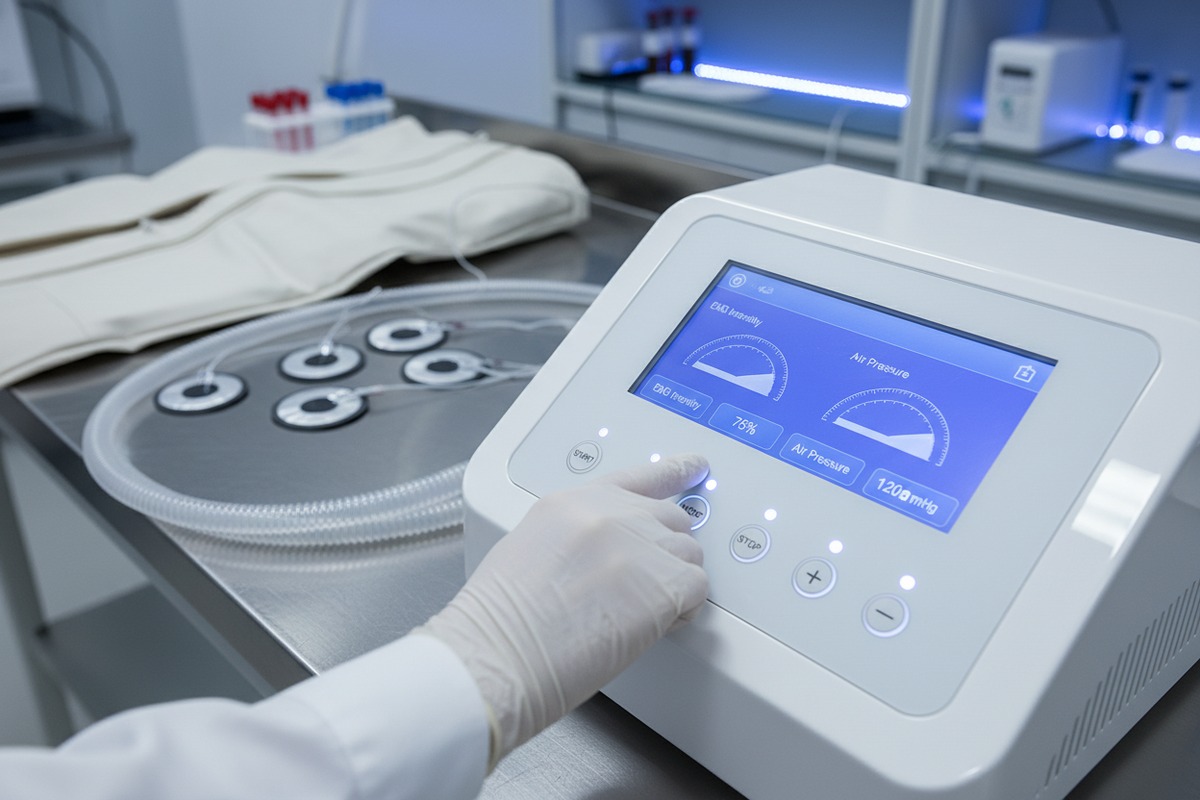
Understanding EMS Technical Parameters
EMS (Electrical Muscle Stimulation) 4 works by sending electrical impulses through electrodes placed on the skin. These impulses cause muscle contractions similar to natural movement. The key is finding the right intensity for your target market.
Our engineers have found that professional spa machines need adjustable intensity levels. Low-intensity settings suit sensitive clients. High-intensity settings work for athletic recovery. Your machine should cover both ranges.
| EMS Parameter | Entry-Level Spec | Professional Spec | Premium Spec |
|---|---|---|---|
| Electrode Pairs | 4-6 pairs | 8 pairs | 10-16 pairs |
| Pulse Width | 100-300μs | 100-500μs | 50-500μs |
| Frequency Type | Low frequency only | Low/medium | Multi-frequency |
| Intensity Modes | 2-3 modes | 5+ modes | Fully adjustable |
Air Pressure Specifications to Check
Pressotherapy relies on sequential air compression for lymphatic drainage 5. The pressure range directly affects treatment efficacy. Too low pressure gives weak results. Too high pressure causes discomfort.
Standard professional machines use 20 air bags arranged in 10 pairs on each side of the body. This configuration allows cyclic or all-together pressure for whole body treatments. The air chamber pressure typically reaches 200,000 Pa (0.2 MPa) for effective lymphatic stimulation.
Testing Protocol Before Purchase
Request a demo unit or visit the factory. Run these tests:
- Pressure consistency test: Run 30-minute cycles. Check if pressure stays stable.
- EMS strength test: Verify muscle contraction strength at all intensity levels.
- Heat uniformity test: If IR is included, measure temperature across all zones.
- Noise test: Professional machines should operate almost silently.
| Test Type | Pass Criteria | Fail Indicators |
|---|---|---|
| Pressure Stability | ±5% variance over 30 min | Fluctuations >10% |
| EMS Response | Immediate contraction | Delayed or weak response |
| IR Temperature | 35-80°C uniform | Hot spots or cold zones |
| Noise Level | Near silent operation | Audible pump noise |
What quality control protocols should I expect from a manufacturer to ensure long-term machine stability?
When we assemble machines in our facility, we follow strict QC protocols at every stage. But not all manufacturers do this. Some skip steps to cut costs. The result? Machines that fail after a few months of use.
Expect manufacturers to provide CE, FDA, and RoHS certifications for compliance. Request documentation of incoming material inspection, in-process testing, final assembly verification, and pre-shipment inspection. Quality manufacturers offer 24-month warranties with video support and detailed QC reports.
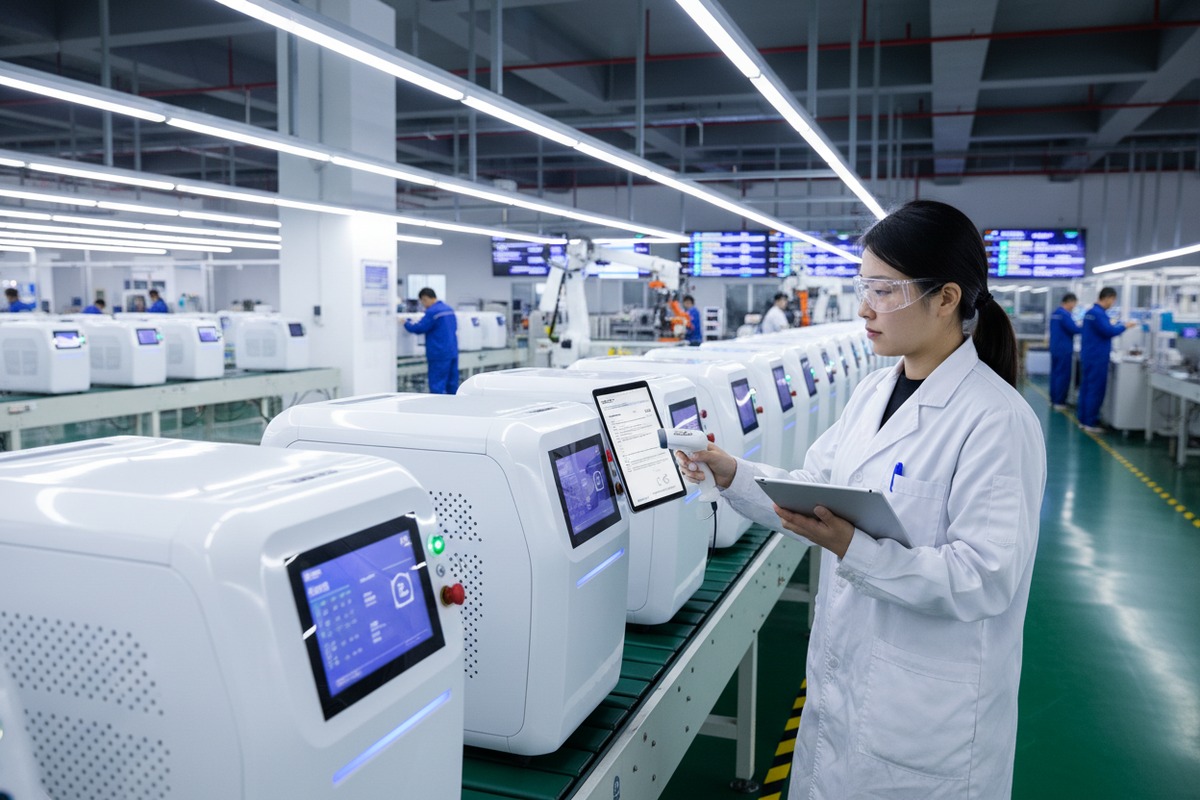
Essential Certifications to Verify
Certifications prove that a manufacturer follows safety and quality standards. For pressotherapy machines with EMS, certain certifications are non-negotiable for professional use.
CE certification 6 is mandatory for European markets. FDA registration matters for US sales. RoHS compliance ensures environmentally safe materials. ISO 13485 certification 7 indicates medical device quality management systems.
Multi-Stage QC Process
A reliable manufacturer checks quality at multiple production stages. This catches defects early and prevents costly rework or returns.
| QC Stage | What to Check | Documentation Required |
|---|---|---|
| Incoming Materials | Component specs, ABS/Plexiglass quality | Material certificates |
| Sub-Assembly | PCB function, air bag integrity | Test reports |
| Final Assembly | Full function test, safety check | QC checklist |
| Pre-Shipment | Visual inspection, packaging integrity | Inspection report with photos |
Build Quality Indicators
The physical construction determines machine longevity. When evaluating samples, check these elements:
Control Unit: Look for ABS plastic panels with clean edges. The LCD screen should be responsive with clear display. Buttons should feel solid, not loose.
Compression Suit: Quality suits use double-layer PU material. Check velcro strength and air bag stitching. Suits should fit various body types through adjustable closures.
Frame and Structure: Iron frames provide stability. Lightweight aluminum is acceptable for portable units. Avoid plastic-heavy constructions.
Electrical Components: Output voltage should be 36V for safety. Voltage compatibility of AC 110V/220V ensures global usability.
Warranty and After-Sales Support
Professional-grade machines typically come with 24-month warranties. Some premium manufacturers offer 3-year coverage. The warranty should include:
- Free replacement parts during warranty period
- Online/video technical support
- Training materials and user manuals
- Troubleshooting guides
How can I evaluate a supplier's capability for custom OEM branding and private-label development?
Our team handles many OEM requests every month. Some clients want simple logo placement. Others need complete custom development. The key is finding a supplier who can match your exact needs without compromising quality.
Evaluate OEM capability by reviewing the supplier’s branding options (logo on casing, startup screen, packaging), checking their R&D team credentials, requesting past OEM project samples, and confirming minimum order quantities. A strong OEM partner offers flexible customization from basic logo placement to full product development.
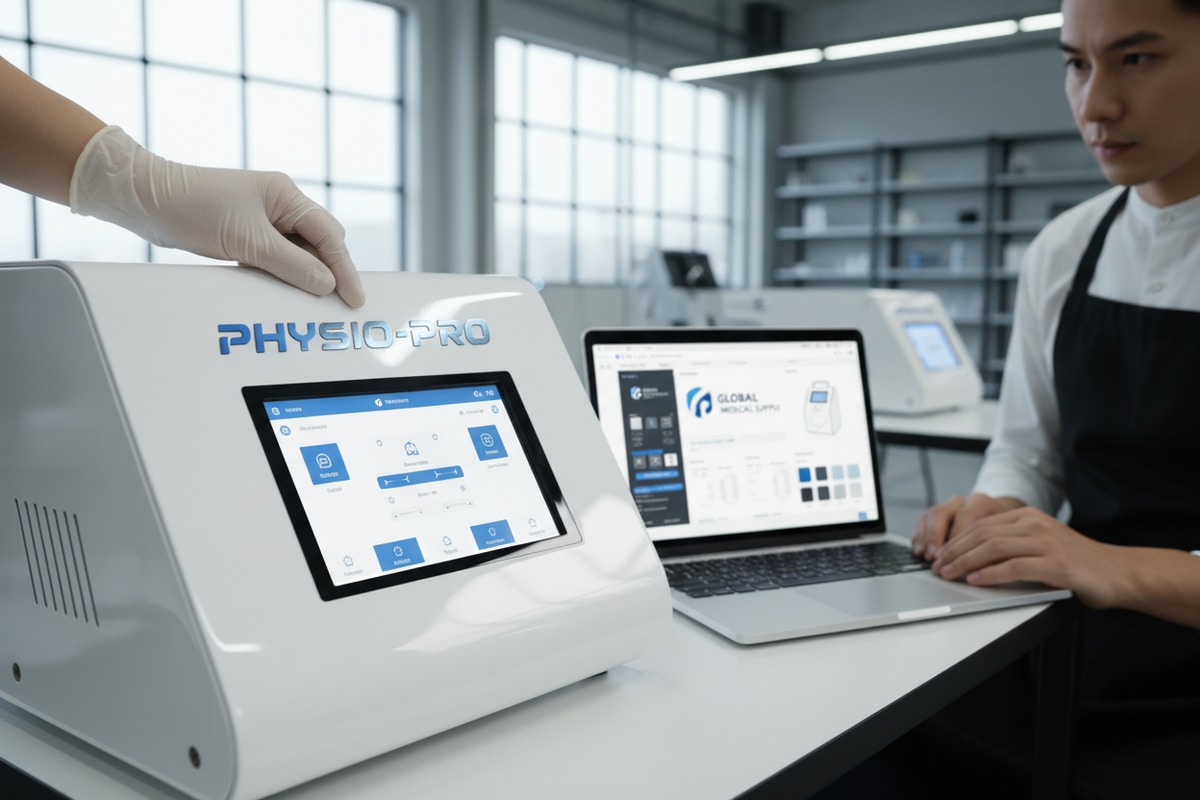
Levels of OEM Customization
Different suppliers offer different customization depths. Understand what each level involves before committing.
Basic Branding: Logo placement on machine body and startup screen. This is the simplest and most common OEM option. It works well for brands entering the market quickly.
Interface Customization: Custom touchscreen interface design, multi-language options, and branded software. Some machines support 8+ languages for international distribution.
Full ODM Development: Complete product development including custom features, unique design, and exclusive functionality. This requires larger investment and longer lead times.
| Customization Level | Typical MOQ | Lead Time | Investment Level |
|---|---|---|---|
| Logo Only | 5-10 units | 2-3 weeks | Low |
| Interface + Logo | 20-50 units | 4-6 weeks | Medium |
| Full Custom | 100+ units | 3-6 months | High |
Evaluating Supplier R&D Capability
A supplier's R&D team determines their ability to execute custom projects. Ask these questions:
- How many engineers are on the R&D team?
- What custom projects have they completed in the past year?
- Can they provide references from existing OEM clients?
- What is their prototype development timeline?
Strong suppliers have dedicated R&D staff who understand both the technology and market trends. They should be able to discuss specific technical modifications confidently.
Branding Quality Standards
When your logo goes on a machine, it represents your brand. The printing and placement quality matter enormously.
Printing Technology: Silk screen printing offers durability for machine casings. UV printing provides color accuracy. Laser etching works best for metal components.
Startup Screen: Custom boot screens should load quickly without lag. Logo resolution must be sharp on LCD displays. Color accuracy should match your brand guidelines.
Packaging: Custom packaging should use your brand colors and logo. Box design should protect products during shipping while looking professional upon delivery.
Protecting Your Brand Identity
Work with suppliers who understand intellectual property protection. Your custom designs, software modifications, and branding should remain exclusive to your brand.
Request non-disclosure agreements 8 before sharing detailed specifications. Clarify ownership of any custom developments in your contract. Ensure the supplier won't sell identical customizations to competitors.
What logistics and packaging standards are necessary to ensure my order arrives without cosmetic or functional defects?
When we prepare shipments to the US and Europe, packaging is critical. Machines that arrive damaged create huge problems. You face customer complaints, warranty claims, and reputation damage. Proper packaging prevents all of this.
Require double-wall carton packaging with foam dividers for pressotherapy machines. Confirm ISTA 3A compliant transit testing, clear handling labels (“Fragile,” “This Side Up”), and moisture barriers. Request pre-shipment inspection photos and tracking information for door-to-door logistics management.
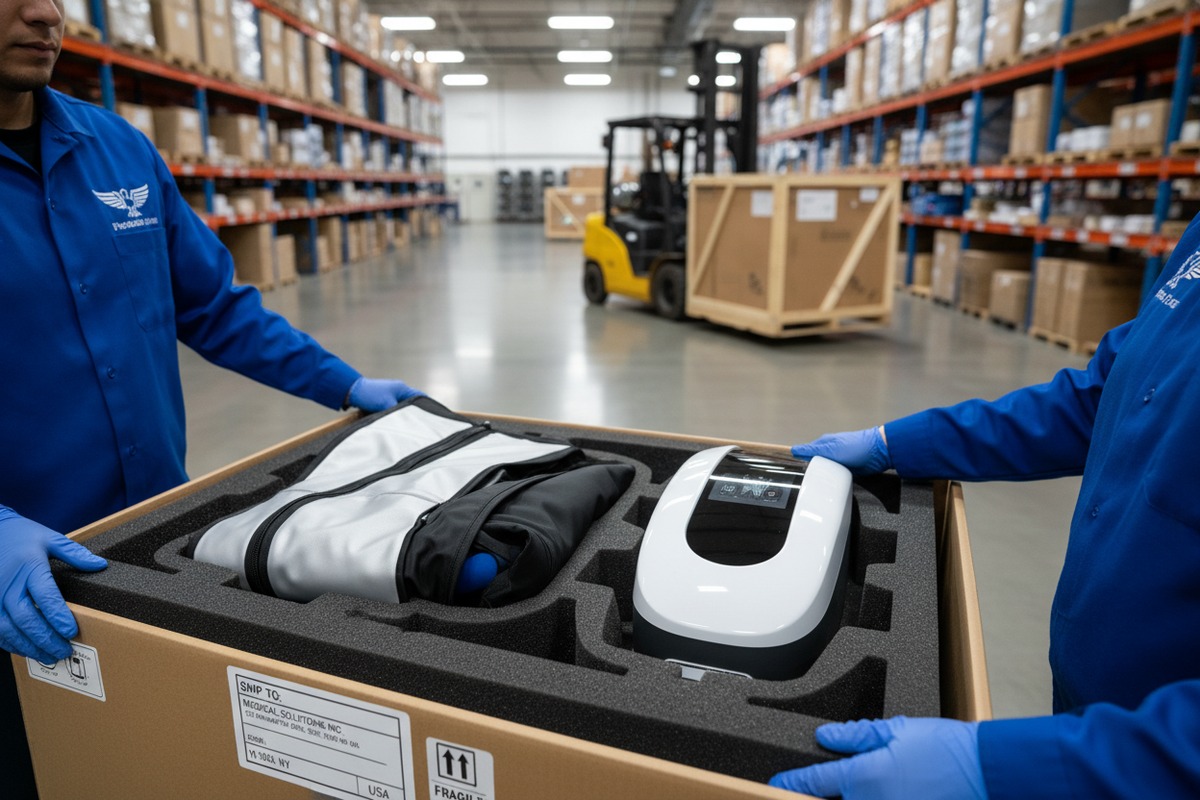
Packaging Structure Requirements
Professional beauty equipment needs multi-layer protection. Each layer serves a specific purpose in preventing damage.
Inner Protection: Custom-fit foam inserts hold the machine securely. High-density foam absorbs impact during handling. The machine should not move within the inner packaging.
Middle Layer: Corrugated cardboard provides structural strength. Double-wall construction is standard for equipment weighing 15-40kg. Triple-wall may be needed for heavier units.
Outer Layer: Waterproof wrapping protects against moisture. Shrink wrap seals the entire package. Corner protectors prevent crush damage during stacking.
| Packaging Component | Standard Requirement | Premium Requirement |
|---|---|---|
| Foam Density | 25-30 kg/m³ | 35-40 kg/m³ |
| Carton Type | Double-wall | Triple-wall |
| Corner Protection | Cardboard | Plastic reinforced |
| Moisture Barrier | Shrink wrap | Aluminum foil layer |
Shipping Documentation and Labeling
Proper labeling ensures handlers treat your shipment correctly. Missing labels lead to rough handling and damage.
Essential labels include:
- "Fragile" warnings in multiple languages
- "This Side Up" orientation markers
- Weight and dimension specifications
- Barcodes for tracking
- Handling instructions
The package size for standard pressotherapy machines is approximately 56x46x52cm. Gross weight typically ranges from 15-40kg depending on configuration. These specs affect shipping costs and handling requirements.
Pre-Shipment Inspection Protocol
Before any machine leaves the factory, a final inspection should verify:
- Visual Check: No scratches, dents, or cosmetic defects on machine body
- Function Test: All modes operate correctly
- Accessories Count: All parts, cables, and manuals included
- Packaging Integrity: No damage to packaging materials
Request photo documentation of this inspection. Photos should show the machine from multiple angles, the screen during operation, and the final packaged state. This creates accountability and provides proof of condition at shipment.
Door-to-Door Logistics Management
Complete logistics support includes order tracking from factory to your warehouse. A good supplier provides:
- Real-time shipment tracking
- Customs documentation assistance
- Delivery scheduling coordination
- Damage claim support if issues occur
Working with suppliers who offer door-to-door service reduces your logistics burden. They handle freight forwarding, customs clearance, and last-mile delivery. You simply receive goods at your location.
Conclusion
Sourcing combination pressotherapy machines with EMS requires careful evaluation of technical specs, quality control, OEM capability, and logistics. Verify performance standards through sample testing. Confirm manufacturer certifications and QC protocols. Assess customization depth for your brand needs. Ensure robust packaging for safe international delivery.
Footnotes
1. Provides a comprehensive explanation of pressotherapy, its benefits, and how it works. ↩︎
2. Official FDA guidance on medical device registration and listing requirements. ↩︎
3. Explains the ISTA 3A standard for package integrity testing by a certified lab. ↩︎
4. Provides academic knowledge and references on Electrical Muscle Stimulation. ↩︎
5. Authoritative medical explanation of lymphatic drainage massage and its benefits. ↩︎
6. Official European Union website detailing CE marking requirements and significance. ↩︎
7. Details the international standard for quality management systems in medical devices. ↩︎
8. Authoritative legal definition and overview of non-disclosure agreements. ↩︎

 English
 Español de México
 Deutsch
 Français
 العربية
 Русский
