

When we first started manufacturing pressotherapy systems at our Guangzhou facility, the question of air chamber count puzzled even our most experienced engineers material certifications 1. Many distributors contacted us asking why their clients complained about uneven compression—often, the root cause traced back to insufficient or poorly configured chambers.
To evaluate air chamber count for pressotherapy machine efficacy, prioritize machines with 16-24 chambers for professional salon use, ensure pressure ranges reach at least 120 mmHg, verify sequential inflation patterns from distal to proximal areas, and test for uniform pressure distribution during pre-shipment inspections.
This guide walks you through the science behind chamber counts, material quality checks, customization options with Chinese manufacturers, and practical inspection techniques MDSAP certifications 2. Let’s dive into what truly matters when sourcing these machines for your brand.
How many air chambers do I actually need for my pressotherapy machines to deliver professional-grade results?
Our production team fields this question weekly from brand owners across the US, Canada, and Europe. The answer isn't simple because the "right" number depends on your target market and intended use cases.
Professional-grade pressotherapy machines typically require 16-24 air chambers for full-body treatments, while 8-12 chambers suffice for leg-only applications. Higher chamber counts enable smoother pressure gradients and better simulation of natural lymphatic flow, but beyond 24 chambers, returns diminish significantly.
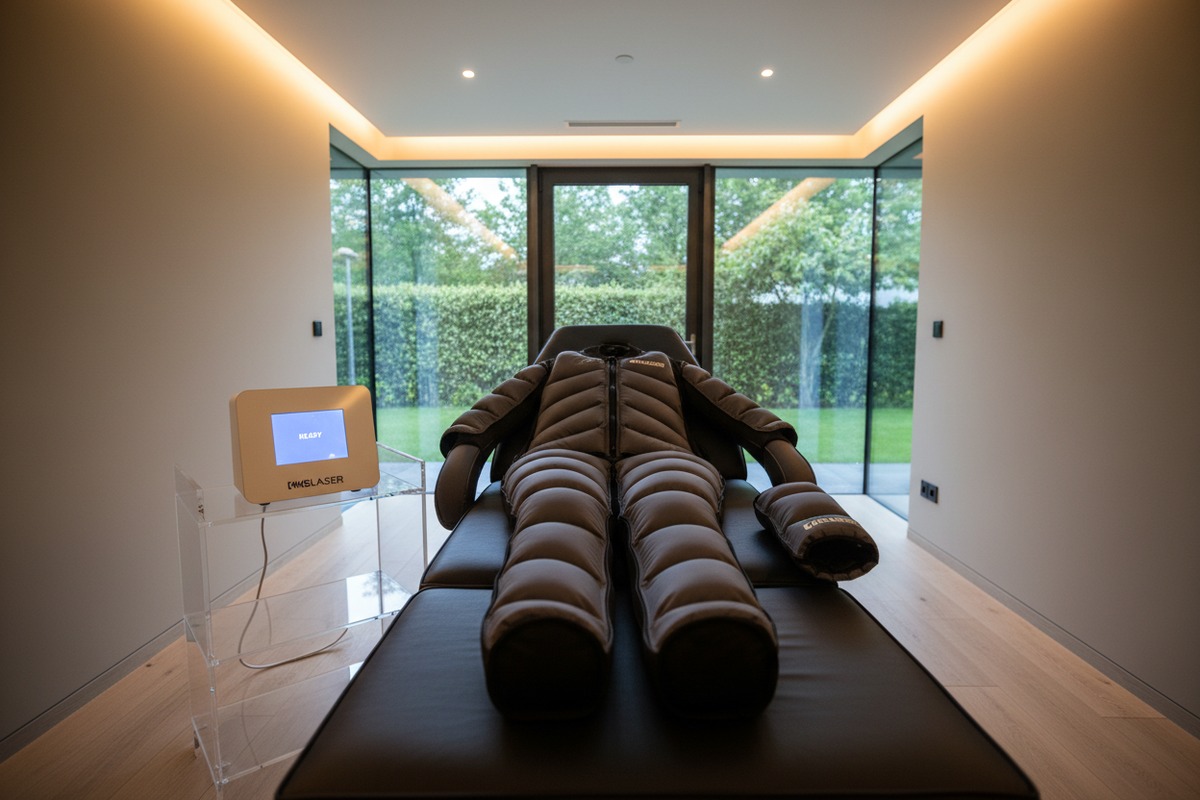
Understanding Chamber Count and Treatment Coverage
The air chamber count directly affects how precisely your machine can target different body zones. Devices supporting 4-chamber/6-chamber leg/arm cuffs and 24-chamber full-body cuffs offer versatile, precise treatment for diverse needs. When chambers inflate and deflate sequentially from distal to proximal areas 3, they create a wave-like motion that mimics natural muscle contractions.
Professional machines with 24-chamber compression suits and adjustable settings are now positioned as the industry standard for med spas and body contouring specialists. However, this doesn't mean every buyer needs maximum chambers.
Chamber Count Selection by Use Case
| Use Case | Recommended Chambers | Pressure Range | Target Market |
|---|---|---|---|
| Leg-only recovery boots | 4-8 | 20-220 mmHg | Athletes, home users |
| Professional leg treatments | 8-12 | 60-200 mmHg | Wellness spas |
| Full-body aesthetic treatments | 16-24 | 100-200 mmHg | Med spas, clinics |
| Comprehensive lymphedema therapy | 24+ | 120-200 mmHg | Medical facilities |
The Science Behind Sequential Compression
The sleeve chambers inflate individually in the disto-proximal direction. When the next chamber begins to inflate, the previous one begins to deflate shortly afterwards, and so on for all chambers. This sequential action is what creates effective lymphatic drainage. sequential compression 4
Studies on intermittent pneumatic compression show that multi-chamber sequential systems outperform single-chamber designs. Treatment protocols carried out on 90 subjects with sequential intermittent pneumatic compression 5 for one hour a day using pressure of 45 mmHg showed significant results.
Why More Isn't Always Better
From our manufacturing experience, we've seen diminishing returns beyond 24 chambers. Each additional chamber adds complexity, potential failure points, and cost. Thanks to intelligent gradient function, interval, hold, setting individual pressure for each chamber in the cuff and the possibility of programming your own treatment algorithms, devices allow you to adjust parameters to the needs of each patient.
The key isn't just quantity—it's how those chambers work together.
How can I ensure the air chamber material and construction won't lead to leaks or quality complaints from my salon clients?
During our quality control processes, we've caught material defects that would have caused headaches for our clients down the line. Air chamber durability is the single biggest factor in long-term customer satisfaction.
Quality air chambers should use medical-grade TPU (thermoplastic polyurethane) with high-frequency welded seams, feature independent air valves for each chamber, and undergo pressure-hold testing at 1.5x operational pressure. Request material certifications and conduct leak tests during pre-shipment inspection.
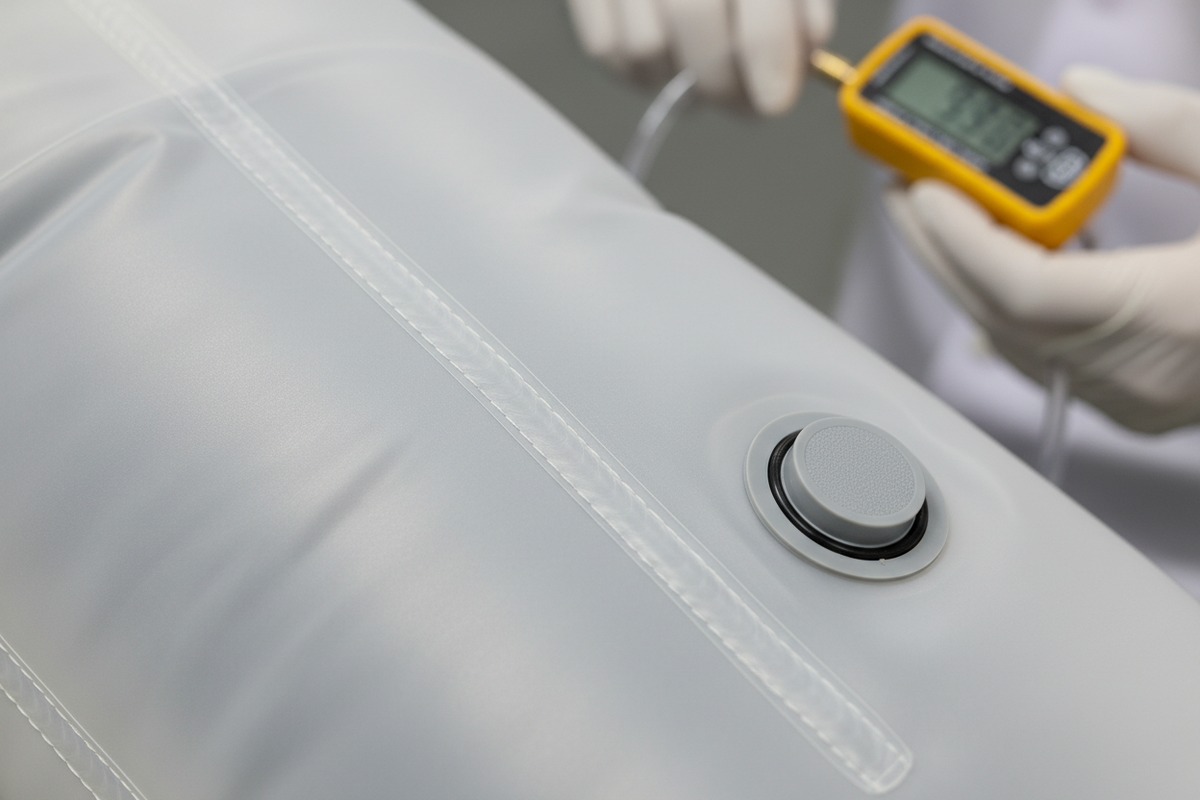
Material Quality Comparison
The three main materials used in pressotherapy air chambers are PVC, PU, and TPU. Each has distinct characteristics that affect performance and longevity.
Thermoplastic polyurethane is a polymer material that has both rubber elastic properties and plastic plasticity. It features excellent physical properties and mechanical properties, such as high tensile strength and high elongation. TPU also has good resilience and excellent abrasion resistance and puncture resistance.
| Material | Durability | Flexibility | Cost | Best For |
|---|---|---|---|---|
| PVC | Moderate | Low | Low | Budget machines |
| PU | Good | Moderate | Medium | Mid-range devices |
| TPU | Excellent | High | Higher | Professional use |
Construction Quality Indicators
The sleeves made of high-elasticity medical-grade TPU material with built-in independent air valves ensure uniform pressure distribution and a snug fit for different body types. When evaluating samples from suppliers, check these specific construction points:
- Seam welding quality at chamber boundaries
- Valve connection reinforcement areas
- Zipper or fastener attachment points
- Tube connector durability
Preventing Common Quality Issues
Precision welding with high frequency technology 6 ensures no gaps, avoiding air leakage and providing stable support. We recommend requesting video documentation of the welding process from your manufacturer.
All cuffs should have an "overlapping" system which prevents lymphatic retraction during the procedure. This overlapping design also provides redundancy that prevents treatment interruption if minor leaks occur.
Testing Protocols for Material Quality
Before accepting shipments, implement these tests:
- Pressure hold test: Inflate chambers to maximum rated pressure and hold for 30 minutes
- Cycle fatigue test: Run 500+ inflation/deflation cycles at operational pressure
- Visual inspection: Check all welded seams under bright light
- Fit test: Verify chambers conform properly to different body sizes
Can I request a custom air chamber configuration from my Chinese manufacturer to differentiate my brand's equipment?
We've helped dozens of brands create unique pressotherapy systems that stand out in their markets. Customization is absolutely possible—but understanding what can and cannot be changed will save you time and development costs.
Chinese manufacturers typically offer OEM customization including logo placement, color schemes, chamber count modifications, software interface changes, and accessory configurations. Full ODM development of new chamber layouts requires higher MOQs (usually 100+ units) and 60-90 day development timelines.

OEM vs ODM Customization Options
Located in Shenzhen, China, manufacturers focus on creating and providing excellent products as well as good services to customers, accepting OEMs from customers all over the world, and providing customized products according to special requirements.
| Customization Level | What's Included | Typical MOQ | Lead Time |
|---|---|---|---|
| Basic OEM | Logo on startup screen, packaging | 10-30 units | 2-3 weeks |
| Standard OEM | Logo, color scheme, user manual branding | 30-50 units | 3-4 weeks |
| Advanced OEM | Software interface, preset programs, accessories | 50-100 units | 4-6 weeks |
| Full ODM | Custom chamber configuration, new designs | 100+ units | 60-90 days |
Standard Customization Areas
For Logo customization: client offers logo design, manufacturer puts the logo on interface or machine case and makes the effect image, client confirms the effect image, then processes the order and produces.
Most manufacturers can adjust these elements on standard models:
- Software: Treatment programs, pressure presets, language options
- Hardware cosmetics: Control panel colors, suit fabric colors
- Branding: Startup logos, user interface graphics, packaging
- Accessories: Suit sizes, chamber configurations within standard ranges
Creating Truly Unique Products
For customized software, machine case, or technology: client offers ideas, manufacturer makes design according to client ideas, client confirms design and adjusts details, finally confirms design, then processes order and produces—making ideas come true and building your own brand.
For genuine differentiation, consider:
- Integrated features: Add far-infrared heating, EMS pads, or eye massage modules
- Chamber segmentation: Request specific zone configurations for target markets
- Control systems: Develop proprietary treatment protocols
Avoiding Customization Pitfalls
From our experience working with international brands, common mistakes include:
- Requesting changes too late in production planning
- Underestimating MOQ requirements for custom features
- Not defining specifications clearly in writing
- Skipping sample approval for new configurations
Wholesale transactions often include discounts and customization opportunities, ensuring you receive premium items from accredited sellers. Always negotiate customization costs and timelines before finalizing orders.
How do I verify that the air chamber count listed in the supplier's specs matches the actual performance during my pre-shipment inspection?
This is where many importers get burned. We've audited competitor products claiming 24 chambers that actually had 16 functional ones. Your pre-shipment inspection protocol needs specific verification steps.
Verify air chamber count by physically counting chambers in deflated suits, testing each chamber individually for proper inflation, measuring pressure uniformity across all zones with a calibrated gauge, and running full treatment cycles while observing sequential operation. Document findings with photos and video.

Physical Inspection Checklist
Before testing functionality, conduct a thorough physical examination:
| Inspection Point | What to Check | Red Flags |
|---|---|---|
| Chamber count | Count visible segments in each suit section | Mismatch with specs |
| Tube connections | Verify tubes match chamber count | Missing or capped tubes |
| Valve function | Test each connection point | Sticky or damaged valves |
| Control unit outputs | Count active air output ports | Fewer ports than chambers |
Functional Testing Protocol
IPC devices equipped with premium compression sensors can monitor the applied pressure and provide feedback to ensure the device functions correctly and applies the desired pressure, thus guaranteeing effective and safe treatment.
Step-by-step verification process:
-
Individual chamber test: Connect suit and activate one chamber at a time from the control unit. Verify each inflates independently.
-
Pressure uniformity test: Use a calibrated pressure gauge to measure actual pressure in different chambers. Compare readings across zones.
-
Sequential operation test: Run standard treatment programs and observe inflation patterns. Chambers should activate in proper distal-to-proximal sequence.
-
Full cycle test: Complete at least three full treatment cycles and check for any chambers that fail to inflate or hold pressure.
Using Measurement Tools
Intelligent feedback mechanisms with built-in pressure sensors enable real-time monitoring, preventing excessive compression and ensuring safety of treatment. However, don't rely solely on the machine's built-in sensors.
Independent verification tools:
- Handheld digital pressure gauge: Measures actual chamber pressure
- Stopwatch: Times inflation and deflation sequences
- Calipers: Measures chamber dimensions for consistency
- Multimeter: Tests electrical connections to air pump
Documentation Requirements
Create a standardized inspection report including:
- Serial numbers of all tested units
- Photo/video of each chamber inflating
- Pressure readings from each zone
- Any deviations from specifications
- Overall pass/fail determination
All IPC devices should meet industry safety and performance standards, holding certifications from FDA 7, NRTL, CE, and Health Canada. Manufacturing facilities should achieve ISO13485 8 and MDSAP certifications. Request copies of these certifications during your inspection.
Working with Third-Party Inspectors
If you cannot conduct inspections personally, brief third-party quality control agencies on these specific tests. Generic inspection protocols may miss chamber-specific issues that affect treatment efficacy.
Conclusion
Evaluating air chamber count requires balancing technical specifications with practical performance. Focus on 16-24 chambers for professional use, verify TPU material quality, negotiate customization early, and implement rigorous pre-shipment testing. When you're ready to discuss specifications for your brand's pressotherapy line, our team at KMSLASER is here to help you get it right the first time.
Footnotes
1. Explains FDA’s role in evaluating medical device materials and biocompatibility. ↩︎
2. Explains the Medical Device Single Audit Program for global regulatory compliance. ↩︎
3. Authoritative government source defining anatomical directions. ↩︎
4. Describes how sequential compression devices work to improve circulation and prevent blood clots. ↩︎
5. Defines intermittent pneumatic compression therapy and its medical applications. ↩︎
6. Explains the manufacturing process used for sealing chambers. ↩︎
7. Provides an overview of the FDA’s role in regulating medical devices in the US. ↩︎
8. Defines ISO 13485 as the international standard for quality management systems in the medical device industry. ↩︎

 English
  Español de México
  Deutsch
  Français
  العربية
  Русский