

When our engineering team analyzes returns from international clients, we frequently find that motor failure is the primary culprit in older pressotherapy models high-torque Brushless DC (BLDC) motors 1. You invest heavily in marketing your salon equipment, yet a noisy or broken pump can ruin your brand reputation instantly. We understand the frustration of dealing with inconsistent pressure delivery and frequent maintenance requests from unhappy spa owners.
To secure the best equipment, you must ask suppliers for high-torque Brushless DC (BLDC) motors that offer efficiency ratings above 85% and operational lifespans exceeding 10,000 hours. Specifically, inquire about their ability to maintain stable pressure under 45dB, ensuring your machines deliver powerful yet silent treatments suitable for high-end luxury salons.
Below, we break down exactly what you need to know to upgrade your product line.
Which specific brushless motor types should I prioritize for my professional pressotherapy equipment?
In our factory, we often see technical sheets that look impressive but fail to mention the specific drive architecture used in the air pump system Inner Rotor Brushless DC (BLDC) motors 2. We know that simply labeling a machine as “powerful” is not enough for professional buyers who need consistent performance across hundreds of duty cycles 3. Finding the right motor type is the difference between a consumer toy and a medical-grade device.
You should prioritize Inner Rotor Brushless DC (BLDC) motors with Hall effect sensors for your professional pressotherapy equipment. These specific motors provide superior low-speed torque control, allowing for precise air chamber inflation without the stalling or jerky pressure fluctuations common in sensorless varieties or cheaper outer rotor designs used in generic appliances.
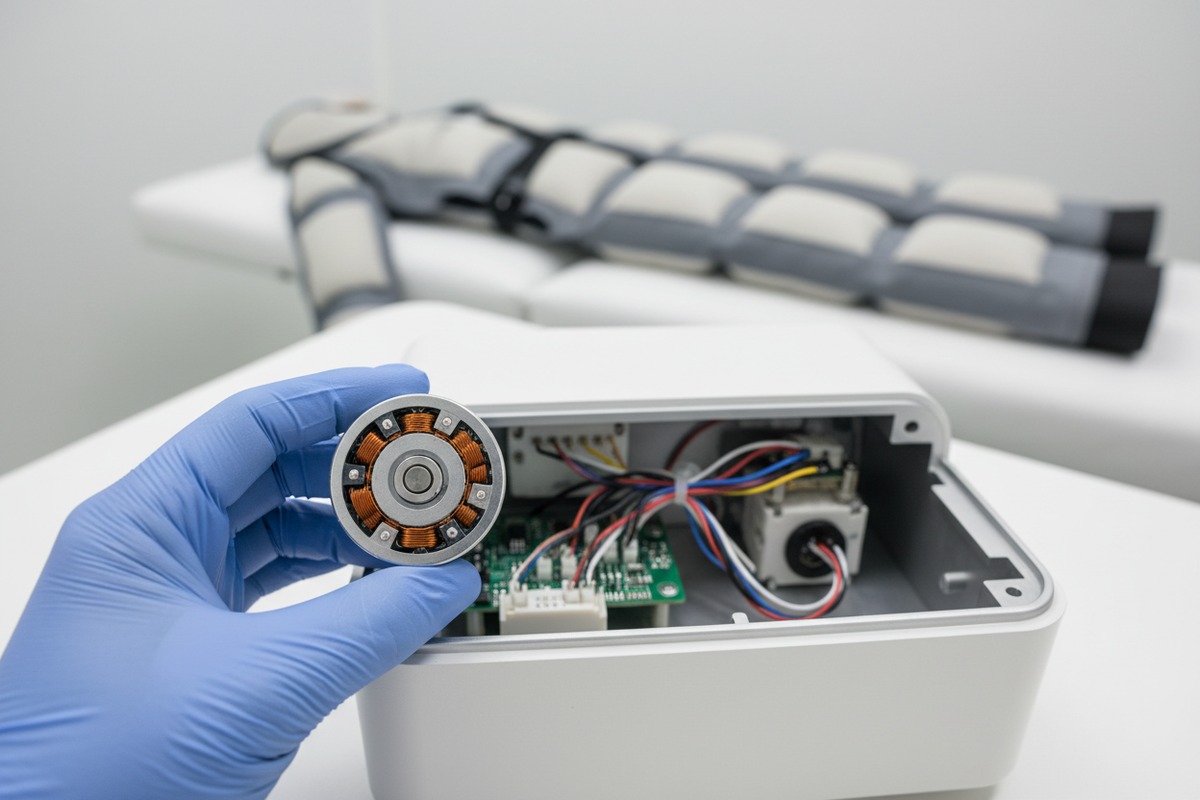
Understanding Motor Architecture in Air Systems
When you source pressotherapy machines, the "engine" driving the air compression is usually a diaphragm pump 4 powered by an electric motor low-speed torque control 5. For professional salon use, not all brushless motors are created equal. You need to distinguish between the generic types and the ones optimized for pneumatic loads 6 sensorless varieties 7.
Standard brushless motors (BLDC) are excellent, but for pressotherapy, the Inner Rotor design is superior. In this design, the rotating part (rotor) is inside the stationary part (stator) EMC (Electromagnetic Compatibility) test reports 8. This configuration allows for faster acceleration and deceleration. Why does this matter for your salon clients? It means the machine can inflate and deflate air chambers rapidly, creating a crisp, distinct massage rhythm that feels premium to the end user.
Sensor vs. Sensorless Technology
Another critical specification to discuss with us or any supplier is the control method. You should ask for Sensored BLDC motors. These motors use Hall effect sensors 9 to track the rotor's position.
In a pressotherapy machine, the motor often runs at varying speeds to build pressure gradually. Sensorless motors sometimes struggle at low speeds or upon startup, causing a slight "stutter" before smooth operation. Sensored motors eliminate this. They ensure that from the very first second of treatment, the airflow is smooth and linear.
Voltage and Power Ratings
Don't just look at Watts. A 50W motor might sound powerful, but efficiency is key. We recommend prioritizing 24V DC systems. Higher voltage systems generally run cooler and more efficiently than 12V equivalents when delivering the high torque needed to push air into a full-body compression suit.
Comparison of Motor Types for Pressotherapy
Use this table to evaluate supplier datasheets. If they cannot provide this level of detail, their engineering depth may be insufficient for your private label needs.
| Feature | Brushed DC (Old Tech) | Outer Rotor BLDC (Generic) | Inner Rotor BLDC (Recommended) |
|---|---|---|---|
| Primary Advantage | Low Cost | High Torque density | High speed, fast response |
| Pressure Control | Linear but wears out | Good, sometimes cogging | Excellent, precise |
| Noise Profile | Whining sound (carbon brush) | Quiet | Very Quiet |
| Suitability | Home-use devices | General Fans | Professional Medical/Salon |
| Maintenance | High (Brush replacement) | Low | Zero |
How will integrating brushless motors improve the long-term reliability and durability of my machines?
Our production managers have tracked the lifecycle data of thousands of units exported to the US and Europe, giving us a clear picture of long-term wear. We consistently observe that machines utilizing older motor technologies result in significantly higher after-sales support tickets. Upgrading the core drive system is the most effective way to protect your brand’s reputation for quality.
Integrating brushless motors will virtually eliminate mechanical wear-and-tear failures, extending your machine’s operational lifespan to over 10,000 hours compared to the 2,000-hour average of brushed motors. This upgrade removes the risk of carbon dust accumulation and brush sparking, drastically reducing internal heat and preventing damage to sensitive control boards.
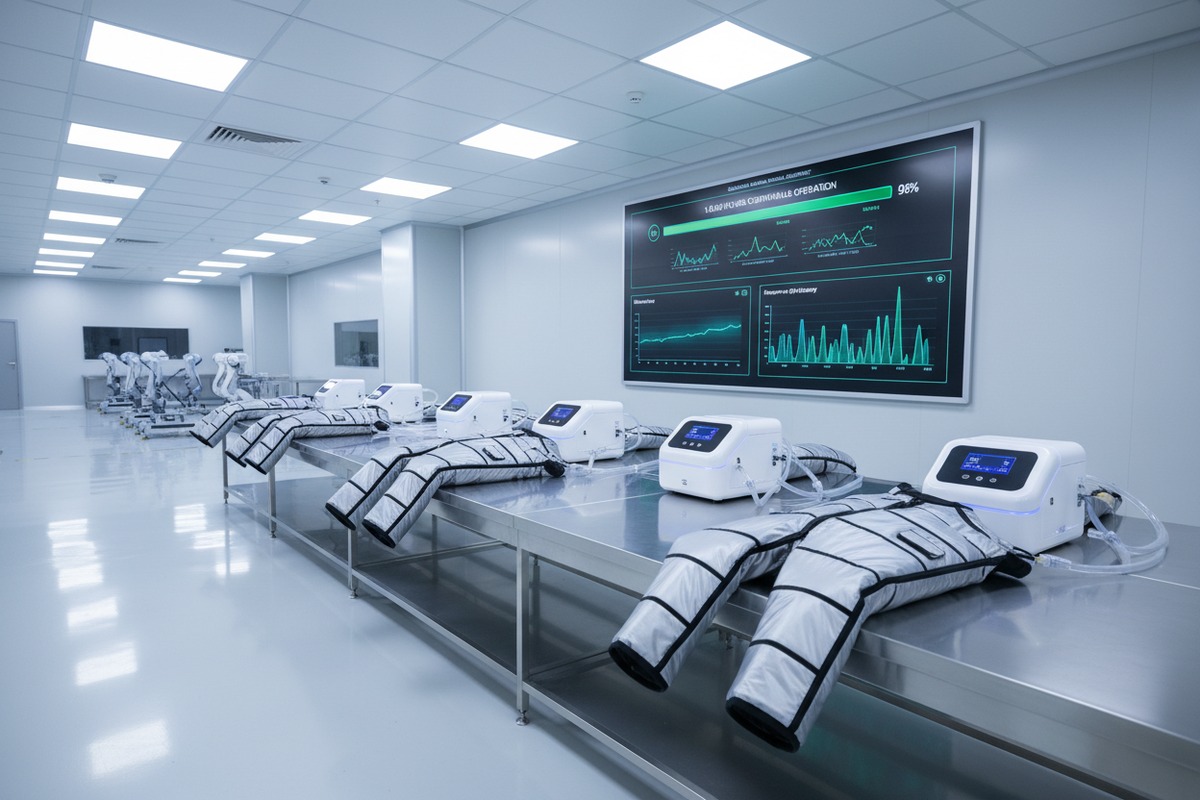
Eliminating the Weakest Link
The most common failure point in traditional pressotherapy machines is the carbon brush. In a standard Brushed DC motor, small blocks of carbon physically rub against the rotating commutator to conduct electricity. Over time, friction wears these brushes down.
When we build machines with Brushless Motors, we remove this physical contact entirely. The energy transfer is handled electronically. No friction means no physical wear on the commutator. For a busy salon running the machine 6 to 8 hours a day, this is the difference between a machine that lasts 1 year and one that lasts 5 to 7 years.
Thermal Management and Electronic Safety
Heat is the enemy of electronics. Brushed motors generate significant heat due to friction and electrical arcing. In compact pressotherapy devices, this heat can build up inside the casing.
Excessive heat degrades:
- The Air Pump Diaphragm: Rubber components dry out and crack faster in hot environments.
- The Mainboard: Capacitors and chips have shorter lifespans when constantly heated.
- The Battery (if portable): Heat kills lithium battery efficiency.
Brushless motors run cool. By generating less waste heat, the internal temperature of your device remains lower. This passive benefit protects every other component inside the chassis, from the touch screen to the power supply unit.
Reduced Maintenance Costs for Your Buyers
For your B2B customers—salon owners—maintenance is a headache. A machine that needs "tune-ups" or stops working is a machine that isn't generating revenue. By specifying brushless technology, you are selling a "maintenance-free" solution. There are no brushes to replace, and the bearings used in high-quality BLDC motors are sealed for life.
Lifecycle Cost Analysis
Here is how the choice of motor impacts the Total Cost of Ownership (TCO) for a salon owner over 3 years.
| Metric | Brushed Motor Device | Brushless Motor Device |
|---|---|---|
| Initial Cost | Lower | Moderate Premium |
| Lifespan (Hours) | ~2,000 – 3,000 Hours | >10,000 Hours |
| Daily Runtime Limit | Needs cooling breaks | Continuous Operation |
| Maintenance Events | Brush change every 6-9 months | None |
| Risk of Breakdown | Moderate to High | Very Low |
| 3-Year Outcome | Likely replaced once | Still in prime condition |
What performance benefits and noise reduction can I expect from brushless technology in my salon devices?
When we invite clients to our showroom to test machines side-by-side, the difference in sound quality is the immediate deal-closer. We know that in a spa environment, the hum of a machine can disrupt the relaxation experience your customers are selling. Beyond just silence, the tactile feedback of the air pressure system defines the perceived luxury of the treatment.
You can expect noise levels to drop significantly below 45dB, creating a near-silent operation that enhances the spa ambiance. Performance-wise, brushless technology delivers precise digital pressure control with instant torque response, ensuring consistent compression at every setting from 20 mmHg to maximum intensity without the vibration typical of older pumps.
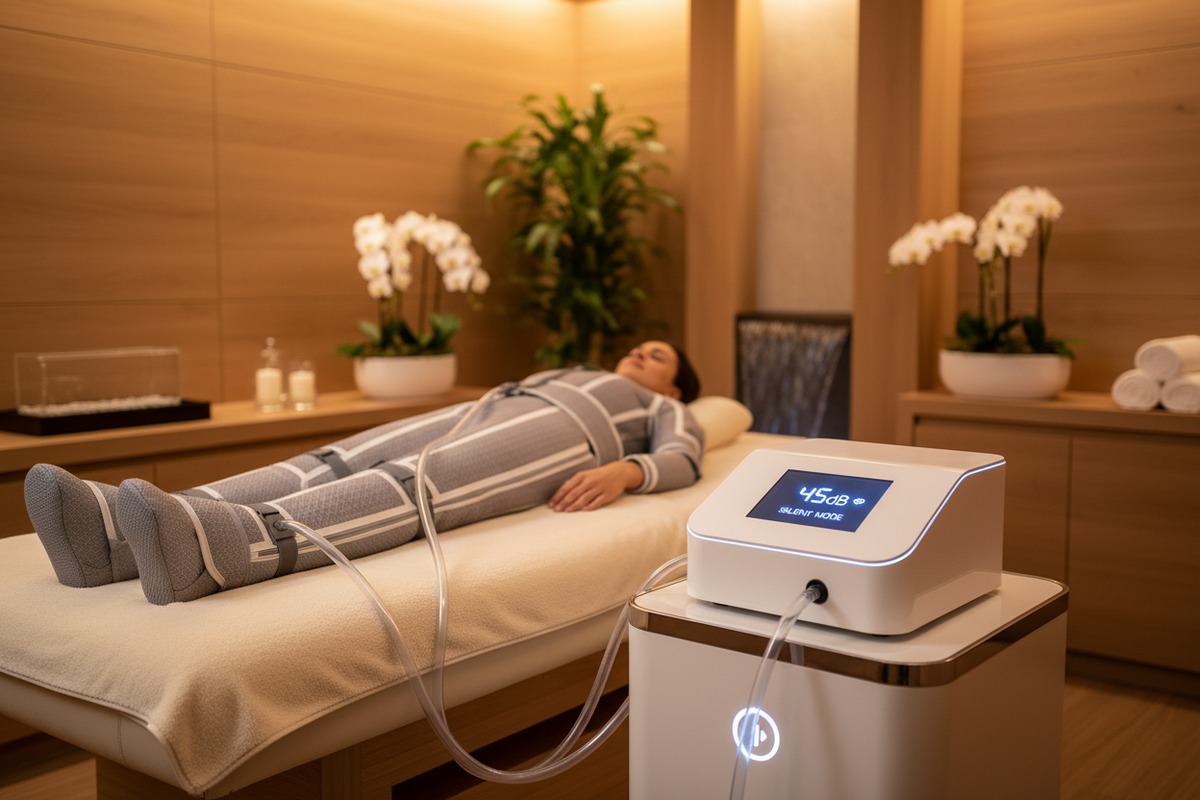
The Importance of "Silent Power"
In the beauty industry, silence is a feature. A pressotherapy session is often marketed as lymphatic drainage or relaxation massage. If the machine sounds like a lawnmower or an old refrigerator, the therapeutic effect is ruined.
Brushless motors operate using electronic commutation rather than mechanical switching. This eliminates the "buzzing" and sparking noise associated with brushed motors. When we test our BLDC-equipped units, the noise floor is often indistinguishable from the ambient room noise. This allows salon staff to speak softly to clients without raising their voices, maintaining a premium atmosphere.
Precision Pressure Control
The performance benefit goes beyond noise. It is about Control.
Brushless motors can be controlled digitally with extreme precision. The microcontroller on the mainboard talks directly to the motor driver.
- Variable Speed: We can program the motor to slow down as it reaches the target pressure. This creates a "soft landing" effect where the air bag fills gently at the end, rather than an abrupt squeeze.
- Holding Pressure: BLDC motors can maintain torque efficiently. If a treatment mode requires holding pressure for 10 seconds, the motor can do this without straining or overheating.
- Complex Modes: Advanced wave-like massage patterns require rapid changes in airflow. Brushless motors react instantly to these commands.
Vibration and Stability
Vibration is a sign of wasted energy and poor balance. Brushed motors often vibrate due to the friction of the brushes and the mass of the wound armature. Over time, this vibration loosens screws and rattles the plastic casing.
BLDC motors are balanced and smooth. This lack of vibration means we can mount them more rigidly without passing shock waves to the case. For your end-user, the machine feels solid and well-built. It sits on the trolley or table without "walking" or rattling.
Performance Data Comparison
| Performance Metric | Standard Brushed System | Advanced Brushless System |
|---|---|---|
| Noise Level | 55 – 65 dB (Conversation level) | < 45 dB (Library quiet) |
| Pressure Accuracy | +/- 10% deviation | +/- 2% deviation |
| Ramp-up Speed | Slower, inconsistent | Fast, linear acceleration |
| Vibration | Noticeable casing vibration | Negligible |
| Heat Emission | Hot to touch after 30 mins | Warm after 4 hours |
How can I confirm a supplier’s engineering capability to customize brushless motors for my private-label brand?
From our experience collaborating on custom ODM projects, we find that many trading companies lack the direct engineering access required to tune motor performance. You need a partner who understands not just the motor, but the firmware that controls it. Verifying this capability upfront saves you from receiving a container of products that look right but fail to perform under load.
Confirm engineering capability by requesting specific datasheets detailing the motor’s P-Q curve (Pressure-Flow) and asking for a video demonstration of their firmware customization process. You should also demand EMC (Electromagnetic Compatibility) test reports to ensure the brushless drivers do not interfere with other salon electronics, a common issue with inexperienced manufacturers.
The Supplier Vetting Checklist
It is easy for a supplier to say "Yes, we have brushless motors." It is harder for them to prove they can engineer them for your specific brand. When you are looking for a long-term manufacturing partner, you need to dig deeper into their R&D process.
You are not just buying a motor off the shelf; you are buying the integration of that motor into a system. Here is how to test a supplier's knowledge:
1. Request the P-Q Curve Data
Ask for the Pressure vs. Flow Rate curve. A real manufacturer will have this data from their pump supplier or their own lab. If they only give you a "Rated Pressure" number (e.g., "200 mmHg"), they might not understand the dynamics of airflow. The curve tells you how fast the machine can inflate a large suit vs. a small arm sleeve.
2. Inquire About EMC and Shielding
Brushless motors use high-frequency switching to control speed. If not designed correctly, this can create electromagnetic interference (EMI).
- Ask: "Do your BLDC drivers have EMC certification?"
- Why: Without this, your machine might cause flickering in salon lights or interfere with other sensitive beauty devices in the same room.
3. Firmware Customization
The motor is hardware; the driver is software.
- Ask: "Can you adjust the PWM (Pulse Width Modulation) frequency to change the ramp-up speed of the pressure?"
- If they answer "We need to check with the factory," they are likely a middleman. If they say "Yes, our engineer can adjust the firmware parameters," you are dealing with a capable manufacturer.
4. Integration and Retrofitting
If you have an existing chassis design you love, ask about fitment. BLDC motors are often more compact but might require different mounting brackets. A capable supplier will offer 3D drawings showing how the new motor fits into your current housing design.
Questions to Validate Engineering Strength
| Question Category | Specific Question to Ask | Desired Supplier Response |
|---|---|---|
| Data Verification | "Can I see the lifespan test report for this specific motor model?" | Provides a report showing >5,000 or >10,000 hours of testing. |
| Customization | "Can we increase the maximum pressure by 10% via firmware?" | "Yes, we can tune the controller, provided the pump head supports it." |
| Quality Control | "How do you test the motor noise during production?" | "We test 100% of units in a soundproof chamber before assembly." |
| Safety | "Does the motor driver have over-current protection?" | "Yes, the system shuts down automatically if the pump is blocked." |
Conclusion
Upgrading to brushless motor technology is a strategic investment that elevates your pressotherapy machines from standard appliances to professional-grade medical aesthetics equipment. By prioritizing high-torque, sensored BLDC motors, you ensure superior durability, whisper-quiet operation, and precise treatment control. When vetting suppliers, demand specific technical data and EMC certifications to verify their engineering competence. This attention to detail will secure a reliable product line that strengthens your brand reputation and maximizes ROI for your salon clients.
Footnotes
1. Explains BLDC motors, including high torque benefits. ↩︎
2. Details the architecture and advantages of inner rotor BLDC motors. ↩︎
3. Replaced with a Wikipedia article providing a comprehensive definition of duty cycle. ↩︎
4. Explains the working principles and applications of diaphragm pumps. ↩︎
5. Replaced with a relevant article discussing controlling BLDC motors at low speeds and minimizing cogging effects, which is crucial for precise low-speed torque control. ↩︎
6. Defines pneumatics and its application in fluid power systems. ↩︎
7. Replaced with an article from Maxon Group, a reputable motor manufacturer, explaining sensorless control methods for brushless motors. ↩︎
8. Explains EMC testing, its importance, and certification processes. ↩︎
9. Provides a comprehensive overview of Hall effect sensor technology. ↩︎

 English
  Español de México
  Deutsch
  Français
  العربية
  Русский