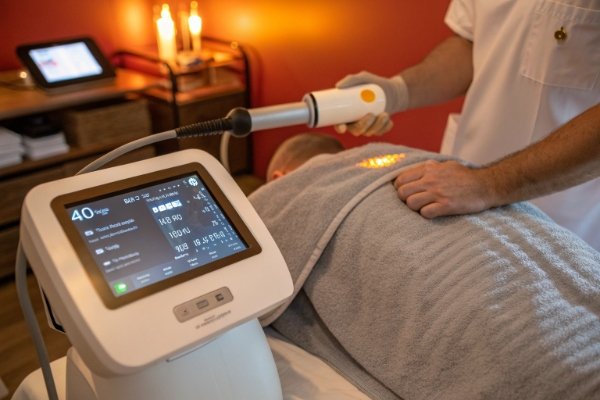
As the manufacturer, I design each shockwave therapy system 1 with multi-layer over-heat protection because temperature control safeguards both patient comfort and equipment longevity.
Yes—professional shockwave therapy machines include active over-heat protection features such as temperature sensors, automatic power reduction, and timed cool-down cycles. These systems prevent coil or compressor overheating during extended treatments and ensure consistent pulse output in busy clinic environments.
Different protection strategies apply to handpieces, consoles, and air compressors depending on energy type (extracorporeal shock wave therapy (ESWT) 2 can be pneumatic, electromagnetic, or piezoelectric).
What types of safety features are available to prevent overheating during long treatments?
Manufacturers integrate electronic and mechanical controls to manage thermal loads generated by repetitive shock pulses, drawing on thermal management solutions for medical electronics 3 and using temperature sensing for medical devices 4 to monitor critical components automatically.
Thermal protection mechanisms in modern ESWT units combine active cooling (fans or heat sinks), temperature-sensing shutdown logic, and auto-restart delays. Some systems reduce frequency or energy output when internal temperature approaches safe limits, while others pause operation until sensors return to nominal range.

Typical protection types
- Temperature sensors: Measure coil, compressor, or PCB heat levels; trigger shutdown around 80–90 °C.
- Smart fan control: Variable-speed fans increase airflow when sensors detect rising heat.
- Pulse-limit mode: The device limits pulse bursts (e.g., 6 000–8 000) before mandatory cooling.
- Auto cool-down: Post-session fans run for several minutes to normalize temperature.
- Thermal fuse / relay: Hardware backup that disconnects power under fault conditions.
Table 1 — Common protection mechanisms by component
| Subsystem | Control type | Trigger condition | Typical response |
|---|---|---|---|
| Handpiece coil | Thermistor / sensor | > 80 °C | Pause + fan boost |
| Compressor | Pressure + temp sensor | > 70 °C | Stop cycle + alarm |
| Power board | Thermal relay | > 85 °C | Shutdown until cool |
| Console CPU | Firmware monitor | Continuous | Reduce duty cycle |
| Housing fans | PWM controlled | Proportional | Increased airflow |
Many manufacturers use NTC temperature sensors 7 in coils, compressors, and power boards to detect rising heat accurately and respond before damage occurs.
As a final hardware layer, many designs incorporate dedicated thermal cutoff devices that permanently disconnect power in fault conditions, similar to over-temperature protection devices used in electronics 9.
These integrated features work together so clinicians can perform long or back-to-back sessions without risking thermal overload.
How should buyers test or request documentation for thermal protection features?
Buyers should verify that over-heat safeguards are documented, not merely mentioned in marketing copy. Real validation comes from technical reports and user manuals aligned with IEC 60601-1 general safety requirements 5 for medical electrical equipment.
Request IEC 60601-1 and IEC 60601-1-2 safety test data, plus manufacturer declarations describing over-temperature protection. During acceptance testing, run the machine at high frequency for ≥ 30 minutes and confirm automatic cooldown or warning behavior. Always review the manual’s “Protective Function” or “Maintenance” section for sensor thresholds and fan cycles.
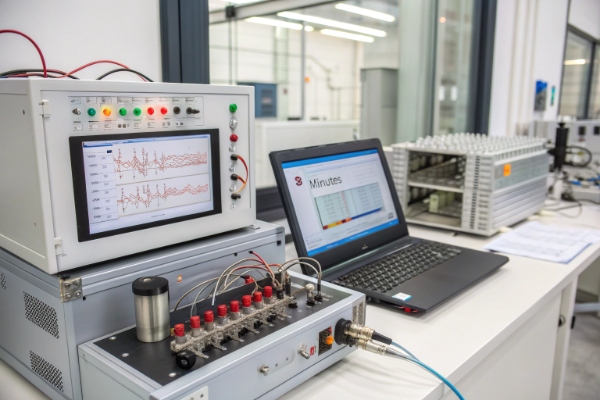
Buyer verification steps
- Ask for IEC test summary: Clause 11 of IEC 60601-1 covers abnormal operation and temperature limits.
- Observe runtime behavior: Continuous mode at maximum energy—check if fan speed changes or alerts appear.
- Inspect logs: Some digital consoles record temperature warnings.
- Review schematic: Ensure sensors appear on coil, compressor, and PSU circuits.
- Check warranty: Confirm overheating is excluded only for blocked-vent misuse, not design failure.
Table 2 — Documentation buyers should obtain
| Document | Standard / Source | Purpose |
|---|---|---|
| IEC 60601-1 safety test report | Certified test lab | Confirms safe surface temperature |
| Declaration of Conformity | Manufacturer | Lists applied standards |
| Technical datasheet | Product brochure | Notes self-protection cycles |
| User manual | Operation section | Shows cooling intervals |
| Service guide | Maintenance info | Fan and filter replacement steps |
These evaluations typically reference Clause 11 excessive temperature requirements in IEC 60601-1, as summarized in practical guidance on IEC 60601-1 temperatures 6.
A short, observed “stress test” in showroom conditions gives buyers immediate proof that the system can protect itself.
Why is over-heat protection important for heavy-use salon/clinic operations?
Clinics performing multiple back-to-back sessions need stable output and minimal downtime. Overheating reduces energy consistency, increases repair costs, and shortens component lifespan.
Thermal protection is crucial because ESWT generates high kinetic or electromagnetic loads—without active cooling, bearing grease dries, coils degrade, and calibration drifts. Automatic thermal control preserves reliability, extends service intervals, and prevents patient discomfort from inconsistent pulse intensity.
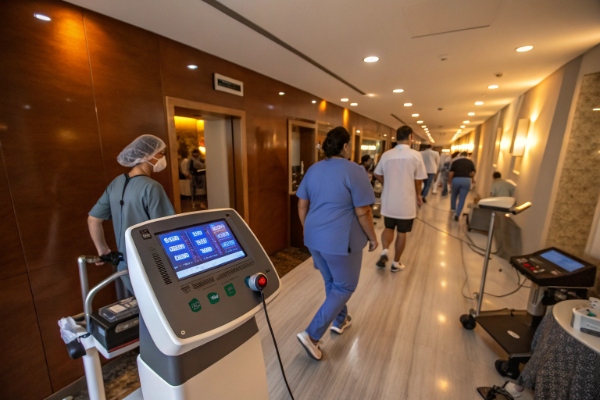
Effective medical equipment thermal management 8 ensures hot spots are controlled so components operate within safe temperature limits even in high-throughput clinics.
Operational benefits
- Safety: Prevents excessive surface temperature on handpieces.
- Consistency: Maintains stable energy per pulse across long sessions.
- Longevity: Protects coils, capacitors, and pneumatic valves.
- Uptime: Reduces emergency servicing due to thermal faults.
- Energy efficiency: Smart fans operate only as needed.
Table 3 — Cost impact of good vs poor thermal design
| Design quality | Average service interval | Typical downtime per year | Energy consistency |
|---|---|---|---|
| Advanced cooling + sensors | 24–30 months | < 2 % | ± 2 % |
| Basic fan only | 12–18 months | ~ 8 % | ± 6 % |
| No active protection | 6–12 months | > 15 % | ± 10 % |
In high-volume environments, robust cooling quickly pays for itself through reduced repairs and predictable throughput.
Are there differences in protection between entry-level and high-end machines?
Yes—higher-end models use multi-sensor feedback and smart fan systems, whereas budget units rely solely on passive airflow.
Entry-level machines may include only a simple fan or fixed pulse-limit, while advanced clinic systems monitor multiple thermal zones (coil, PCB, compressor) and integrate firmware logic for auto-cooldown and fault logging. The sophistication of over-heat protection often correlates with price, certification scope, and duty-cycle rating.
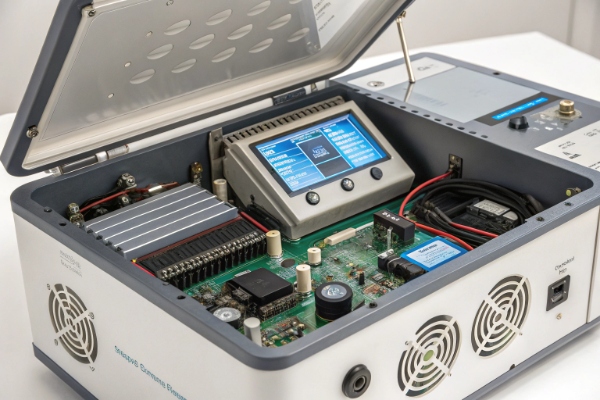
Comparative overview
| Feature | Entry-level unit | Mid-range clinic | High-end professional |
|---|---|---|---|
| Cooling type | Passive fan | Dual-fan / heat sink | Dynamic multi-zone |
| Sensors | None or 1 sensor | 2 sensors (coil + board) | 3–4 sensors with firmware logic |
| Shutdown logic | Manual rest | Automatic after N pulses | Auto cooldown + restart |
| Data logging | None | LED warning only | Full digital log |
| Typical use | Light duty / home | Standard clinic | Continuous multi-room |
| IEC 60601 test scope | Basic | Partial | Full certification |
For salon chains or physiotherapy centers operating all day, investing in a certified high-end system with proven medical equipment cooling solutions 10 reduces long-term maintenance and protects warranty eligibility.
Conclusion
Professional shockwave therapy machines incorporate multi-layer over-heat protection using sensors, smart fans, and automated cooldown logic. Buyers should demand IEC 60601 test evidence, observe real-time protection behavior, and match the device’s duty-cycle and cooling design to their workload. High-end systems cost more upfront but deliver safer, more reliable performance under heavy clinical use.
Footnotes
1. Product page showing professional extracorporeal shockwave therapy devices and key specifications. ↩︎
2. Clinical review explaining indications and mechanisms of extracorporeal shock wave therapy (ESWT). ↩︎
3. Article outlining active and passive thermal management methods for medical electronics. ↩︎
4. Overview of temperature sensing technologies and sensors for medical devices. ↩︎
5. IEC 60601-1 standard describing basic safety and essential performance for medical electrical equipment. ↩︎
6. Guide discussing IEC 60601-1 Clause 11 excessive temperature requirements and tests. ↩︎
7. NTC temperature sensor family commonly used for precise monitoring in medical devices. ↩︎
8. Application note on system-level thermal design for medical equipment and avoiding overheating failures. ↩︎
9. Manufacturer page describing thermal cutoff devices for reliable over-temperature protection. ↩︎
10. Supplier overview of cooling and airflow solutions for medical equipment enclosures. ↩︎

 English
  Español de México
  Deutsch
  Français
  العربية
  Русский