
We have seen too many excited clients open a shipment only to find a cracked screen on their new shockwave Shockwave therapy 1 device. It is a heartbreaking waste of time and money that disrupts sales cycles and damages reputation.
To prevent damage, request a heavy-duty aluminum flight case with reinforced steel corners and custom-molded high-density EVA foam inserts. Ensure the outer shipping carton is double-wall K=K grade cardboard with edge protectors, and mandate palletization with shock indicators for any shipment exceeding 30 kilograms.
Here is exactly how we secure these machines to survive the journey from Guangzhou to your warehouse.
Is an aluminum flight case better than a carton box for importing shockwave equipment?
Relying on standard cardboard boxes for heavy medical equipment often leads to crushed corners during transit. medical equipment 2 Our warehouse team avoids this risk entirely by prioritizing rigid structural protection.
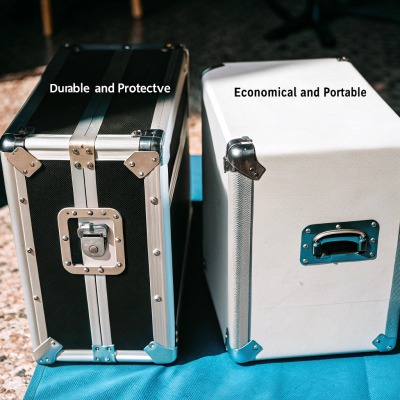
Yes, an aluminum flight case is significantly better because it offers superior impact resistance and reusability. Unlike carton boxes that lose structural integrity under humidity or stacking pressure, flight cases use rigid plywood panels and aluminum frames to protect the 20-50kg shockwave unit from puncture and crushing forces.
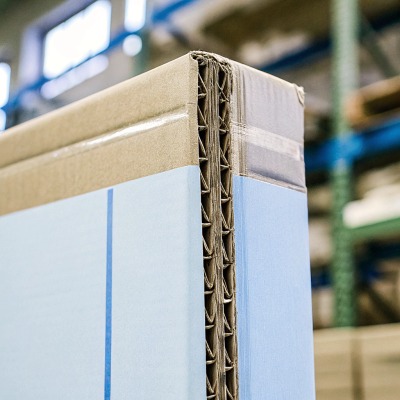
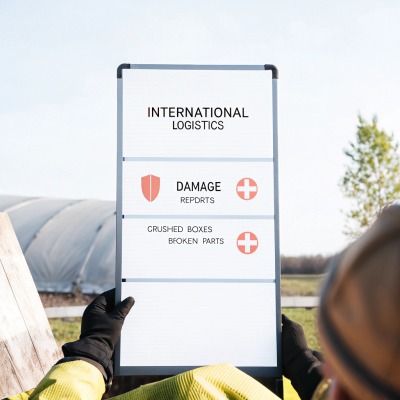
When we analyze the damage reports from international logistics, the vast majority of incidents occur when heavy devices are packed in standard corrugated fiberboard corrugated fiberboard 3. Shockwave therapy machines typically weigh between 20kg and 50kg. While a standard 5-ply cardboard box might hold this weight in a static warehouse environment, it often fails during the dynamic stresses of air or sea freight.
The Hidden Dangers of Humidity and Stacking
In our experience exporting to the US and Europe, sea shipments are particularly brutal on cardboard. The high humidity levels inside shipping containers can soften the paper fibers, reducing the box's vertical compression strength by up to 50% vertical compression strength 4. If your machine is at the bottom of a pallet stack, a softened box will collapse, crushing the device inside.
We utilize aluminum flight cases because they are impervious to humidity. aluminum flight cases 5 The structure usually consists of 9mm to 12mm fireproof plywood laminated with a hard ABS layer, framed by aluminum alloy profiles. This creates a rigid exoskeleton that absorbs impacts rather than transferring them to the machine.
Cost vs. Protection Analysis
While the flight case adds to the initial FOB cost, it dramatically reduces the "hidden costs" of returns and repairs. For a distributor selling to salons, the flight case also serves as a professional carrying case for the end-user, adding value to your product offering.
Table 1: Packaging Material Comparison for Shockwave Machines
| Feature | Standard Cardboard Box | Wooden Crate (Plywood) | Aluminum Flight Case |
|---|---|---|---|
| Moisture Resistance | Low (Absorbs water) | Medium (Can warp) | High (Impervious) |
| Stacking Strength | Low (Risk of crushing) | High | Very High |
| Shock Absorption | Minimal (Depends on insert) | Medium | Superior |
| Reusability | None (Single use) | Low (Hard to open/close) | High (End-user asset) |
| Professionalism | Low | Industrial/Rough | Premium/Medical |
For our clients, we always recommend upgrading to the flight case for any unit valued over $1,000. It transforms the packaging from a disposable wrapper into a durable asset.
How can I ensure the fragile handpieces and accessories are secured inside the package?
Loose projectiles inside a handpiece can destroy the internal mechanism if they rattle around. We learned early on that movement is the enemy of precision medical instruments.
You must require custom-cut EVA foam inserts that separate the handpiece from the main console. Specifically, demand a “floating” design where the applicator is housed in a dedicated, tight-fitting compartment that decouples it from the heavy generator unit, preventing internal collision damage during drops or vibrations.
The internal layout of the packaging is just as critical as the external shell. A common mistake we see in the industry is suppliers wrapping accessories in bubble wrap and stuffing them into empty spaces. This is a recipe for disaster. The shockwave handpiece is a precision instrument containing a heavy projectile and a delicate transmitter. If it is allowed to move, it becomes a hammer inside the box.
The "Floating" Foam Strategy
To secure the device, we use high-density EVA (Ethylene-Vinyl Acetate) foam rather than the cheaper, brittle Styrofoam (EPS). Ethylene-Vinyl Acetate 6 EVA has excellent elasticity and memory. We design the mold so that the main console—the blue and white unit with the touchscreen—sits snugly in the center.
Crucially, the handpiece must be placed in a separate, cut-out compartment. We ensure there is at least 2cm of solid foam between the handpiece compartment and the main console. This creates a "floating" effect where the vibration from an external impact is dampened by the foam before it reaches the applicator.
Protecting the Interface
For the device described—featuring a touchscreen with anatomical skeletal diagrams and a prominent blue button—screen protection is vital. We apply a static-cling film to the screen to prevent scratches from dust. However, to prevent pressure damage, the foam lid must have a "relief cut" or recess area directly above the screen and the button. This ensures that if the case is dropped flat on its face, the impact force is transferred to the bezel (the frame) of the machine, not the glass touchscreen or the protruding button.
Table 2: Accessory Security Checklist
| Component | Potential Hazard | Packaging Solution |
|---|---|---|
| Handpiece | Internal projectile rattling; impacting console. | Dedicated EVA foam slot; projectile removed or secured with a silicon cap. |
| Touchscreen | Scratching; pressure cracks. | Recessed foam lid (no contact); PE protective film. |
| Foot Pedal | Crushing other items due to weight. | Bottom-layer placement; separate cardboard divider box. |
| Gel Bottles | Leaking; damaging electronics. | Sealed in a zip-lock bag; placed in a separate compartment away from the console. |
By isolating each component, we ensure that the accessories do not damage the main unit, and the main unit does not crush the accessories.
What drop test reports should I demand from the manufacturer to verify packaging strength?
Assuming a package is strong just because it looks tough is a gamble. We validate every new packaging design with rigorous stress testing before shipping to ensure it meets international standards.
Demand an ISTA 1A or 2A series drop test report, which simulates free-fall drops, repetitive shocks, and vibration sequences. Additionally, request photos of the specific “corner, edge, and face” drop tests performed on your specific machine model to verify the foam inserts do not crack under impact.
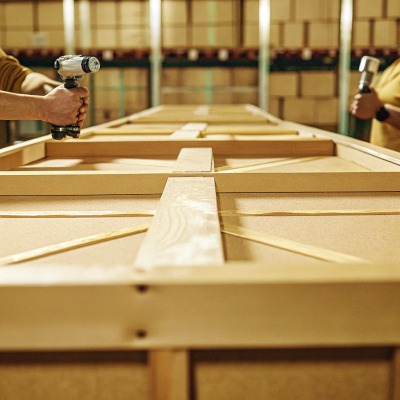
It is not enough for a supplier to say their packaging is "good." In international trade, "good" is subjective. We rely on data. When negotiating with your supplier, you should ask for proof that the packaging can withstand the rigors of the logistics chain, specifically the "last mile" delivery where packages are often handled manually and dropped.
Understanding ISTA Procedures
The International Safe Transit Association (ISTA) sets the standards. International Safe Transit Association 7 For a shockwave machine weighing between 20kg and 50kg, the most relevant test is the ISTA 1A or 2A. This involves dropping the packed box from a specific height (usually 61cm or 24 inches for this weight class) onto concrete.
The critical part of the test is the sequence:
- Corner Drop: The weakest point of any box.
- Edge Drop: Along the shortest, medium, and longest edges.
- Face Drop: Flat on the top, bottom, and all four sides.
If the supplier cannot provide a formal lab report, ask them to record a video performing this sequence in their factory. We often do this for clients to prove that the internal EVA foam does not crack and the machine still powers on after the abuse.
Vibration and Compression
Beyond drops, vibration is a silent killer. Ships and trucks vibrate at frequencies that can loosen internal connectors. A vibration test simulates this. If the machine arrives and the screen flickers or the blue button doesn't respond, it is often due to vibration loosening a cable. We use thread-locking fluid on internal screws, but the packaging must also absorb these frequencies.
Table 3: Essential Packaging Validation Tests
| Test Type | Simulation | Pass Criteria |
|---|---|---|
| Drop Test (ISTA 1A) | Manual handling drops (corner, edge, face). | No cosmetic damage; device powers on; foam intact. |
| Vibration Test | Truck/Ship resonance (1 hour duration). | No loose screws; no internal component disconnection. |
| Burst Strength | Stacking pressure in warehouse. | Outer carton does not buckle under top load. |
| Seal Integrity | High-altitude pressure change (Air Freight). | Air bubbles in cushioning do not burst; seals remain tight. |
Furthermore, we always recommend applying ShockWatch and TiltWatch labels to the outside of the crate. These change color if the package is dropped or tipped over. While they don't physically protect the box, they force the logistics handlers to be more careful, as they know they will be held accountable if the label turns red.
Can I customize the packaging design with my brand logo without compromising safety?
Generic brown boxes dilute your brand value before the customer even sees the machine. We help clients turn shipping containers into powerful marketing tools without sacrificing protection.
Yes, you can customize packaging safely by printing directly on the aluminum case surface or using adhesive vinyl wraps, rather than altering the structural integrity. We recommend laser engraving your logo on the flight case metal tags or silk-screening the lid, which maintains the protective shell while enhancing brand visibility.
Branding is essential for our customers who act as distributors. You want the salon owner to see your logo the moment the truck arrives. However, customization must never compromise the structural integrity of the package. We have developed several methods to achieve this balance.
Safe Branding Techniques
The most common and safe method is silk-screen printing. We can print your logo in white or your brand colors directly onto the black ABS surface of the flight case. This adds zero weight and does not weaken the panel.
Another premium option is laser engraving. We can attach a stainless steel plate to the handle area of the case and laser etch your company name and support number. This looks incredibly high-end and permanent.
The "Russian Doll" Protection Strategy
One risk of branding is theft. A box that looks expensive and medical is a target. To solve this, we recommend a "Russian Doll" approach. We place the fully branded, high-end aluminum flight case inside a plain, heavy-duty, double-wall (K=K) corrugated cardboard box.
- Outer Layer: Boring, plain cardboard with only necessary shipping labels (and ShockWatch stickers).
- Inner Layer: Your beautiful, branded flight case.
This strategy serves two purposes: it protects the expensive flight case from getting scratched or dirty during shipping, and it hides the nature of the valuable goods from prying eyes.
Table 4: Customization Options and Safety Impact
| Branding Method | Cost | Durability | Safety Impact | Recommended |
|---|---|---|---|---|
| Silk Screen on Case | Low ($5-$10) | Medium (Can scratch) | Neutral | Yes |
| Metal Plate Engraving | Medium ($10-$20) | High (Permanent) | Neutral | Yes |
| Full Vinyl Wrap | High ($30+) | Medium | Neutral | For Events Only |
| Cardboard Box Print | Low | Low (Gets dirty) | Negative (Attracts thieves) | No |
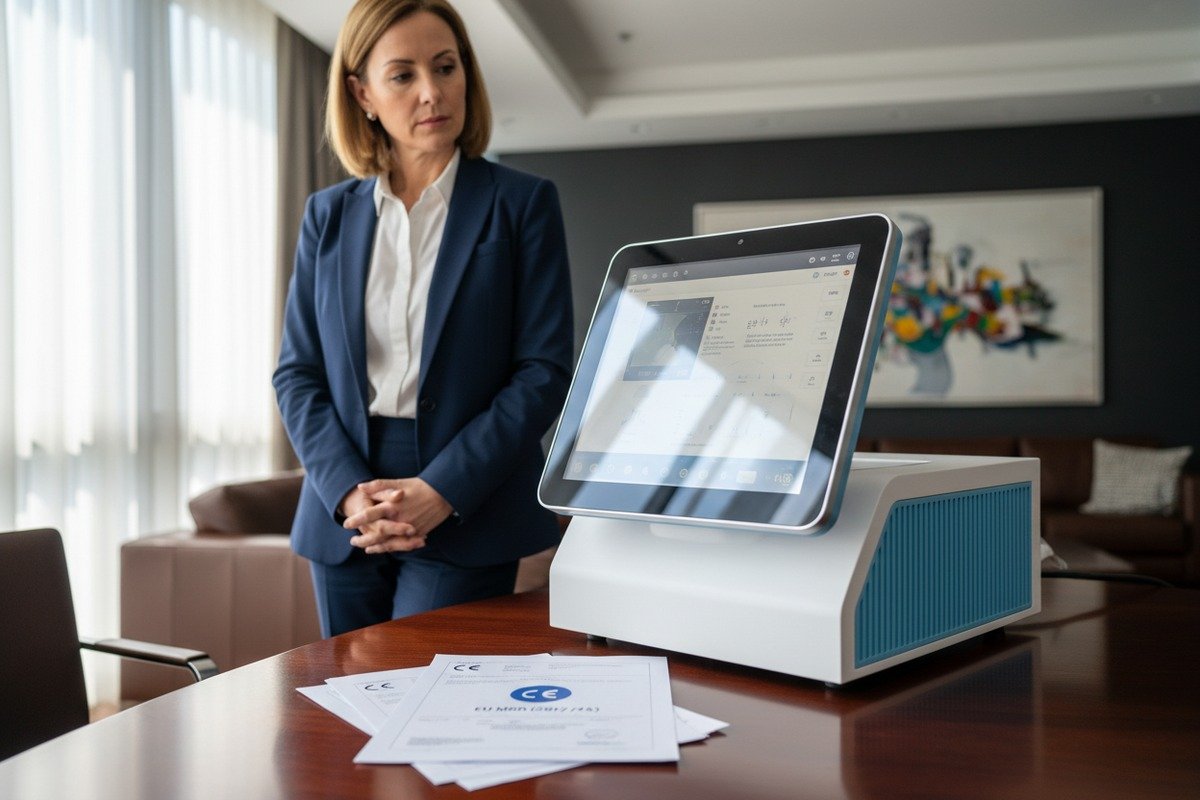
When we arrange the artwork, we also ensure compliance. Even with custom logos, we must leave space for mandatory markings like the WEEE symbol (crossed-out wheelie bin) WEEE symbol 8, CE marks, and "Fragile" icons. WEEE symbol 9 CE marks 10 These must be visible on the outermost layer to avoid customs delays.
Conclusion
Packaging is not just a box; it is an insurance policy for your investment. By demanding aluminum flight cases, internal EVA foam isolation, and verified drop tests, you significantly reduce the risk of receiving damaged goods. Prioritizing these specifications ensures your shockwave machines arrive in pristine condition, ready to perform.
Footnotes
1. General background on the medical technology being shipped. ↩︎
2. FDA guidance on regulatory standards for medical devices and their distribution. ↩︎
3. Authoritative industry association defining standards for corrugated packaging materials. ↩︎
4. Official ASTM standard test method for determining compressive resistance of shipping containers. ↩︎
5. Background on the design and protective capabilities of professional flight cases. ↩︎
6. Scientific data on the material properties and shock absorption of EVA foam. ↩︎
7. Official website of the organization establishing the packaging test standards mentioned. ↩︎
8. Official European Commission page regarding WEEE directive compliance and marking. ↩︎
9. UK government regulations regarding the marking and disposal of electronic equipment. ↩︎
10. European Commission guidelines on CE marking requirements for products sold in Europe. ↩︎
 English
 Español de México
 Deutsch
 Français
 العربية
 Русский
Join the Conversation
Have a question or insight to share? We read every comment — whether you're a distributor, salon owner, or just curious about the technology. Your real-world experience helps others make better decisions. Drop your thoughts below.