
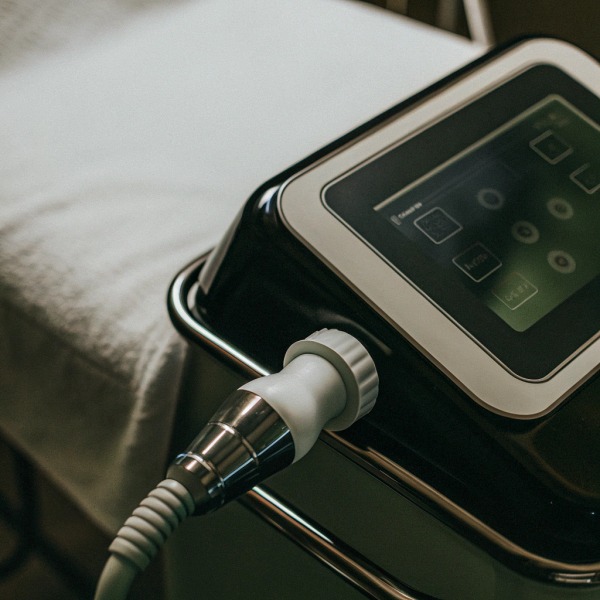
When we assemble our latest blue and white shockwave units in Guangzhou, we often hear new buyers worry about losing their deposit to a scam high fees associated with 1. You want security, but complex bank terms can feel overwhelming Letter of Credit 2.
For most shockwave therapy machine orders under $50,000, T/T (Telegraphic Transfer) is the preferred method due to its speed and lower costs. While a Letter of Credit (L/C) offers theoretical security, the high bank fees and strict documentation rules often make it impractical unless your transaction volume is significantly higher.
Let’s break down the trade-offs between wire transfers and bank guarantees so you can order your equipment with confidence.
Is a Letter of Credit truly safer than T/T for my initial shockwave therapy machine order?
We see many first-time importers assume that bank intervention automatically guarantees bank intervention automatically guarantees 3 they will receive the exact high-tech device they ordered. Unfortunately, this is a common misconception in international trade international trade 4.
A Letter of Credit protects your money only against non-shipment, not against quality issues. The bank releases payment once they receive documents that match the credit terms, meaning a supplier could theoretically ship a box of rocks and still get paid if the paperwork is flawless.
The Illusion of Total Security
Many buyers believe an L/C acts like an insurance policy for product quality quality issues 5. In our daily operations exporting to the US and Europe, we find that banks deal strictly with documents, not goods. The bank officer checks the Bill of Lading, the Commercial Invoice, and the Packing List. They do not visit our factory floor to verify that the skeletal diagram on the touchscreen works or that the handheld tool is painted the correct shade of blue and black.
If you rely solely on an L/C for safety, you might face the discrepancy trap 6 "discrepancy trap." If a single letter switching to a Letter of Credit 7 is wrong on the shipping documents, the bank may refuse payment or charge penalty fees. This delays the release of your cargo at the destination port.
Where T/T Actually Wins
With a standard T/T arrangement, you typically pay a 30% deposit and the remaining 70% before shipment. This sounds risky, but it gives you leverage. You can hire a third-party inspection company to visit our facility before you pay the final balance.
Real security comes from verification, not just payment terms. When you send an inspector to test the gray cables and verify the digital interface, you ensure the machine works before it leaves China. An L/C does not offer this flexibility because the payment trigger is the shipment itself, not the inspection result.
Comparing the Risks
Below is how we view the risk profile from the factory floor perspective versus the buyer's perspective.
| Risk Factor | T/T (Telegraphic Telegraphic Transfer 8 Transfer) | Letter of Credit (L/C) |
|---|---|---|
| Non-Shipment | High risk (if supplier is a scammer). | Low risk (bank holds funds). |
| Quality Issues | Mitigated by pre-shipment inspection. | High risk (bank pays on docs). |
| Delay in Release | Low (funds clear in 1-3 days). | High (document review takes weeks). |
| Flexibility | High (easy to amend terms). | Low (amendments cost money). |
For a standard order of our shockwave machines, the flexibility of T/T combined with a physical inspection is often safer than relying on a banker who has never seen a beauty machine.
Do the higher bank fees of an L/C justify the security when importing beauty equipment?
Our finance department frequently calculates the landed cost for clients, and we often see bank charges eat into the profit margins of distributors. This is especially painful for mid-sized orders.
The high fees associated with a Letter of Credit, which often range from 1% to 2% of the total invoice value plus fixed charges, rarely justify the security for orders under $50,000. These costs directly reduce your potential profit margin on resale without guaranteeing product quality.
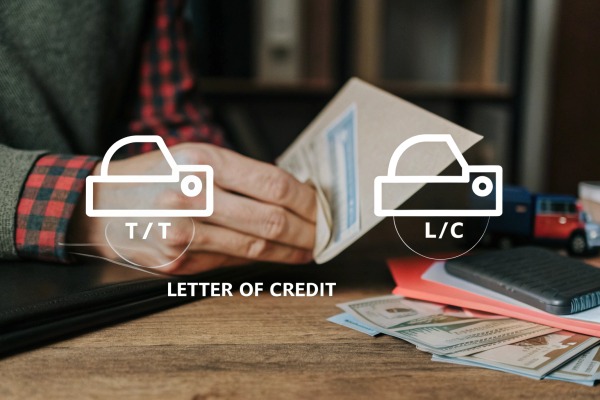
The Hidden Costs of L/C
When you open an L/C, your bank charges an opening fee. Then, our bank in China charges an advising fee. If there is a discrepancy in the documents—which happens in about 50% of first-time L/C transactions—there is a discrepancy fee.
For a sleek, rectangular shockwave device costing $3,000, an order of ten units totals $30,000. L/C fees could easily run up to $600 or $800. A T/T wire transfer usually costs a flat fee of around $40 regardless of the amount.
Where That Money Should Go Instead
In the competitive beauty equipment market, margins matter. Instead of paying $600 to a bank for administrative shuffling, we recommend investing that money in quality assurance.
For $300, you can hire a professional third-party inspection agency. They will come to our factory in Guangzhou. They will turn on the machine. They will touch the white front panel. They will verify that the digital touchscreen display accurately shows the skeletal diagram. This provides tangible security.
Cost-Benefit Analysis Table
We have broken down the typical costs for a hypothetical $30,000 order of beauty equipment.
| Cost Item | T/T Transfer | Letter of Credit (At Sight) |
|---|---|---|
| Setup/Opening Fee | $0 | $150 – $300 |
| Transaction Fee | $30 – $50 (Flat rate) | 0.75% – 1.5% of value |
| Discrepancy Fee | $0 | $75 – $100 (per error) |
| Courier/Postage | $0 (Digital copies) | $50 – $100 |
| Total Estimated Cost | ~$40 | ~$500 – $800 |
| Time to Process | 1-3 Days | 10-21 Days |
For most of our distributors, saving that $700 allows them to buy more marketing materials or cover local shipping costs in the US. The math simply favors T/T for these transaction sizes.
At what specific order value should I switch from T/T wire transfer to a Letter of Credit?
We typically see a shift in payment preferences when our distributors grow from small purchases to filling entire containers. The financial risk simply becomes too large to manage with a direct wire transfer.
You should generally consider switching to a Letter of Credit only when your single order value exceeds $50,000 to $100,000. Below this threshold, the administrative burden and bank costs outweigh the benefits, while larger amounts justify the bank’s role as a neutral guarantor.

The $50,000 Threshold
Why do we suggest $50,000 as the tipping point? It comes down to risk tolerance and cash flow.
If you are buying five of our blue and white shockwave units for a total of $15,000, sending a 30% deposit ($4,500) via T/T is a manageable risk for most businesses. If we were to disappear (which we won't), the loss is painful but not bankrupting.
However, if you are ordering 200 units for a nationwide chain of clinics, the order value might hit $300,000. A 30% deposit is now $90,000. That is a significant amount of cash to have floating in the ether. In this scenario, paying the extra 1% for an L/C is smart insurance. It ensures we don't get the full payment until the goods are verified as shipped on a specific vessel.
The Vendor's Cash Flow Perspective
From our side, T/T is always preferred because it aids cash flow. We use the deposit to buy the deep blue casing materials and the high-tech touchscreens.
When you move to L/C, we have to finance the production ourselves. We don't see a penny until the goods leave China. This is why we, and many other manufacturers, might raise the unit price slightly for L/C orders to cover our own financing costs.
Order Volume vs. Payment Strategy
Here is a guide on how we suggest structuring payments based on your growth stage.
| Order Value | Recommended Method | Why? |
|---|---|---|
| Under $5,000 | PayPal / T/T | Speed is key. L/C is impossible here. |
| $5,000 – $50,000 | T/T (30% deposit) | Standard industry practice. Low fees. |
| $50,000 – $100,000 | T/T or L/C | A "grey zone." Depends on trust level. |
| Over $100,000 | L/C (At Sight) | Risk is high enough to justify bank fees. |
If you are just starting with a trial order of two machines, stick to T/T. It keeps the process simple and lets us ship your goods faster.
Will Chinese manufacturers accept L/C payments for custom OEM beauty machine projects?
When we collaborate on a new design, such as adding a specific logo to the handheld tool or modifying the software interface, our upfront upfront cash to purchase raw materials 9 costs skyrocket. This changes how we negotiate payment terms.
Most Chinese manufacturers, including us, are reluctant to accept 100% L/C payments for custom OEM projects because we need upfront cash to purchase raw materials. A hybrid approach, combining a T/T deposit with an L/C for the balance, is the standard compromise for custom orders.
The Reality of OEM Manufacturing
Customization requires capital. If you want us to change the machine body from our standard deep blue to a custom silver, or if you need the software labels translated into Spanish, we have to spend money before production begins.
We need to pay our mold suppliers and software engineers. If you pay via 100% L/C at sight, we receive zero funds until the machine is finished and shipped. If you cancel the order halfway through, we are left with custom inventory that we cannot sell to anyone else because it has your brand on it.
The Hybrid Solution
To balance your need for security with our need for working capital working capital 10, we often propose a "Deposit + L/C" model.
- 30% Deposit via T/T: This secures your commitment. We use this to buy the specific screens and cables required for your custom order.
- 70% Balance via L/C: This protects you. You open an L/C for the remaining balance. We only get this money after we ship the custom goods.
Negotiation Tips for OEM Orders
If you are pushing for an L/C on a custom project, be prepared for resistance. Here is how to make the deal smoother:
- Offer a higher deposit: If you offer 40% T/T upfront, we are more likely to accept the balance via L/C.
- Split the fees: Offer to cover the bank advising fees on our side.
- Standardize where possible: If the customization is only on the packaging and not the machine body, we might be more flexible.
When the product features a unique design—like that specific white front panel with your logo—trust goes both ways. You trust us to build it; we trust you to pay for it. The hybrid model bridges that gap effectively.
Conclusion
Choosing between T/T and L/C depends on your order size and risk appetite. For most initial shockwave therapy machine orders under $50,000, T/T combined with third-party inspection offers the best balance of speed, cost, and security. Save the Letter of Credit for when your volume grows significantly.
Footnotes
1. Explains the costs and fees typically involved in Letter of Credit transactions. ↩︎
2. Provides a foundational definition of the complex financial instrument mentioned in the article. ↩︎
3. Legal definition and explanation of bank obligations and limitations in credit transactions. ↩︎
4. Official US government guidance on standard international payment methods and their associated risks. ↩︎
5. The global standard for quality management systems relevant to manufacturing and product consistency. ↩︎
6. The ICC sets the global rules for documentary credits and handles document discrepancies. ↩︎
7. US government guide advising on appropriate payment methods for different transaction sizes. ↩︎
8. Explains the technical background and process of the T/T payment method. ↩︎
9. Explains why exporters prefer cash in advance to fund production and materials. ↩︎
10. Official resource explaining the importance of working capital for manufacturers in export scenarios. ↩︎

 English
 Español de México
 Deutsch
 Français
 العربية
 Русский
