
When we coordinate large shipments from our Guangzhou facility import controls and regulations 1 to distribution centers in the United States, we see how currency Currency Adjustment Factor (CAF) 2 shifts can erode profit margins overnight. You calculate your landed cost based on today’s rate methods of payment 3, but by the time the container arrives, the market has moved against you.
To mitigate exchange rate risk, you should utilize financial instruments like forward contracts to lock in rates or negotiate invoices in your local currency (USD) to transfer the risk. Additionally, maintaining a multi-currency bank account allows you to time your currency conversions strategically rather than being forced to exchange funds at unfavorable spot rates during payment.
Let’s explore the specific strategies that help savvy importers foreign exchange risk 4 protect their bottom line during these transactions.
What are the best contract clauses to protect my business against currency volatility?
We often review supply agreements where a simple delay in production causes significant pricing disputes due to currency movement. If your contract lacks flexibility, you might end up paying a premium that was not in your original budget.
The most effective contract clauses include a currency adjustment factor that triggers price changes only if rates fluctuate beyond a set threshold, such as 3% or 5%. Fixed-rate clauses for a specific duration, typically 6 to 12 months, also provide stability by guaranteeing a set price regardless of market volatility.
Understanding Currency Adjustment Clauses
When you draft a purchase agreement for high-value medical devices medical device standards 5, clarity is your best defense. A static price on a quote valid for 30 days is standard. However, manufacturing and shipping shockwave therapy machines can take several weeks. During this period, the exchange rate between the USD and CNY can swing wildly. global currency markets 6
A Currency Adjustment Factor (CAF) is a practical tool. This clause states that the base price remains valid as long as the exchange rate stays within a "neutral band." If the rate moves outside this band, the price adjusts accordingly. This prevents constant renegotiation while protecting both parties from extreme losses. Incoterms 2020 rules 7
The "Neutral Band" Strategy
We recommend setting a neutral band of +/- 3% around the spot rate at the time of signing. If the currency fluctuates within this 3% range, neither party takes action. This absorbs the normal daily noise of the forex market.
If the rate shifts by 5%, for example, the clause activates. You and the supplier share the impact of the 2% excess, or the price adjusts strictly by the mathematical difference. This mechanism creates a fair environment. It shows your supplier that you understand their cost structure while protecting your own margins.
Fixed-Price Periods for Recurring Orders
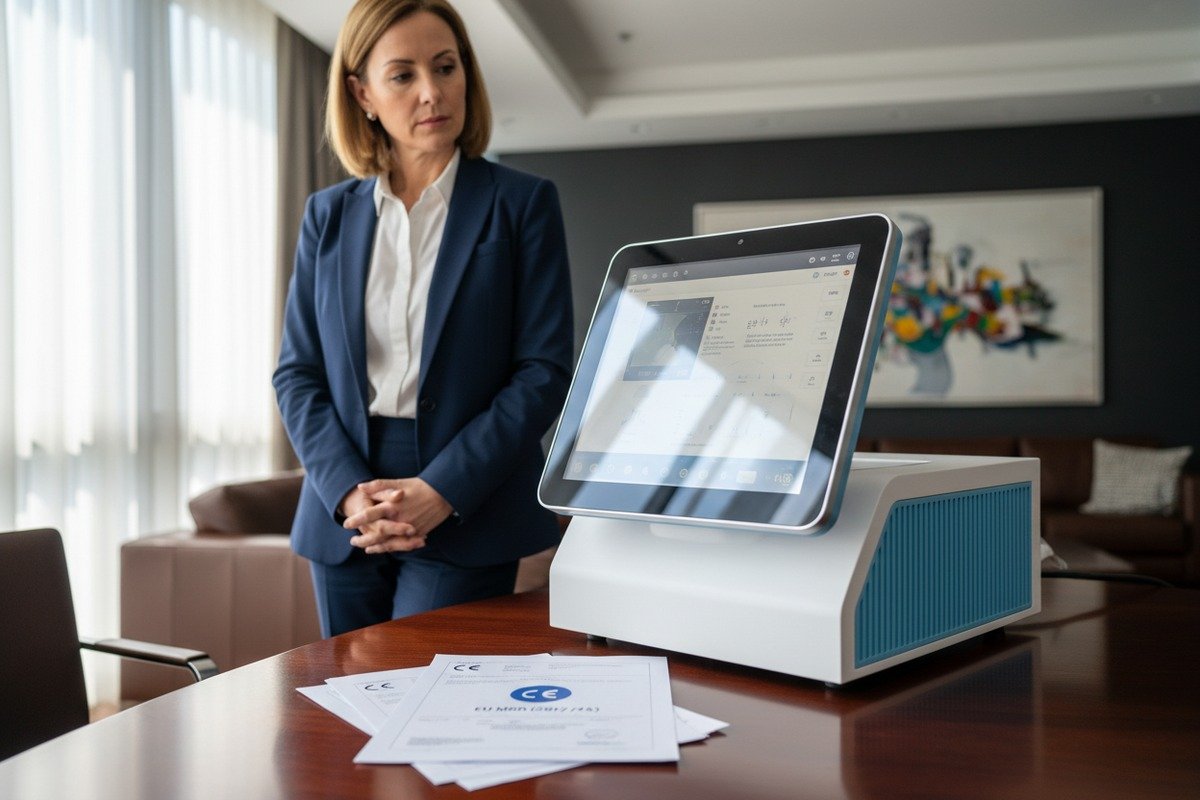
For distributors who order regularly, a fixed-price clause is powerful. You agree on a price for 6 or 12 months. This locks in your cost for the sleek, blue and white shockwave units you stock.
However, suppliers will often build a "risk premium" into this fixed price. They might add 2-4% to the current price to cover their own potential losses. You must calculate if this premium is cheaper than the potential risk of an unhedged open market.
Comparison of Contract Clauses
Here is a breakdown of common clauses we see in international trade agreements for medical equipment.
| Clause Type | How It Works | Benefit for Importer | Supplier Risk Acceptance |
|---|---|---|---|
| Fixed Price (6-12 Months) | Price is locked for a set period regardless of FX rates. | 100% cost certainty for inventory planning. | High. Supplier often adds a buffer to the price. |
| Currency Adjustment Factor (CAF) | Price changes only if FX rate moves beyond a set % (e.g., +/- 3%). | Protects against massive market crashes. | Medium. Risk is shared only in extreme cases. |
| Spot Rate Pricing | Invoice value is recalculated based on the rate on the day of payment. | You benefit if the USD strengthens significantly. | Low. Supplier passes all risk to you. |
| Split Currency Clause | 50% paid in USD, 50% in CNY (or pegged equivalent). | Diversifies risk across two currencies. | Medium. Requires multi-currency accounts. |
Should I pay in USD or CNY to minimize exchange rate losses on large orders?
Our finance team processes payments daily, and we notice that American clients who strictly pay in USD often face higher base unit prices without realizing it. Suppliers essentially act as their own bank, hedging the risk and charging you for the service.
Paying in CNY (Chinese Yuan) can minimize exchange rate losses because it allows you to negotiate a lower “local” price without the supplier adding a hidden risk buffer. However, paying in USD is simpler administratively and shifts the immediate conversion risk to the supplier, though often at the cost of a slightly higher product price.

The Hidden Cost of USD Invoicing
When you ask for a quote in USD, the supplier takes on the risk. If the US dollar weakens against the Chinese Yuan between the quote date and the payment date, the supplier receives fewer Yuan. To protect against this, most manufacturers add a buffer to the exchange rate they use.
If the market rate is 7.10 CNY/USD, a supplier might calculate your price using 6.90 CNY/USD. This "cushion" ensures they don't lose money. However, this means you are effectively paying a hidden fee of 2-3% on every blue and white shockwave machine you import. On a $50,000 order, that is a $1,500 premium just for the convenience of paying in dollars.
The Case for Paying in CNY
Global trade platforms now make it easier to pay directly in CNY (often referred to as CNH for offshore transactions). By asking for a quote in CNY, you strip away the supplier's risk buffer. You get the same price a local distributor would get.
You then have control over when to buy the CNY. You can watch the market and convert your USD to CNY when the rate is favorable watch the market 8, holding the funds in a digital wallet until the payment due date. This puts the power back in your hands.
Operational Complexity
Paying in CNY does require a setup change. You need a payment provider that supports CNH transfers. Traditional banks often charge high fees for these conversions, so using specialized FX brokers is usually smarter.
Furthermore, you must ensure your supplier can accept offshore Yuan. Most established exporters of medical aesthetics equipment have multi-currency accounts and welcome this method because it simplifies their own accounting.
Comparing Payment Currencies
Deciding between the two currencies depends on your internal financial capabilities and risk appetite.
| Feature | Paying in USD | Paying in CNY (CNH) |
|---|---|---|
| Base Product Price | Higher (includes supplier's risk buffer). | Lower (true market price). |
| Conversion Risk | Borne by the Supplier. | Borne by the Importer. |
| Administrative Effort | Low (standard wire transfer). | Medium (requires FX account/broker). |
| Transparency | Low (hidden exchange rate padding). | High (you see the exact rate). |
| Best For | Smaller, infrequent orders. | Large, recurring container shipments. |
How can forward contracts help me lock in the cost of my equipment inventory?
We see purchase orders placed months before the final balance is due, especially for custom orders requiring specific skeletal diagram interfaces or branded casing. This gap creates uncertainty that can ruin your projected ROI if the market moves unexpectedly.
Forward contracts allow you to lock in a specific exchange rate today for a payment that is due in the future, eliminating uncertainty regardless of market volatility. This financial tool ensures that the cost of your inventory remains fixed, allowing you to price your products accurately and protect your profit margins from adverse currency swings.

Mechanics of a Forward Contract
A forward contract is a "buy now, pay later" arrangement for currency. forward contract 9 Suppose you order 20 units of our shockwave therapy machines. The total value is $100,000. You pay a 30% deposit now and the remaining 70% ($70,000) is due in 60 days upon shipment.
In those 60 days, the exchange rate could fluctuate. If the dollar weakens, that $70,000 might effectively cost you more in real terms if you are converting from other holdings or if your sales are in a different currency. A forward contract lets you agree with a specialized FX provider to buy the necessary currency 60 days from now at a rate fixed today.
Certainty vs. Opportunity
The main benefit of a forward contract is budget certainty. You know exactly how much the remaining balance will cost. You can set the wholesale price for your clinics and salons without worrying that your margin will vanish before the goods arrive.
The downside is opportunity cost. If the exchange rate moves in your favor (e.g., the dollar gets stronger), you are still obligated to exchange at the locked-in rate. You cannot benefit from the positive market move. However, in B2B importing, stability is usually more valuable than gambling for a slightly better rate.
Example Scenario: The High-Tech Handheld Tool
Consider the handheld tool attached to our device. It has complex internal components. Supply chain delays for these parts can push production back by two weeks.
If you are unhedged, that two-week delay extends your risk exposure. With a flexible forward contract (often called an "open window" forward), you can draw down the funds anytime within a specific window (e.g., between day 50 and day 70). This matches the reality of logistics where shipping dates can slide.
Forward Contract Decision Matrix
| Order Scenario | Recommended Strategy | Reasoning |
|---|---|---|
| Standard Stock Order (Ships in 1 week) | Spot Payment | Timeframe is too short for significant volatility. |
| Custom OEM Order (Ships in 3 months) | Fixed Date Forward | Long lead time creates high risk; lock it in. |
| Large Seasonal Stocking (Multiple shipments) | Window Forward | Flexibility needed for staggered shipping dates. |
Can I negotiate with suppliers to share the burden of significant exchange rate shifts?
Building long-term relationships with partners like us allows for open conversations about financial pressures. We value consistent volume over a single high-margin transaction, which opens the door for creative solutions when currency markets become volatile.
You can negotiate risk-sharing agreements where both parties split the financial impact if the exchange rate fluctuates beyond a pre-agreed percentage. Suppliers may also agree to offer non-monetary compensation, such as free spare parts or extended warranties, to offset your losses from unfavorable exchange rates without lowering the invoice price.

The "Split the Difference" Approach
Negotiation is not just about beating down the price. It is about sustainability. If the exchange rate moves drastically and hurts your ability to sell the product profitably in the US, it eventually hurts the supplier too.
You can propose a clause where, if the exchange rate shifts unfavorably by more than 5%, the supplier agrees to discount the invoice by 2.5%. This essentially splits the pain 50/50. This is fair because it acknowledges that currency shifts are outside of everyone's control.
Value-Added Offsets
Sometimes, suppliers have hard limits on price reductions due to raw material costs. However, we often have more flexibility with physical goods. If the exchange rate causes your landed cost to rise by $1,000, ask the supplier to provide equivalent value in other ways.
For our shockwave machines, this could mean including extra replacement bullets for the handheld tool, providing additional gray connecting cables, or extending the warranty on the touchscreen display from one year to two years.
Leveraging Future Volume
Suppliers are more likely to share the burden if they see a future with you. share the burden 10 When negotiating these terms, reference your annual purchasing volume.
"We plan to import 50 units this year. To maintain this volume, we need price stability." This framing moves the conversation from a transactional dispute to a strategic partnership. It aligns your success with theirs.
Negotiation Checklist for Currency Risk
When you approach your supplier about this, be prepared with data.
- Track the Rate: Show a chart of how the rate has moved since your last order.
- Define the Trigger: Be clear about when the sharing starts (e.g., "If rate drops below 6.8").
- Offer Alternatives: If they say no to a discount, immediately suggest the spare parts offset.
- Document It: Ensure this is written in the Proforma Invoice (PI) terms, not just a WhatsApp message.
Conclusion
Mitigating exchange rate risk requires a mix of financial tools and smart negotiation. Whether you choose to lock in forward contracts, pay in CNY to avoid hidden buffers, or negotiate risk-sharing clauses for your sleek medical inventory, the goal is predictability. By taking control of these variables, you ensure that your margins remain healthy, allowing you to focus on distributing high-quality shockwave therapy machines rather than watching the forex markets.
Footnotes
1. UK government guidance on import controls and financial regulations for businesses. ↩︎
2. Standard definition of the specific logistics pricing mechanism mentioned. ↩︎
3. Official US government resource on international payment methods and risk mitigation. ↩︎
4. General background on the concept of foreign exchange risk in international business. ↩︎
5. International standards for medical equipment quality and safety from the WHO. ↩︎
6. Real-time reporting on current global currency market trends and volatility. ↩︎
7. Global standard for international trade terms and risk allocation in contracts. ↩︎
8. Major financial news outlet for monitoring real-time currency markets. ↩︎
9. Official US government guide on using forward contracts to manage risk. ↩︎
10. Authoritative advice on supplier negotiation strategies from Harvard Law School. ↩︎


 English
 Español de México
 Deutsch
 Français
 العربية
 Русский
Join the Conversation
Have a question or insight to share? We read every comment — whether you're a distributor, salon owner, or just curious about the technology. Your real-world experience helps others make better decisions. Drop your thoughts below.