

When our production line runs at full capacity, we see firsthand how clinic owners panic when a handpiece fails mid-treatment. shockwave therapy machine 1 The downtime costs money. Patients reschedule. Frustration builds. Yet many buyers struggle to get clear answers from suppliers about part availability and delivery timelines.
To inquire about shockwave therapy machine spare parts and shipping speed, provide your exact machine model, serial number, and specific part numbers. Request the supplier’s catalog, confirm lead times, compare air express versus sea freight options, and verify door-to-door delivery timelines before placing your order.
This guide walks you through every step of the inquiry process. You will learn what technical details to share, how to confirm shipping guarantees, what quality evidence to request, and how to communicate private-label packaging 2 needs. Let’s dive in.
What technical specifications should I provide to get an accurate quote for shockwave therapy machine spare parts?
Our engineering team receives dozens of incomplete inquiries every week. Missing details cause back-and-forth emails. This wastes your time and delays your order. The solution is simple: prepare the right information before you reach out.
To get an accurate quote, provide the machine brand, model name, serial number, specific part numbers from your manual, quantity needed, and clear photos of damaged components. This information ensures the supplier identifies compatible parts immediately and avoids costly mistakes.
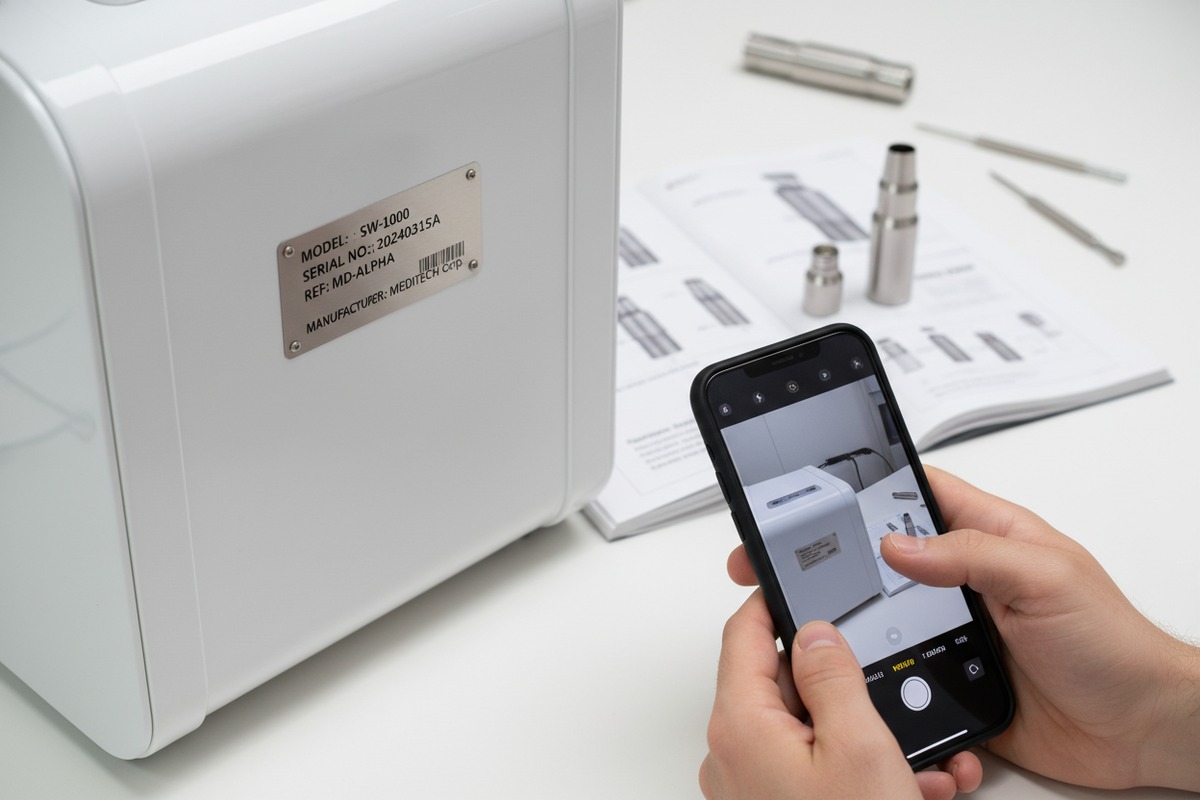
Start With Your Machine Identity
Every shockwave therapy device has unique identifiers. These include the brand name, model designation, and serial number 3. For example, a Zimmer Enpulse differs significantly from a Storz Masterpuls. Internal components are not interchangeable.
Locate your serial number on the back panel or inside the battery compartment. Some machines display it on the main screen under "Settings" or "Device Info." Write this down before contacting any supplier.
List the Exact Parts You Need
Spare parts fall into two categories: consumables and durable components. Consumables need frequent replacement. Durable parts last longer but eventually wear out.
| Category | Common Parts | Replacement Frequency |
|---|---|---|
| Consumables | O-rings, seals, air filters, projectiles, rubber caps | Every 3-6 months |
| Semi-Durable | Applicator heads 4 (6mm, 15mm, 25mm), transmitters, sponge covers | Every 6-12 months |
| Durable | Handpieces, display screens, cables, foot switches, fuses | Every 2-5 years |
If your manual lists part numbers, use them. For instance, SW-A15 typically indicates a 15mm applicator head. Generic descriptions like "the small tip" create confusion.
Provide Visual Evidence
Photos eliminate guesswork. Take clear images of damaged parts from multiple angles. Include a ruler or coin for scale. Show any visible cracks, wear marks, or discoloration.
Our quality control team often identifies problems faster through images than through written descriptions. A photo of a worn O-ring tells us the exact size and material needed within seconds.
Sample Inquiry Template
Here is a format that works:
Subject: Spare Parts Inquiry – [Your Machine Model]
Dear [Supplier Name],
I need replacement parts for my [Brand] [Model], serial number [XXXXX].
Parts required:
- 2x Applicator heads (15mm) – Part #SW-A15
- 10x O-rings – Part #OR-200
- 1x Air filter cartridge – Part #AF-100
Please provide pricing, availability, and estimated shipping time to [Your Country].
Attached: Photos of damaged components.
Best regards,
[Your Name]
This approach saves everyone time and gets you accurate quotes faster.
How can I confirm the guaranteed shipping speed and door-to-door delivery timeline for my order?
In our export operations, we have seen urgent orders miss delivery windows because buyers assumed shipping terms without confirming them. A handpiece sitting in customs for two weeks defeats the purpose of air shipping. Clear confirmation upfront prevents this nightmare.
Confirm shipping speed by requesting the carrier name, tracking capability, transit time guarantee, and customs clearance support. Ask specifically about door-to-door delivery timelines, including pickup, transit, customs processing, and final delivery to your clinic address.

Understand Your Shipping Options
Different shipping methods serve different needs. Your choice depends on urgency, budget, and order size.
| Shipping Method | Transit Time | Best For | Cost Level |
|---|---|---|---|
| DHL/FedEx/UPS Air Express 5 | 3-7 days | Urgent single parts, small quantities | High |
| Air Freight (Standard) | 7-14 days | Medium orders, moderate urgency | Medium-High |
| Sea Freight (LCL) | 4-6 weeks | Bulk consumables, planned maintenance | Low |
| Sea Freight (FCL) | 4-8 weeks | Large inventory replenishment | Lowest |
For a failed handpiece causing clinic downtime, air express makes sense despite the cost. For routine O-ring replenishment, sea freight saves money.
Ask the Right Questions
When you contact a supplier, request specific information:
- Which carriers do you use for air shipments?
- What is the transit time to my city?
- Do you handle customs documentation?
- Is the delivery door-to-door or to port only?
- What tracking system do you use?
- What happens if customs delays the shipment?
Reputable suppliers provide clear answers. Vague responses signal potential problems.
Door-to-Door vs. Port Delivery
Door-to-door service means the supplier handles everything. door-to-door delivery 6 They arrange pickup from their warehouse, manage export customs, handle import customs in your country, and deliver directly to your address. You receive your parts without visiting any freight office.
Port delivery means your responsibility begins when the shipment arrives at your local port or airport. You must arrange customs clearance 7 and final delivery yourself. This adds complexity and potential delays.
When we quote shipping for our US and European clients, we default to door-to-door service. This eliminates surprises and ensures predictable delivery dates.
Get Written Confirmation
Before paying, request written confirmation of:
- Exact shipping method and carrier
- Estimated dispatch date
- Estimated arrival date
- Tracking number delivery timeline
- Contact information for logistics support
Save this confirmation. It becomes your reference if issues arise.
Plan for Customs Variables
International shipments pass through customs. Processing time varies by country and current workload. Typical ranges:
- United States: 1-3 days
- Canada: 1-4 days
- European Union: 1-5 days
Medical device parts may require additional documentation. Ask your supplier if they provide CE certificates, FDA registration numbers, or commercial invoices that speed customs clearance.
What quality control evidence should I request to ensure my replacement parts don't fail in the field?
We have rebuilt our quality control system three times based on client feedback. Buyers who received faulty parts taught us what documentation matters most. Quality failures damage both your reputation and your patients' trust.
Request batch testing reports, material certifications, photos of actual parts before shipment, warranty terms, and references from existing buyers. Quality suppliers provide this evidence willingly because it demonstrates their manufacturing standards and builds long-term trust.

Distinguish OEM from Generic Parts
The spare parts market includes three tiers:
| Part Type | Source | Price Range | Quality Risk |
|---|---|---|---|
| OEM Original | Machine manufacturer | Highest ($695-$1,295 for handpieces) | Lowest |
| Authorized Aftermarket | Licensed third-party manufacturers | Medium | Low-Medium |
| Generic Compatible | Unbranded factories | Lowest ($25-$50) | Higher |
OEM parts from Storz or Zimmer carry premium prices but guarantee compatibility. Generic parts from platforms like AliExpress cost less but may void your machine warranty or fail prematurely.
Request Testing Documentation
Quality suppliers test parts before shipment. Ask for:
Functional Test Reports: Did the applicator head produce the correct pressure output? Did the transmitter achieve the specified frequency range?
Material Certificates: What grade of rubber do the O-rings use? Is the metal in the projectiles medical-grade stainless steel?
Dimensional Verification: Do the parts match the original specifications within acceptable tolerances?
Our factory maintains testing records for every production batch. Clients who request these documents receive them within 24 hours.
Inspect Before You Pay
Reputable suppliers offer pre-shipment inspection options. You can request:
- Photos of packed parts with your order number visible
- Video of functional testing
- Third-party inspection by companies like SGS or Bureau Veritas
- Your own representative visiting the factory
For high-value items like handpieces, the inspection cost is worthwhile. For consumables like O-rings, photos usually suffice.
Understand Warranty Terms
Warranty coverage varies widely. Clarify these points:
- How long does the warranty last?
- What failures does it cover?
- Who pays return shipping for defective parts?
- How quickly will replacements ship?
Some distributors offer 90-day warranties on rebuilt handpieces. Others provide 12-month coverage on new components. Get the terms in writing before ordering.
Check Supplier Track Record
Ask for references from buyers in your country. A supplier serving US clinics successfully for five years presents lower risk than one with no verifiable history.
Look for reviews on platforms like Alibaba. Check if the supplier holds relevant certifications like ISO 13485 8 for medical device quality management.
The Rebuilt Parts Option
Suppliers like HealthMed offer rebuilt handpieces for Zimmer devices at lower cost than new replacements. This involves disassembling, inspecting, replacing worn components, and retesting.
Rebuilt parts from qualified technicians can perform identically to new parts. However, verify the rebuilder's credentials and warranty terms before purchasing.
How do I communicate my private-label requirements when inquiring about custom spare part packaging?
When we first offered private-label services, clients struggled to explain what they wanted. Vague requests like "make it look professional" led to revisions and delays. Clear communication from the start produces better results faster.
Communicate private-label requirements by providing your brand logo files, color codes, packaging dimensions, labeling content, regulatory compliance needs, and minimum order quantities. Include visual examples of desired packaging style and specify all text that must appear on labels.

Prepare Your Brand Assets
Before contacting a supplier about private labeling, gather these materials:
Logo Files: Provide vector formats (AI, EPS, SVG) for print quality. PNG files work for digital mockups but may pixelate when printed.
Color Specifications: Use Pantone codes 9 for consistent color matching. "Blue" means different things to different printers. "Pantone 286 C" produces identical results every time.
Typography Guidelines: Specify fonts for any text on packaging. Include font files if using custom typefaces.
Define Your Packaging Needs
Spare parts packaging ranges from simple to complex:
| Packaging Level | Components | Typical Use |
|---|---|---|
| Basic | Plain box with branded label | Cost-sensitive consumables |
| Standard | Branded box, instruction insert | Regular spare parts |
| Premium | Custom molded tray, full-color box, manual | High-value components |
Decide which level matches your brand positioning and budget. Our clients selling to premium clinics typically choose standard or premium packaging.
Specify Label Content
Labels on medical device spare parts must include specific information:
- Your brand name and logo
- Part name and number
- Compatible machine models
- Lot number or batch code
- Manufacturing date
- Country of origin
- Any required regulatory markings (CE, FDA registration)
- Storage instructions if applicable
Provide exact text for each element. Leaving content decisions to the factory often produces unsatisfactory results.
Address Regulatory Requirements
Different markets have different labeling rules. For US distribution, you may need:
- English-language instructions
- FDA establishment registration number
- UDI (Unique Device Identifier) if required for your product class
For European markets:
- CE marking with notified body number
- EU authorized representative details
- UKCA marking for UK sales
Discuss these requirements early. Compliance errors can prevent your products from clearing customs.
Confirm Minimum Order Quantities
Private-label packaging requires setup costs. Suppliers typically set minimum order quantities (MOQs) to justify these costs.
Expect higher MOQs for custom packaging than for standard parts. A supplier might sell 10 generic O-ring sets but require 100 units minimum for private-label packaging.
Negotiate MOQs based on your annual volume projections. Suppliers often reduce minimums for committed long-term buyers.
Request Physical Samples
Before approving mass production, request physical samples of:
- Printed packaging with your branding
- Labels as they will appear on final products
- Complete packaged units as customers will receive them
Approve samples in writing before production begins. This prevents disputes about color accuracy or print quality later.
Discuss Inventory and Reorder Terms
Private-label packaging often requires the supplier to hold your branded materials. Clarify:
- Who owns the packaging inventory?
- What happens to unused materials if you change suppliers?
- What lead time applies for reorders?
- Are there minimum reorder quantities?
These details prevent surprises when you place future orders.
Conclusion
Successful spare parts procurement requires clear communication, thorough documentation, and careful supplier evaluation. Provide complete technical specifications, confirm shipping guarantees in writing, request quality evidence, and define private-label requirements precisely. These steps protect your clinic operations and your brand reputation.
Footnotes
1. Provides an update on extracorporeal shockwave therapy and its applications. ↩︎
2. Defines private label manufacturing and its implications for product branding and packaging. ↩︎
3. Real, working FDA page explaining UDI basics, which includes serial numbers as part of the Production Identifier. ↩︎
4. Guides on different types of radial shockwave therapy applicator heads and their uses. ↩︎
5. Explains the differences and benefits of air express shipping for urgent deliveries. ↩︎
6. Real, working Wikipedia page explaining door-to-door shipping within the context of freight transport. ↩︎
7. Outlines the process and requirements for customs clearance of imported goods. ↩︎
8. Real, working BSI Group page explaining the ISO 13485 quality management system for medical devices. ↩︎
9. Real, working Wikipedia page explaining Pantone and the Pantone Matching System (PMS) codes. ↩︎

 English
 Español de México
 Deutsch
 Français
 العربية
 Русский
