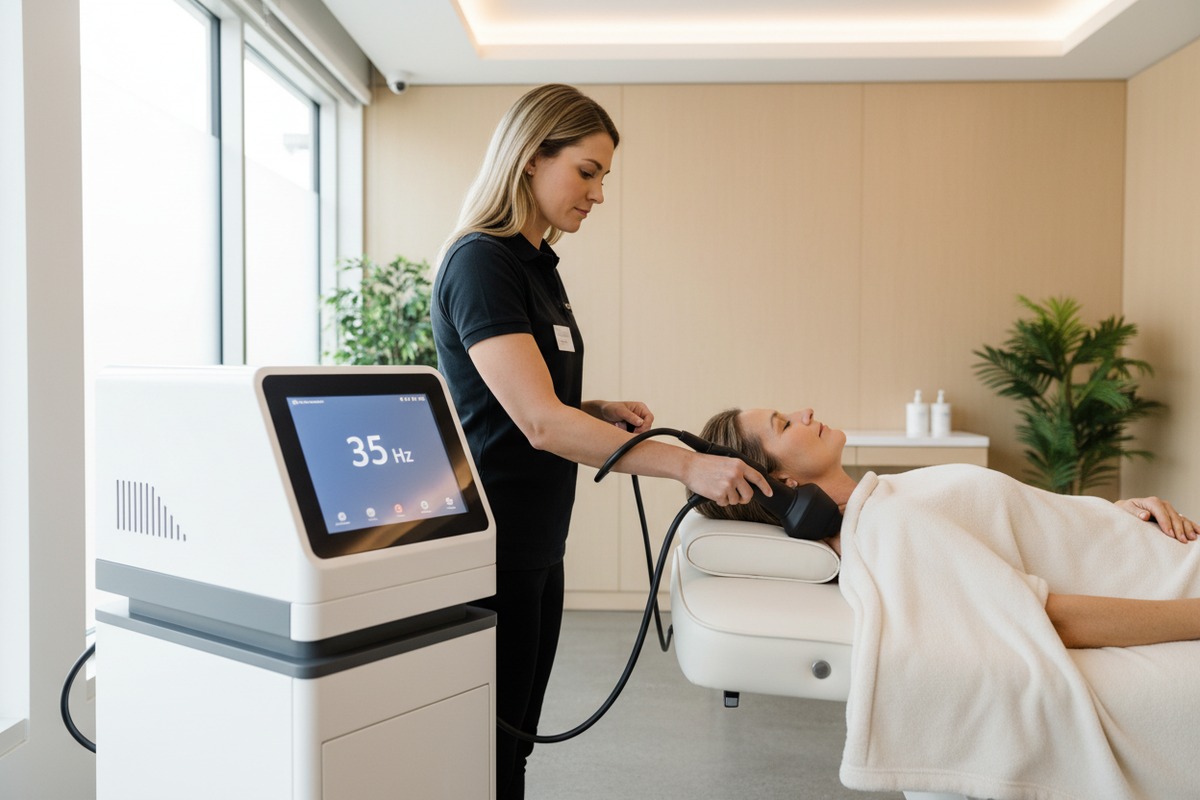
In our production line, we see buyers struggle with one question repeatedly neuromuscular systems 1. They invest in shockwave equipment 2 expecting deep muscle relaxation results. But their machines fail to deliver. The pulse frequency settings 3 confuse them. Clients complain. Returns pile up. This problem costs brands money and reputation.
To determine if pulse frequency is sufficient for deep muscle relaxation, assess tissue response at 1-50 Hz ranges, monitor patient feedback during treatment, verify consistent energy delivery, and observe immediate post-treatment outcomes like reduced muscle tension and improved range of motion.
This guide walks you through the exact methods our engineering team uses when calibrating equipment for salon-grade performance. We cover frequency ranges, verification techniques, and customization options that matter for your brand.
How do I determine if a shockwave machine's pulse frequency is powerful enough for deep muscle relaxation?
When we test equipment on our factory floor, power alone never tells the full story. A machine may generate impressive numbers on paper yet fail to relax deep muscle tissue 4. The frustration mounts when brand owners receive complaints from salons. Their investment sits unused. Client trust erodes fast.
Sufficient pulse frequency for deep muscle relaxation requires low-to-medium frequency ranges (1-50 Hz) that activate neuromuscular systems and trigger tonic vibration reflexes. Evaluate sufficiency through tissue response observation, patient tolerance levels, and measurable outcomes like tension reduction within the first session.
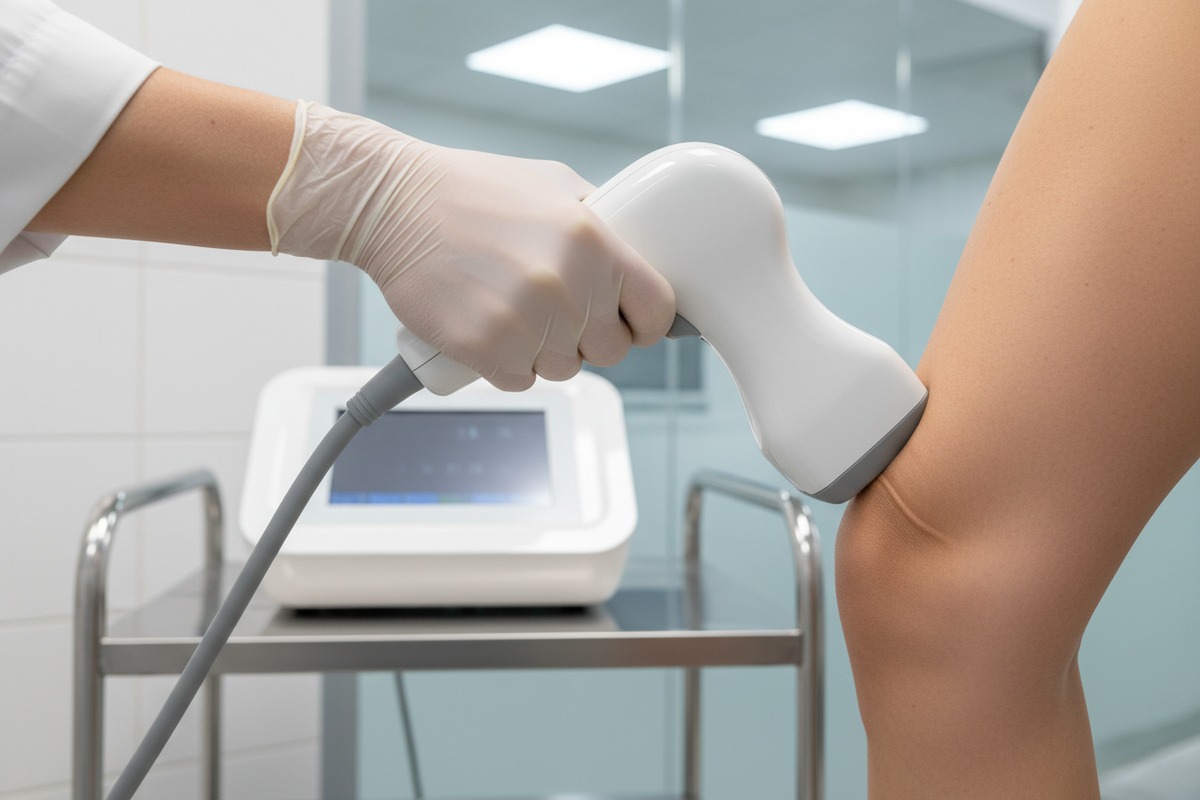
Understanding the Frequency-Depth Relationship
Many buyers assume higher frequency means deeper penetration. Our testing data proves otherwise. Lower frequencies actually penetrate deeper into muscle tissue. This counterintuitive fact changes everything about equipment selection.
Here is why this matters. Low frequencies (1-35 Hz) create longer wavelengths. These wavelengths travel through superficial layers without losing energy. They reach deep muscle fibers intact. High frequencies (51-100 Hz) concentrate energy near the surface. They work well for pain override but not for deep relaxation.
Key Indicators of Sufficient Frequency
When our quality control team evaluates machines, we look for specific indicators:
| Indicator | What to Observe | Sufficiency Threshold |
|---|---|---|
| Tissue Response | Visible muscle contraction rhythm | Consistent, rhythmic response at 36-50 Hz |
| Patient Feedback | Discomfort level during treatment | Noticeable sensation without unbearable pain |
| Post-Treatment Results | Muscle tension change | 80-90% report improvement after first session |
| Range of Motion | Joint flexibility increase | Measurable improvement within 24 hours |
Practical Testing Protocol
We recommend this approach when evaluating new equipment. First, set the device to 35 Hz. Apply to a test subject's trapezius muscle. Observe the tissue response. The muscle should show rhythmic activation without spasm.
Second, increase to 50 Hz gradually. This triggers the tonic vibration reflex 5. You should see tone reduction in tense tissue. If no change occurs, the frequency delivery may be insufficient.
Third, check patient feedback. Some discomfort indicates proper tissue engagement. No sensation at all suggests inadequate energy delivery. Unbearable pain means intensity is too high for the selected frequency.
What specific frequency range should I look for when sourcing professional shockwave equipment for my brand?
Our engineering team receives this question weekly from distributors across America and Europe. They want exact numbers. They need specifications that justify their investment. The wrong frequency range means inventory that cannot move. The right range builds brand reputation fast.
Professional shockwave equipment for deep muscle relaxation should offer 1-50 Hz frequency ranges. Low frequencies (1-35 Hz) activate neuromuscular systems for relaxation. Medium frequencies (36-50 Hz) trigger tonic vibration reflexes that reduce muscle tone. Avoid equipment limited to only high-frequency (51-100 Hz) options.

Breaking Down Frequency Bands
Different frequency bands serve different clinical purposes. Understanding this helps you source equipment that meets your customers' actual needs.
| Frequency Band | Range | Primary Function | Best Application |
|---|---|---|---|
| Low | 1-35 Hz | Neuromuscular activation | Deep relaxation, metabolism boost |
| Medium | 36-50 Hz | Tonic vibration reflex | Spasticity reduction, tone normalization |
| High | 51-100 Hz | Sensory stimulation | Pain override, acute pain management |
Equipment Specifications That Matter
When we design shockwave devices for export markets, we prioritize certain specifications. Frequency range comes first. But other factors determine real-world performance.
Energy output 7 matters alongside frequency. Our mid-range devices deliver 50-200 mJ at low frequencies. This combination ensures adequate tissue penetration. Cheap devices may list correct frequency ranges but lack energy output to make those frequencies effective.
Transmitter type affects results too. Radial transmitters 8 spread energy across a wider area. Focused transmitters concentrate energy at specific depths. For general salon use targeting muscle relaxation, radial transmitters paired with low-medium frequencies work best.
What Your Customers Actually Need
Based on feedback from our US and Canadian distributors, salon operators prioritize these features:
Versatility ranks highest. A machine limited to one frequency band frustrates therapists. They need flexibility to treat different conditions. Equipment offering 1-50 Hz covers most relaxation applications effectively.
Ease of adjustment matters next. Therapists switch between clients rapidly. Complex frequency adjustment processes slow them down. Look for devices with intuitive controls and preset protocols.
Consistency under load comes third. Busy salons run machines for hours daily. Frequency drift during extended use undermines treatment quality. We address this in the next section.
How can I verify that the pulse frequency remains consistent and stable during heavy-duty salon use?
Our quality control department has seen this problem destroy brands. A device performs perfectly during demonstrations. The buyer commits. Then reality hits. After six months of salon use, frequency drifts. Treatment results decline. Complaints follow. By then, the supplier has moved on. Your brand takes the damage.
Verify frequency stability through extended operation testing (4+ hours continuous use), periodic calibration checks using oscilloscope measurements, monitoring output consistency across multiple treatment sessions, and requesting manufacturer certifications for frequency tolerance specifications under heavy-duty conditions.
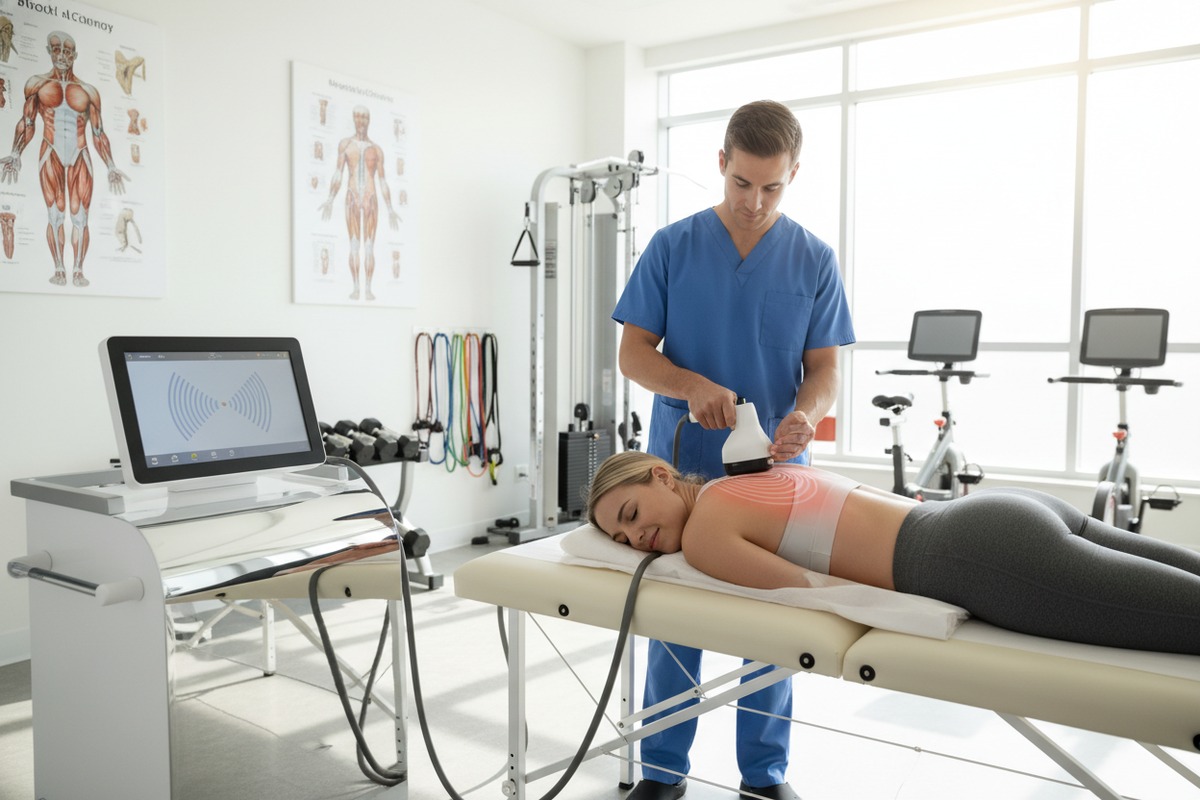
Why Frequency Drift Occurs
Components degrade under stress. Piezoelectric elements in shockwave generators lose efficiency over time. Power supply fluctuations affect frequency accuracy. Heat buildup during extended sessions causes temporary drift. All these factors combine in busy salon environments.
When we engineer devices for heavy-duty use, we address each factor:
| Problem Source | Cause | Our Solution |
|---|---|---|
| Component fatigue | Piezoelectric element degradation | Medical-grade components rated for 50,000+ cycles |
| Power fluctuation | Voltage inconsistency | Built-in voltage regulation circuitry |
| Thermal drift | Heat accumulation | Active cooling systems, thermal protection protocols |
| Mechanical wear | Handpiece connector loosening | Reinforced connector design, tighter tolerances |
Testing Protocol for Stability Verification
Before finalizing any supplier relationship, run these tests:
Extended Operation Test: Run the device continuously for four hours at medium frequency (40 Hz). Measure output frequency at startup, two hours, and four hours. Drift should stay within ±5% of set frequency.
Recovery Test: After extended use, power down for 30 minutes. Restart and measure frequency immediately. Compare to baseline readings from a cold start. Significant deviation indicates thermal management problems.
Multi-Day Consistency Test: Use the device in realistic salon conditions over five consecutive days. Track treatment outcomes. Inconsistent results suggest stability issues even if frequency readings appear normal.
What to Request from Suppliers
When sourcing equipment, demand these documents:
Frequency tolerance certification showing acceptable drift ranges under specified conditions. We provide ±3% tolerance guarantees on our professional-grade devices.
Component lifecycle data indicating expected performance over time. Quality manufacturers track this information and share it transparently.
Thermal management specifications explaining how the device handles heat during extended operation. Devices without active cooling struggle in busy salons.
Warranty terms covering frequency drift issues. If a manufacturer refuses to cover stability problems, that tells you something important about their confidence in the product.
Real-World Verification Methods
Your salon customers can verify ongoing stability without specialized equipment:
Track treatment times. If therapists need longer sessions to achieve the same results, frequency may be drifting downward.
Monitor patient feedback trends. Increasing complaints about reduced effectiveness often trace back to equipment degradation.
Schedule quarterly calibration checks. We recommend professional verification every 2,000 treatment sessions or three months, whichever comes first.
Can I customize the frequency settings on my private-label shockwave devices to meet my customers' performance standards?
In our ODM department, customization requests arrive daily. Brand owners want specific frequency ranges for their target markets. Some need broader ranges for versatile salon applications. Others want focused bands for niche treatments. The question is not whether customization is possible. The question is what customization delivers real value.
Yes, professional manufacturers offer frequency customization including preset protocol programming, frequency range adjustments (typically within 1-100 Hz), swing mode features for in-treatment modulation, and interface modifications for easier frequency selection. Customization should match your target salon operators' specific treatment needs.

Customization Options That Add Value
When we discuss customization with clients, we focus on features that solve real problems their customers face:
Preset Protocol Programming: Instead of requiring therapists to manually set frequency for each condition, we program preset protocols. One button selects optimal frequency, intensity, and duration for common applications. This reduces training time and treatment inconsistency.
Frequency Modulation (Swing Mode): This feature adjusts frequency automatically during treatment. It starts at one frequency and shifts gradually to another. Our AMSW-style systems use this for adaptive treatment that responds to tissue changes during the session.
Interface Customization: Different markets have different preferences. US salon operators often prefer touchscreen interfaces. European clinics sometimes want traditional dial controls. We adapt interfaces to match your customers' expectations.
What Customization Costs
Customization involves trade-offs. Understanding these helps you make smart decisions:
| Customization Type | Typical Lead Time | Minimum Order | Cost Impact |
|---|---|---|---|
| Logo/branding only | 2 weeks | 10 units | Minimal |
| Preset protocol programming | 4 weeks | 50 units | 5-10% increase |
| Frequency range modification | 8 weeks | 100 units | 15-25% increase |
| Full interface redesign | 12 weeks | 200 units | 30-50% increase |
Frequency Customization Considerations
Some frequency modifications make sense. Others create problems:
Good Customization: Expanding low-medium frequency range (adding 1-60 Hz capability to a device originally limited to 20-80 Hz). This addresses deep muscle relaxation needs without compromising other functions.
Problematic Customization: Narrowing frequency range to cut costs. A device limited to 40-60 Hz cannot serve therapists who need low frequencies for relaxation or high frequencies for pain management.
Complex Customization: Adding HF Burst mode (rapid 50 Hz pulses). This feature shortens treatment times while maintaining efficacy. Development requires significant engineering but delivers strong market differentiation.
Working With Your Manufacturer
When requesting customization, provide specific information:
Describe the treatment applications your customers prioritize. Deep muscle relaxation requires different specifications than scar tissue treatment or pain management.
Share feedback from your existing customers. What do they complain about with current equipment? What features do they request? This guides meaningful customization.
Define your price ceiling. Not all customizations deliver proportional value. We help clients prioritize modifications that solve the biggest problems within budget constraints.
Discuss testing and validation. Custom frequency ranges need verification before production. Our engineering team runs clinical-simulation tests on all customized devices. This prevents surprises after you receive inventory.
Conclusion
Determining sufficient pulse frequency for deep muscle relaxation requires understanding frequency bands, verifying stability under salon conditions, and selecting equipment that matches your customers' needs. Partner with manufacturers who test rigorously and support customization. Your brand reputation depends on equipment that performs consistently.
Footnotes
1. Explains the function and components of the neuromuscular system. ↩︎
2. Provides an overview of shockwave therapy devices and their applications. ↩︎
3. Explains how frequency affects energy penetration and therapeutic outcomes in shockwave therapy. ↩︎
4. Provides a comprehensive overview of muscle tissue types, structure, and function. ↩︎
5. Defines and describes the physiological mechanisms of the tonic vibration reflex. ↩︎
6. Discusses physiological states of deep muscle relaxation and its promotion. ↩︎
7. Explains energy flux density as a parameter for shockwave therapy and its effects. ↩︎
8. Differentiates radial “shockwaves” from focused shockwaves and their generation. ↩︎
 English
 Español de México
 Deutsch
 Français
 العربية
 Русский
Join the Conversation
Have a question or insight to share? We read every comment — whether you're a distributor, salon owner, or just curious about the technology. Your real-world experience helps others make better decisions. Drop your thoughts below.