
When our production line first started exporting shockwave therapy machines 1 five years ago, we received countless calls from frustrated distributors. Their complaints were the same: unclear warranty terms, slow technical support, and unexpected repair costs technical support scope 2. These problems damaged their brands and cost them loyal customers.
Defining after-sales service boundaries requires establishing clear agreements on warranty coverage, technical support scope, shipping responsibility, and response time standards. Document these terms in written contracts before purchasing. Include specific parts lists, repair timelines, cost allocation, and escalation procedures to protect your investment and brand reputation.
This guide will walk you through the essential components of a solid service agreement 3. We will cover warranty specifics, support limitations, shipping costs, and response time benchmarks. Let us dive into each area so you can negotiate better terms with your supplier.
What specific components and wear parts are included in my shockwave machine warranty?
Our engineering team often sees distributors surprised by what their warranty covers Response time standards 4. They assume everything is included. Then a transducer 5 fails at month eight, and they learn it was classified as a "wear part." This misunderstanding costs them thousands of dollars.
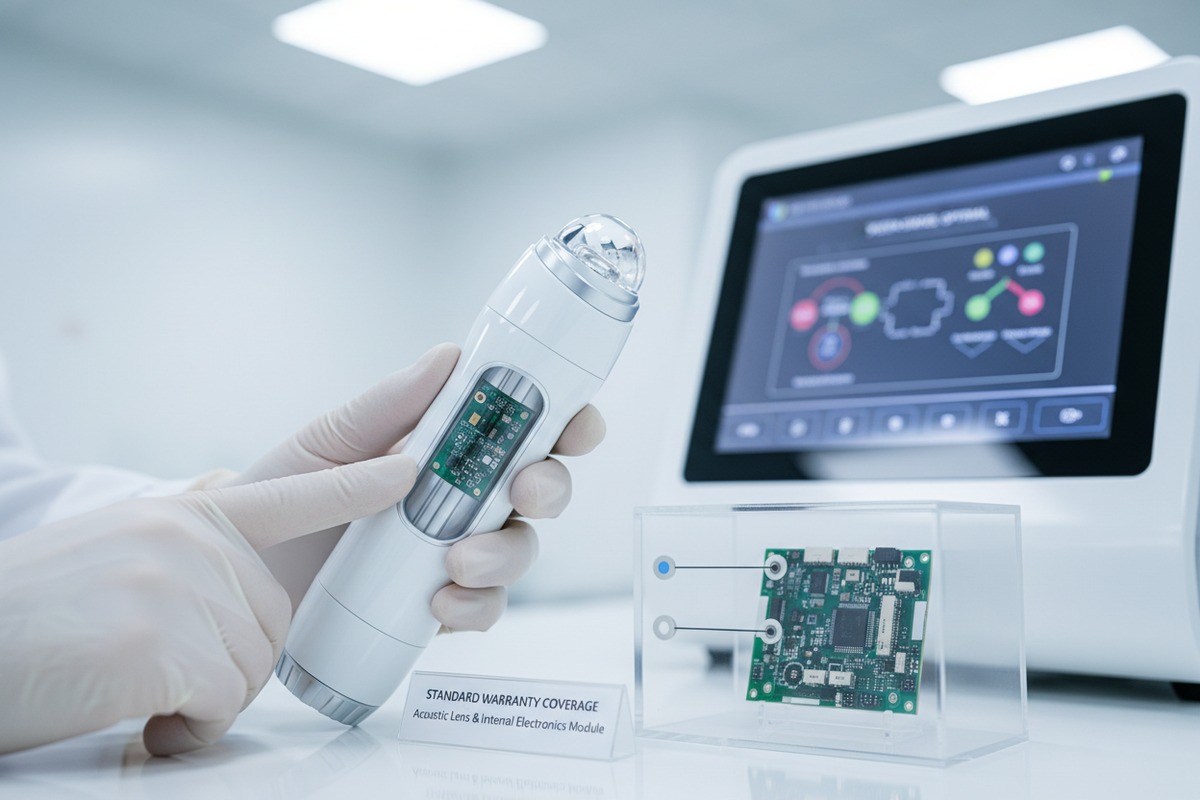
Standard shockwave machine warranties typically cover the main control unit, power supply, display screens, and internal circuit boards for 12-24 months. Wear parts like transducers, treatment heads, and acoustic lenses usually have shorter coverage periods of 3-6 months or are excluded entirely. Always request a detailed parts list before signing.
Understanding Core Components vs. Wear Parts
The distinction between core components and wear parts 6 is critical. Core components are the structural and electronic parts that rarely fail under normal use. Wear parts contact patients or experience high stress during treatments. They degrade over time regardless of careful use.
When we design our machines, we categorize parts into three tiers. Tier one includes the chassis, motherboard, and power systems. These rarely fail and carry full warranty coverage 7. Tier two includes motors, fans, and connectors. These may fail occasionally and usually have conditional coverage. Tier three includes transducers, handpieces, and cables. These experience daily wear and have limited or no coverage.
Standard Warranty Coverage Table
| Component Category | Typical Coverage Period | Common Exclusions |
|---|---|---|
| Main Control Unit | 18-24 months | Water damage, power surge |
| Power Supply Board | 18-24 months | Voltage fluctuation damage |
| Display Screen | 12-18 months | Physical impact, scratches |
| Transducers | 3-6 months or shot count | Normal wear, overuse |
| Treatment Cables | 3-6 months | Bending damage, cuts |
| Handpiece Housing | 6-12 months | Drop damage, cracks |
Questions to Ask Your Supplier
Before finalizing any purchase, request a comprehensive warranty document. Ask these specific questions:
What is the exact shot count limit for transducer coverage? Some suppliers cover transducers for 500,000 shots. Others limit coverage to 200,000 shots. This difference matters significantly for high-volume clinics.
Does the warranty transfer if I resell the machine? Many distributors resell to end-users. If the warranty does not transfer, your customers have no protection.
What documentation do I need to file a warranty claim? Some suppliers require original invoices, serial number photos, and detailed failure descriptions. Know these requirements upfront.
Are software updates included during the warranty period? Software issues can disable machines completely. Ensure updates are covered without additional fees.
Negotiating Better Warranty Terms
You have more negotiating power than you think. Suppliers want long-term relationships with serious distributors. Use these strategies:
Request extended transducer coverage if you commit to volume purchases. We often extend wear part warranties by 50% for partners ordering 20 or more units annually.
Ask for loaner units during warranty repairs. Downtime hurts your customers and your reputation. A loaner policy shows supplier commitment.
Negotiate warranty start dates. Coverage should begin when you receive the machine, not when it ships from the factory.
How do I define the technical support limits for my private-label beauty equipment?
When our team handles support calls, we sometimes face requests beyond reasonable scope. One distributor asked us to train their customer's entire clinic staff remotely. Another wanted us to troubleshoot a machine they had modified without authorization. Clear boundaries prevent these conflicts.
Technical support limits should specify available support channels, operating hours, covered issues, and training scope. Define whether support includes remote diagnostics, on-site visits, and software assistance. Clarify that modifications void support coverage. Document response protocols for different issue severity levels in your service agreement.
Establishing Support Channel Boundaries
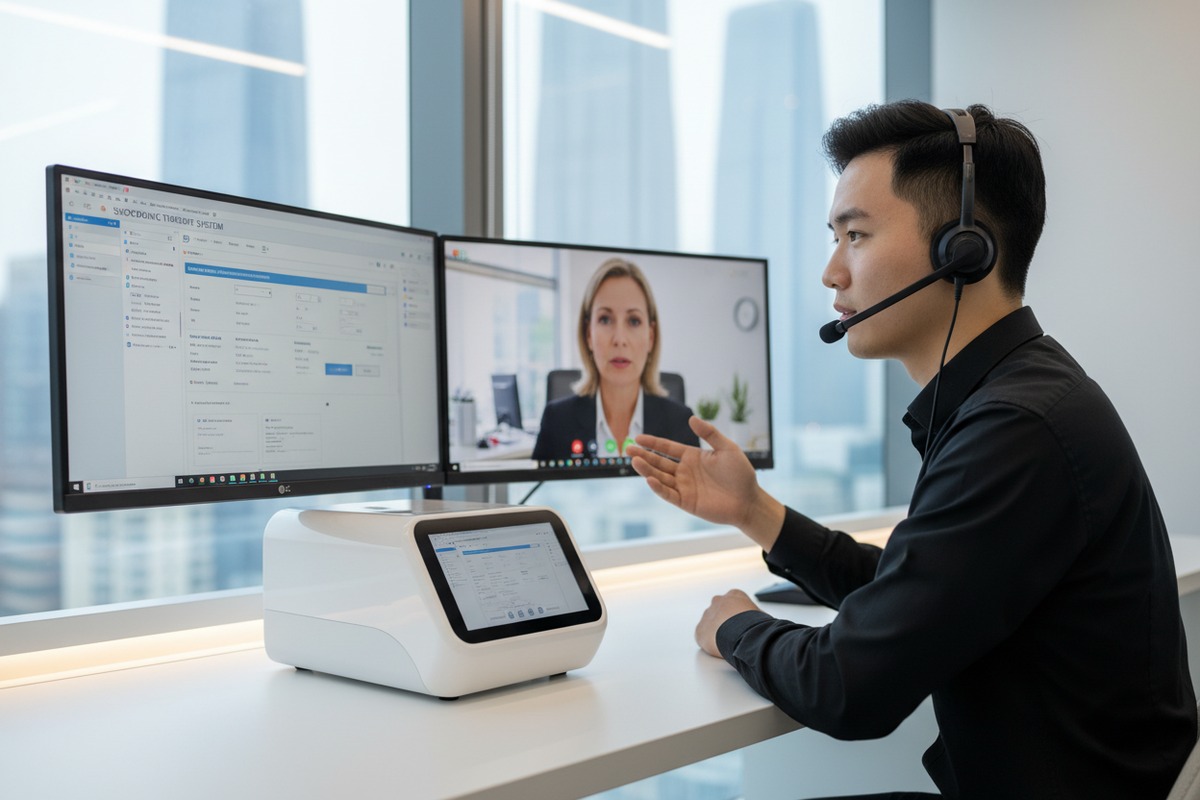
Different issues require different support channels. Minor troubleshooting works fine over email. Critical failures need phone support or video calls. On-site visits are expensive and should be reserved for problems that cannot be solved remotely.
We recommend establishing a tiered support system. Tier one is self-service support through documentation, videos, and FAQ databases. Tier two is remote support via phone, email, or video call. Tier three is on-site support from factory technicians or authorized service partners.
Support Scope Definition Table
| Support Type | Included in Standard Agreement | Additional Fee Required |
|---|---|---|
| Email troubleshooting | Yes | No |
| Phone consultation | Yes, business hours | After-hours premium |
| Video diagnostic calls | Limited sessions | Per-session fee |
| Remote software updates | Yes, warranty period | Post-warranty fee |
| On-site technician visit | Usually excluded | Travel + labor fees |
| End-user staff training | Initial training only | Refresher training fee |
| Third-party integration help | Usually excluded | Consulting fee |
Defining Operating Hours and Response Windows
Time zones complicate international support. When your customer in California calls at 9 AM, it is midnight in Guangzhou. Your agreement must address this reality.
Establish clear operating hours in both local time and supplier time. Specify expected response times for each channel. Email responses within 24 business hours are standard. Phone support should offer call-back within 4-8 hours for urgent issues.
We provide our partners with a dedicated WhatsApp line for urgent matters. Messages sent outside business hours receive acknowledgment within 2 hours and full response when our team returns.
Training Scope Clarification
Initial training is standard with most purchases. However, the scope varies dramatically. Some suppliers offer a 30-minute video call. Others provide multi-day on-site training programs.
Define exactly what training includes:
- Number of attendees covered
- Training duration and format
- Topics covered (operation, maintenance, troubleshooting)
- Whether training materials are provided in your language
- Frequency of refresher training available
- Certification or documentation provided
Exclusions and Limitations
Your agreement should clearly state what is not covered. Common exclusions include:
Support for machines modified by unauthorized parties. Once someone opens the machine and changes components, the original manufacturer cannot guarantee safe operation.
Training for end-users beyond your direct staff. We train our distributors thoroughly. However, training every salon employee who uses the machine is beyond reasonable scope.
Integration with third-party software or equipment. Custom integrations require separate development agreements.
Who is responsible for international shipping costs when a machine requires factory repair?
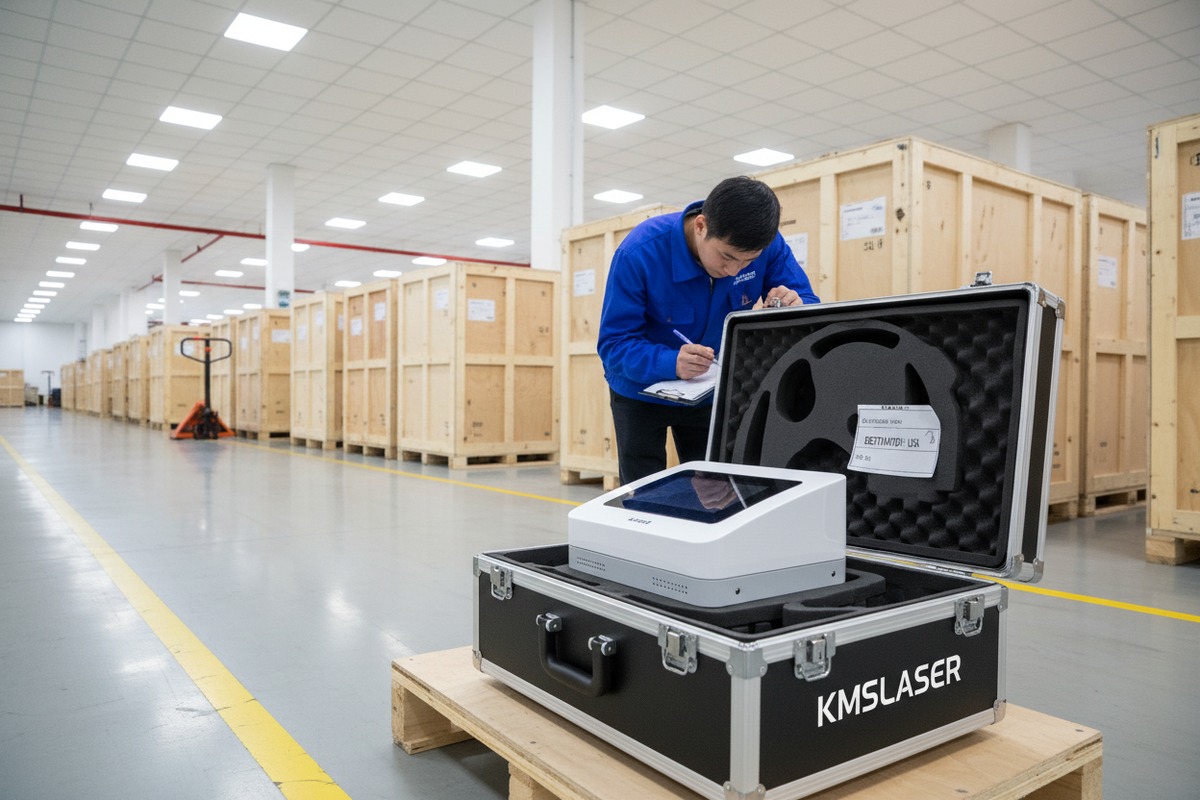
Our logistics team handles dozens of international repairs monthly. The biggest disputes always involve shipping costs. A machine repair costing $200 can easily have $400 in round-trip shipping fees. Without clear agreements, these costs create significant conflicts.
Shipping cost responsibility must be explicitly defined in your service agreement. Standard practice assigns outbound shipping costs to the buyer and return shipping costs to the supplier for warranty repairs. For non-warranty repairs, buyers typically cover both directions. Always negotiate prepaid shipping labels and customs documentation support.
Understanding the True Cost of International Repairs
Shipping costs extend far beyond carrier fees. When a machine travels internationally for repair, expect these cost categories:
Export documentation and customs clearance from your country. Carrier fees for air or sea freight. Import duties and taxes at the supplier's port. Storage fees if customs clearance is delayed. The same costs apply in reverse when the machine returns.
For a typical shockwave machine weighing 15-25 kg, round-trip express shipping between the US and China costs $300-$600. international shipping costs 8 Add customs brokerage fees of $50-$150 each direction. Delays can add storage costs of $20-$50 daily.
Shipping Cost Allocation Models
| Repair Type | Outbound Shipping | Return Shipping | Customs Fees | Recommended For |
|---|---|---|---|---|
| Warranty defect repair | Buyer | Supplier | Split equally | Most agreements |
| Wear part failure | Buyer | Buyer | Buyer | Extended warranties |
| User-caused damage | Buyer | Buyer | Buyer | Standard practice |
| DOA (Dead on Arrival) | Supplier | Supplier | Supplier | All agreements |
| Upgrade/enhancement | Buyer | Supplier | Split equally | Service upgrades |
Negotiating Favorable Shipping Terms
You can negotiate better shipping terms with the right approach. Here are strategies that work:
Request local repair partnerships. Ask if your supplier has authorized service partners in your region. Local repairs eliminate international shipping entirely.
Negotiate prepaid shipping labels. When suppliers provide return labels, they often secure better carrier rates through volume contracts.
Establish component-only shipping options. For some repairs, shipping just the failed component (like a transducer) costs far less than shipping the entire machine.
Request customs documentation support. Experienced suppliers provide all necessary paperwork for smooth customs clearance. This reduces delays and brokerage fees.
Reducing Repair Shipping Through Preventive Measures
The best shipping cost is the one you never pay. Work with your supplier to minimize repair frequency:
Request comprehensive training on proper operation and maintenance. User errors cause many failures that require factory repair.
Stock common spare parts locally. Replacing a cable or connector locally costs a fraction of shipping the machine internationally.
Implement remote diagnostic protocols. Many issues can be diagnosed and resolved through video calls, firmware updates, or guided user repairs.
Insurance and Risk During Transit
Machines can be damaged during shipping. Your agreement should address:
Who insures the machine during outbound shipping? During return shipping? What happens if a machine is lost or damaged by the carrier?
We require our partners to insure outbound shipments for full replacement value. We insure return shipments on our end. This clear allocation prevents disputes.
What response time standards should I negotiate to protect my brand's reputation?
When we surveyed our distribution partners last year, response time ranked as their top service priority. A machine sitting broken in a clinic costs them customers daily. Every hour of delay damages their reputation with downstream buyers. Quick response is not just convenience—it is brand protection.
Response time standards should include tiered commitments based on issue severity. Negotiate 2-4 hour initial response for critical failures, 24-hour response for urgent issues, and 48-72 hours for routine inquiries. Include maximum repair completion times, escalation procedures, and penalty clauses for non-compliance in your written agreement.

Defining Issue Severity Levels
Not all problems require equal urgency. A complete machine failure during a patient appointment is critical. A minor display glitch that does not affect treatment is routine. Your agreement should define severity levels clearly.
We use a three-tier system:
Critical issues prevent any machine operation or create safety risks. These require immediate response.
Urgent issues reduce functionality but allow limited operation. These need same-day or next-business-day response.
Routine issues are questions, minor glitches, or scheduled maintenance requests. These receive standard business-day response.
Response Time Benchmark Table
| Issue Severity | Initial Response | Diagnostic Completion | Repair Completion | Escalation Trigger |
|---|---|---|---|---|
| Critical | 2-4 hours | 8 hours | 24-48 hours | 6 hours no response |
| Urgent | 8-24 hours | 48 hours | 3-5 business days | 24 hours no response |
| Routine | 24-48 hours | 5 business days | 7-10 business days | 72 hours no response |
Building Escalation Procedures
When initial response times are missed, you need a clear escalation path. escalation procedures 9 Your agreement should name specific contacts at each escalation level.
Level one is your assigned account representative. Level two is the service department supervisor. Level three is company management.
Each escalation should have defined triggers. If your account representative does not respond within the initial window, you contact the supervisor directly. Document these contacts with names, phone numbers, and email addresses in your agreement.
Penalty Clauses and Performance Guarantees
Response time commitments mean nothing without consequences. Serious suppliers accept penalty clauses for non-compliance.
Common penalty structures include:
Service credit percentages applied to future purchases. Free expedited shipping for delayed repairs. Extended warranty periods as compensation for downtime. Partial refunds for repeated service failures.
We offer our premium partners a service level guarantee. If we miss critical response times three times in one year, they receive a free replacement transducer valued at several hundred dollars.
Calculating Acceptable Downtime
Your customers expect equipment availability. Calculate how much downtime you can tolerate before your reputation suffers.
A high-volume clinic performing 30 treatments daily loses significant revenue with each day of downtime. They need faster response commitments. A low-volume practice using the machine twice weekly can tolerate longer repair windows.
Match your response time requirements to your customer base. Then ensure your supplier can meet those standards consistently.
Documentation and Tracking
Track every support interaction. Log the initial report time, first response time, diagnosis completion, and final resolution. This data proves whether your supplier meets their commitments.
We provide our partners with an online portal showing all service requests and their status. This transparency builds trust and provides documentation if disputes arise.
Conclusion
Clear after-sales service boundaries protect your investment and brand. Define warranty coverage, technical support limits, shipping responsibilities, and response standards in writing before purchasing. Review these terms annually as your business grows. Strong service agreements build lasting supplier partnerships.
Footnotes
1. Provides a general overview of extracorporeal shockwave therapy and the machines used. ↩︎
2. The article defines technical support as a service to solve technical problems and mentions it’s structured in tiers with specific scopes of expertise and responsibilities. ↩︎
3. Defines a service agreement and its importance in establishing clear business relationships. ↩︎
4. Explains SLA response and resolution times, crucial for service level agreements. ↩︎
5. Provides a medical dictionary definition of a transducer, relevant to its use in devices. ↩︎
6. Distinguishes wear parts from spare parts and explains their function in machinery. ↩︎
7. Defines warranty in a legal context, including express and implied warranties. ↩︎
8. Details the various components and factors that contribute to international shipping expenses. ↩︎
9. Outlines the process and best practices for managing customer service escalations effectively. ↩︎
 English
 Español de México
 Deutsch
 Français
 العربية
 Русский
Join the Conversation
Have a question or insight to share? We read every comment — whether you're a distributor, salon owner, or just curious about the technology. Your real-world experience helps others make better decisions. Drop your thoughts below.