

When we prepare our shockwave therapy devices for export, we know that a single misunderstanding in the documentation can lead to user error. You cannot afford to guess if the instructions are clear.
To confirm accuracy, perform a back-translation where an independent linguist translates the manual back to the source language to reveal discrepancies. Cross-reference all technical terminology against the device’s on-screen software interface and verify that the translation provider holds ISO 17100 certifications for medical device documentation.
In the following sections, we will explore practical steps to audit your documentation and protect your brand reputation.
How do I verify that the safety warnings meet FDA or CE regulatory standards?
Our compliance team spends weeks ensuring every warning label on our production line meets international safety codes before shipping. Ignoring these details invites regulatory audits.
You must compare translated warnings directly against the FDA Human Factors guidance and the European Commission’s MDR Annex I requirements. Consult a legal professional in the target country to confirm that liability disclaimers and safety symbols meet local legal standards for adequacy, clarity, and enforceability.

Navigating the Regulatory Landscape
Verifying safety warnings is not just about grammar; it is about legal compliance. legal compliance 1 In our experience manufacturing mid-to-high-end beauty equipment, we see that the United United States (FDA) 2 United States (FDA) and Europe 3 States (FDA) and Europe (CE/MDR) have different strictness levels regarding "intended use" and "contraindications." A translator might translate "Caution" as "Warning," but in the medical device world, these two words carry different liability weights. "Warning" implies a risk of serious injury or death, while "Caution" implies minor injury or equipment damage. If your manual mixes these up due to poor translation, you risk non-compliance.
The Role of Standardized Symbols
Text is not the only language your manual speaks. You must verify that the description of safety symbols complies complies with ISO 15223-1 4 with ISO 15223-1 (Medical devices – Symbols to be used with medical device labels). We have seen cases where a translator described a specific icon as "Stop" when the regulatory standard requires it to be identified as "Emergency Stop." These subtle differences matter during an audit. You should create a checklist that maps every symbol on your blue and white device chassis to its explanation in the manual.
Assessing Clinical Risk Descriptions
Shockwave therapy involves acoustic energy, which carries specific risks if applied to the wrong anatomy Shockwave therapy involves acoustic energy 5 (e.g., lungs or eyes). You must ensure that the translated text for "Contraindications" is absolute and unambiguous. Ambiguity here is dangerous. For instance, a phrase like "avoid use near the lungs" is weak; it should be translated to the standard regulatory equivalent of "Do not apply strictly over air-filled tissue."
Regulatory Documentation Checklist
The following table outlines the key differences you must check between US and EU standards in your translations:
| Feature | FDA Requirements (USA) | CE MDR Requirements (Europe Europe (CE/MDR) 6) |
|---|---|---|
| Language | English (must be legible and understandable by lay users if applicable). | Official language of the member state where the device is sold. |
| Safety Signals | ANSI Z535 standards (Danger, Warning, Caution). | ISO 3864 safety colors and safety signs. |
| Adverse Events | Focus on "Medical Device Reporting" (MDR) terminology. | Focus on "Vigilance" and "Post-Market Surveillance" terminology. |
| Symbols | Must provide a glossary if symbols are not standard. | Must use harmonized symbols found in ISO 15223-1 ISO 15223-1 7. |
What specific technical terms are most commonly mistranslated in shockwave therapy documentation?
During our R&D phase for the digital touchscreen display, we often struggle to find the perfect English terms for complex pneumatic parameters. Technical precision is critical for effective treatment.
Common mistranslations involve parameter units like “energy density” (mJ/mm²) versus “pressure” (Bar), and frequency settings (Hz). Inconsistent terms for “radial” versus “focused” shockwaves often confuse operators, leading to incorrect treatment protocols, reduced clinical results, and potential safety risks during patient application.

The Software-Manual Mismatch
The most frequent technical error we observe occurs when the manual does not match the software interface. Since your product features a touchscreen display with a skeletal diagram, the labels on that screen must match the manual word-for-word. If the screen says "Frequency" but the manual says "Rate," the user will be confused. This happens because software localization and manual translation are often done by different teams or at different times. We always recommend freezing the software UI strings before starting the manual translation to ensure consistency.
Energy and Pressure Units
Shockwave therapy relies on precise physics. The term "Bar" (pressure) is often used for radial shockwaves, while "Energy Flux Density" (mJ/mm²) is used for focused waves. We have seen manuals where "Bar" was translated simply as "Level" or "Intensity." This is technically incorrect and dangerous. A clinician following a protocol for 2.0 Bar needs to see "Bar" on the screen and in the book. If the manual vaguely refers to "Power," the clinician cannot accurately replicate the treatment parameters required for the patient.
Anatomy and Applicator Terminology
Your device includes a handheld tool and a skeletal diagram on the display. The translation of anatomical terms must be clinically accurate. anatomical terms must be clinically accurate 8 A common mistake is translating "soft tissue" effectively to "tender meat" or other non-medical phrasing. Similarly, the transmitters (the heads of the handheld tool) often have specific technical names like "15mm transmitter." If the translation calls it a "15mm cap" or "15mm tip," it might sound like a disposable accessory rather than a functional part of the acoustic wave transmission.
Critical Terminology Verification Table
Use this table to audit your manual for the most high-risk terms found in shockwave therapy:
| English Term | Common Mistranslation | Correct Context / Meaning |
|---|---|---|
| Radial Pressure Wave | Radio Pressure / Radiation Wave | Refers to the type of acoustic wave; must not imply radiation. |
| Handpiece / Applicator | Handle / Grip / Stick | The medical tool used to deliver energy to the patient. |
| Coupling Gel | Glue / Paste / Lubricant | The medium used to transfer acoustic energy; "Glue" implies adhesion, which is wrong. |
| Cavitation | Emptying / Holing | A physical phenomenon caused by shockwaves; must remain a technical term. |
| Contraindication | Forbidden / Ban | Medical conditions where treatment should not be used. |
Should I hire an independent native speaker to audit the manual provided by the manufacturer?
We openly encourage our partners to review our work, because we know that linguistic nuance builds trust with local clinics. A second pair of eyes is always a smart investment.
Hiring an independent native speaker is highly recommended to identify awkward phrasing that automated tools miss. They perform critical in-country reviews to ensure the language is natural, culturally appropriate, and clear for the end-user, significantly reducing liability risks and improving the user experience.
The Value of "In-Country" Review
You might think the translation provided by the factory is "good enough," but "good enough" does not build a premium brand. An independent audit by a native speaker—preferably one with a background in medical devices—is essential. They catch the "false friends" that dictionaries miss. For example, in some languages, the word for "manipulate" the device might carry a negative connotation of "tampering," whereas a native speaker would suggest "operate" or "adjust." This level of nuance protects your professional image.
Subject Matter Experts (SME) vs. General Linguists
When you hire an auditor, do not just hire a general translator. You need a Subject Matter Expert (SME). A general translator might translate "shots" (the count of shockwaves) as "injections" or "gunfire" depending on the context they assume. A biomedical engineer or a clinician fluent in the target biomedical engineer 9 language knows that in this context, "shocks" or "impulses" is the correct industry terminology. We find that distributors who invest in this step have fewer support tickets later because the instructions are intuitive to the actual users (nurses and therapists).
Cost Benefit Analysis
You might worry about the extra cost. However, consider the cost of a user returning a machine because they "couldn't figure out how to work it." Or worse, the legal cost of a patient injury due to unclear safety instructions. An audit typically costs a fraction of the price of one single machine. It is a one-time fee that safeguards the usability of hundreds of units you might sell. It also provides you with a "Glossary of Terms" that you can use for all future marketing materials, ensuring consistency across your website and brochures.
Audit Workflow Strategy
- Selection: Choose a reviewer who lives in the target market (e.g., the US or UK), not just someone who speaks the language.
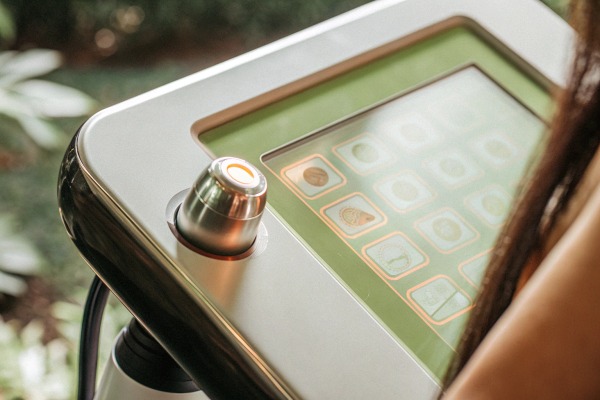
- Briefing: Provide the reviewer with photos or videos of the device (showing the blue and white design and the screen) so they understand the physical context.
- Simulation: Ask them to "dry run" the setup instructions. If they get stuck, the text is wrong.
How can I identify awkward phrasing or grammatical errors that could damage my brand image?
We invest heavily in the sleek design of our machines because we know appearance matters. The user manual is part of that product experience and must feel equally premium.
Identify awkward phrasing by reading the text aloud or having a native-speaking clinician simulate a device setup. Look for inconsistent terminology, literal word-for-word translations that ignore syntax, and confusing sentence structures that force the user to re-read instructions multiple times.
The "Read-Aloud" Test
The simplest way to spot awkward phrasing is to read the manual out loud. If you stumble, the user will too. High-quality documentation flows naturally. If a sentence requires you to pause and rearrange the words in your head to understand the meaning, it is a bad translation. For example, a sentence like "Please strictly accurately connect the power wire" is clumsy. A native speaker would simply write, "Securely connect the power cord." These small stumbles accumulate, causing user fatigue and lowering their confidence in the device's quality.
Spotting "Chinglish" and Literal Translations
As an exporter, we are very aware of the grammatical differences between Chinese and English. Literal translations often result in sentences that are grammatically correct but stylistically wrong. Watch out for the excessive use of "please" at the beginning of every sentence, or the overuse of passive voice. Also, be wary of "noun stacks"—long strings of nouns used as adjectives (e.g., "Body health care beauty shockwave machine tool"). Professional localization breaks these down for readability Professional localization 10 (e.g., "Shockwave therapy device for aesthetic body treatments").
Consistency is Key to Professionalism
Nothing screams "cheap" louder than inconsistency. If page 5 calls the handheld unit a "handle," page 10 calls it a "gun," and page 12 calls it a "probe," your brand image suffers. It implies a lack of attention to detail. If the manual is sloppy, the customer subconsciously assumes the engineering inside the blue and white casing is also sloppy. You should check the table of contents against the actual chapter headings; mismatches here are a red flag that the document was not proofread after final layout adjustments.
Indicators of Poor vs. Professional Translation
The table below helps you quickly identify the quality level of your manual:
| Indicator | Poor Quality (Machine/Literal) | Professional Quality (Localized) |
|---|---|---|
| Sentence Structure | "The machine open must be carefully." | "Open the device carefully." |
| Terminology | Varies (Probe, Head, Tip used interchangeably). | Consistent (e.g., always uses "Transmitter"). |
| Tone | Overly polite or commanding ("Please you must…"). | Professional and direct ("Ensure that…"). |
| Articles (a/an/the) | Often missing or used incorrectly. | Correctly used to define specific vs. general items. |
| Punctuation | Incorrect spacing or full-width symbols. | Standard English punctuation and spacing. |
Conclusion
Accurate translation is not just about words; it is about safety, compliance, and brand integrity. By verifying regulatory standards, auditing technical terms, and engaging independent reviewers, you ensure your documentation matches the high quality of your shockwave therapy equipment.
Footnotes
1. Official UK government guidance on complying with medical device regulations and legal requirements. ↩︎
2. Official regulatory body for medical devices in the USA. ↩︎
3. Primary resource for FDA regulations and oversight of medical devices in the United States. ↩︎
4. International standard for symbols used in medical device labeling and documentation. ↩︎
5. Comprehensive background on the technology and clinical application of extracorporeal shockwave therapy. ↩︎
6. Official European Commission page on Medical Device Regulations. ↩︎
7. Official ISO standard for medical device symbols. ↩︎
8. Official WHO resource for standardized nomenclature and classification of medical devices. ↩︎
9. Leading professional society for biomedical engineering. ↩︎
10. General background on the process of adapting content for specific linguistic and cultural markets. ↩︎

 English
 Español de México
 Deutsch
 Français
 العربية
 Русский
