
Last month, a US clinic owner called our factory in distress energy density specifications 1. They had purchased probes from another supplier, only to discover the devices failed to reach deep tissue for chronic Achilles cases. shockwave therapy machines 2 Their patients complained. Revenue dropped. This nightmare scenario happens more often than you think.
To properly ask suppliers about soft tissue vs. orthopedic probes, request specific penetration depth data (2-5 cm for soft tissue, up to 12 cm for orthopedic), energy density specifications, wave generation method (radial vs. focused), and documented clinical evidence. Always verify acoustic impedance testing protocols and probe interchangeability with your existing machine.
Choosing the wrong probe type can destroy your brand reputation wave generation method 3. Below, we break down the exact questions you must ask suppliers. Each section gives you actionable checkpoints to ensure you receive probes that match your clinical needs perfectly.
How can I verify if your shockwave probes are specifically engineered for deep orthopedic penetration or superficial soft tissue treatment?
When our engineering team developed probe specifications, we learned one critical truth acoustic impedance testing protocols 4. Marketing claims rarely match real-world performance. Many suppliers use vague language to hide probe limitations.
To verify probe engineering, ask suppliers for documented penetration depth test results, wave type specification (radial for soft tissue at 2-5 cm, focused for orthopedic at 5-12 cm), and the energy generation method used. Request third-party lab reports showing actual tissue penetration measurements under clinical conditions.
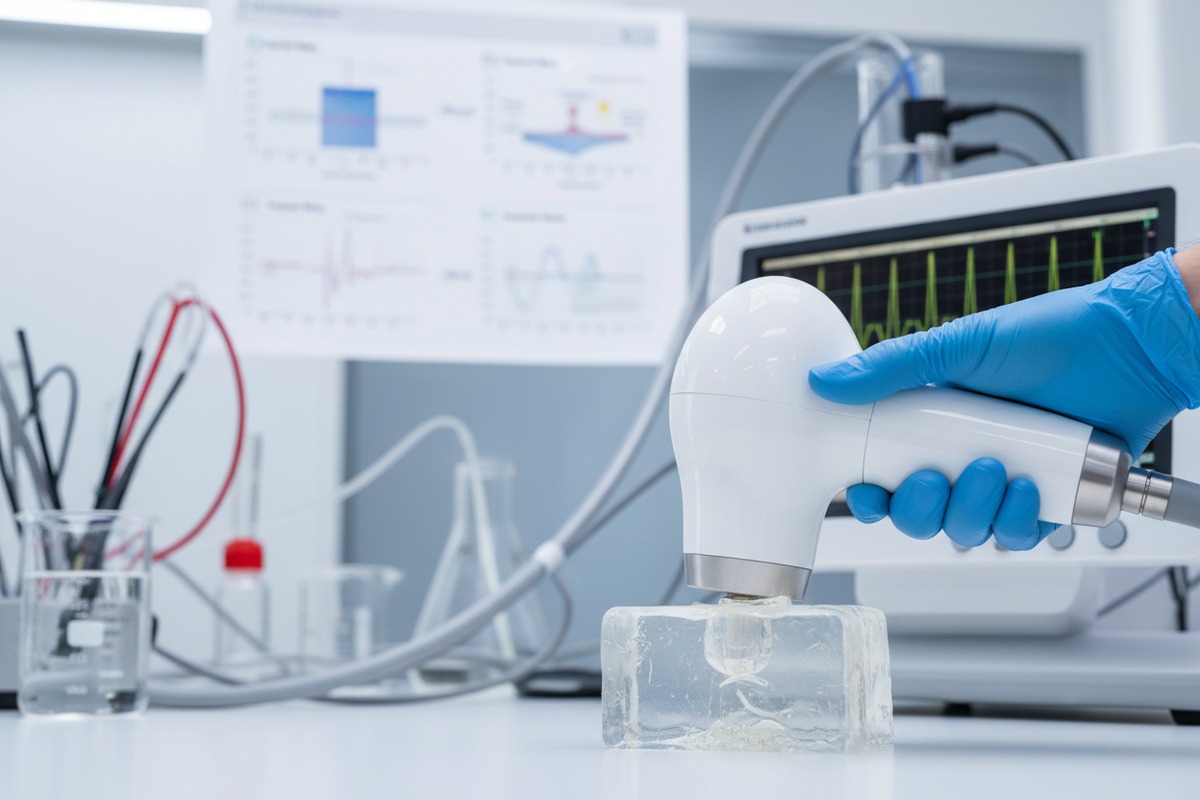
Understanding Wave Types and Their Applications
The fundamental difference between soft tissue and orthopedic probes lies in wave physics. Radial pressure waves 5 spread outward from the probe tip. They cover large surface areas. They penetrate shallowly. Focused shockwaves 6 converge at a precise point deep inside tissue. They deliver concentrated energy.
Our production team has observed that many buyers confuse these two technologies. This confusion leads to purchasing errors. Radial probes work excellently for muscle strains, trigger points, and myofascial release. They treat the top layers of tissue. Focused orthopedic probes target bone non-unions, calcific tendonitis, and chronic deep tendon issues.
Key Verification Questions to Ask
You need specific data points. Never accept general statements like "deep penetration" or "effective treatment." Here are the questions that separate professional buyers from amateur ones:
| Question | Expected Answer for Soft Tissue Probe | Expected Answer for Orthopedic Probe |
|---|---|---|
| Maximum penetration depth? | 2-5 cm | 5-12 cm |
| Wave type? | Radial pressure wave | Focused shockwave |
| Generation method? | Pneumatic/ballistic | Electrohydraulic, electromagnetic, or piezoelectric |
| Treatment area coverage? | Broad, diffuse | Precise, targeted |
| Best clinical applications? | Muscle strains, trigger points | Bone healing, calcific deposits |
Red Flags to Watch For
Some suppliers blur the line between true shockwaves and pressure waves. They market radial probes as "shockwave" devices. This misleads buyers. True focused shockwaves create cavitation bubbles in tissue. They generate peak pressures approximately 1000 times higher than ultrasound. Radial waves do not produce this effect.
Ask your supplier directly: "Does your orthopedic probe create cavitation effects?" If they hesitate or cannot answer, proceed with caution. Our quality control department always tests for cavitation capability before approving orthopedic probe batches.
Request wave propagation diagrams. A legitimate supplier will show how their focused probe converges energy at depth. The diagram should display the focal zone clearly. Soft tissue probe diagrams should show radial dispersion patterns instead.
What technical specifications should I request to ensure the probes meet my brand's durability and performance standards?
Our factory receives returns sometimes. The reason is almost always the same. Buyers did not request detailed specifications upfront. They trusted marketing brochures. Then reality disappointed them.
Request these technical specifications: total shock impact lifespan (measured in millions of shots), handpiece weight and ergonomic design details, materials used in probe construction, sterilization compatibility, energy output range (mJ/mm²), frequency range (Hz), and warranty terms. Also verify software compatibility with your existing base unit.

Durability Metrics That Matter
Probe lifespan directly affects your total cost of ownership. A cheap probe that dies after 500,000 shots costs more long-term than a premium probe lasting 3 million shots. When we design probes at our facility, we test each batch to verify shot count claims.
Ask suppliers for the following durability data:
| Specification | Minimum Acceptable Standard | Premium Standard |
|---|---|---|
| Total shock lifespan | 1 million shots | 3+ million shots |
| Handpiece weight | Under 400 grams | Under 300 grams |
| Operating temperature range | 10-40°C | 5-45°C |
| Warranty period | 1 year | 2+ years |
| Revision kit availability | Yes | Yes, with expedited shipping |
Performance Parameters to Verify
Energy density determines treatment effectiveness. Orthopedic probes require higher energy output. Soft tissue probes need gentler settings. Your machine must offer adjustable parameters within appropriate ranges.
Request the exact energy output range. Orthopedic applications typically need 0.08-0.60 mJ/mm². Soft tissue treatments work well at 0.06-0.18 mJ/mm². If a supplier cannot provide these numbers, they likely do not understand their own product.
Frequency range matters too. Most clinical protocols use 1-22 Hz. Lower frequencies (1-5 Hz) suit sensitive areas. Higher frequencies (15-22 Hz) speed up treatment for less sensitive zones. Confirm your probes support this full range.
Material Quality and Sterilization
Probe tips contact patient skin. Material quality affects both hygiene and longevity. Medical-grade stainless steel or titanium alloys perform best. Plastic components should be autoclave-compatible.
Our production line uses 316L stainless steel for probe tips. This grade resists corrosion from sterilization chemicals. We have seen competitors use inferior metals that pit and corrode within months.
Ask your supplier: "What sterilization methods are compatible with your probes?" Acceptable answers include autoclave sterilization, chemical disinfection with approved agents, and UV sterilization. Vague answers suggest the supplier has not tested their products properly.
Can you provide a detailed comparison of how your OEM soft tissue and orthopedic probes differ in terms of energy density and focal depth?
When we consult with US and European brand owners, energy density questions come up constantly. They want numbers. They want comparison charts. Suppliers who cannot provide these details usually sell generic products without proper engineering.
OEM soft tissue probes typically deliver 0.06-0.18 mJ/mm² energy density with radial dispersion across 2-5 cm depth. Orthopedic probes deliver 0.08-0.60 mJ/mm² with focused convergence at 5-12 cm depth. The key difference is energy concentration: soft tissue spreads energy broadly while orthopedic concentrates it at a precise focal point.

Energy Density Explained Simply
Energy density measures how much therapeutic energy reaches each square millimeter of tissue. Higher density creates stronger biological effects. Lower density treats gently.
Think of it like a garden hose versus a pressure washer. Both use water. The pressure washer concentrates force into a small stream. It cuts through dirt. The garden hose spreads water broadly. It rinses surfaces gently. Orthopedic probes work like pressure washers. Soft tissue probes work like garden hoses.
Comprehensive Comparison Table
Request this exact comparison from any supplier you evaluate:
| Parameter | Soft Tissue (Radial) Probe | Orthopedic (Focused) Probe |
|---|---|---|
| Energy density range | 0.06-0.18 mJ/mm² | 0.08-0.60 mJ/mm² |
| Focal depth | Surface to 5 cm | 5-12 cm adjustable |
| Peak pressure | 5-10 MPa | 30-100 MPa |
| Pulse duration | Longer, microseconds | Shorter, nanoseconds |
| Cavitation effect | Minimal | Significant |
| Treatment sensation | Painless warmth | Tolerable tapping |
| Session duration | 5-10 minutes | 10-15 minutes |
| Tissue response | Increased circulation | Angiogenesis, collagen remodeling |
Clinical Implications of Energy Differences
Energy density directly correlates with clinical outcomes. Insufficient energy fails to trigger healing responses. Excessive energy causes unnecessary discomfort or tissue damage.
Our clinical advisors recommend matching energy levels to pathology severity. Acute soft tissue injuries respond to low-energy radial treatment. Chronic calcific deposits require high-energy focused pulses. Non-union bone fractures need the highest energy settings available.
Ask your supplier about adjustability. Can you fine-tune energy output during treatment? The best machines allow real-time adjustment. This flexibility helps practitioners optimize therapy for each patient.
Focal Depth Adjustment Mechanisms
Premium orthopedic probes offer adjustable focal depth. The practitioner can target different tissue layers without changing probes. This feature saves time and improves precision.
Ask: "How do your orthopedic probes adjust focal depth?" Acceptable mechanisms include interchangeable standoff pads, electronic focal length adjustment, or gel coupling variations. Suppliers who cannot explain their focal adjustment method may sell fixed-depth probes with limited versatility.
Our engineering team has tested multiple focal adjustment systems. Electronic adjustment provides the most precise control. Standoff pads offer simplicity and reliability. Both work well when properly implemented.
How do I confirm that your manufacturing process includes rigorous quality control for the different acoustic impedances required for these probes?
Quality control separates reliable suppliers from risky ones. When we audit our own production line, acoustic impedance testing ranks among the most critical checkpoints. Many suppliers skip this step to save costs. Their customers suffer later.
Confirm manufacturing quality control by requesting documentation of acoustic impedance testing protocols, batch testing frequency, calibration certificates for testing equipment, defect rate statistics, and third-party inspection reports. Ask to see their ISO certification and inquire about specific QC checkpoints for both soft tissue and orthopedic probe production lines.
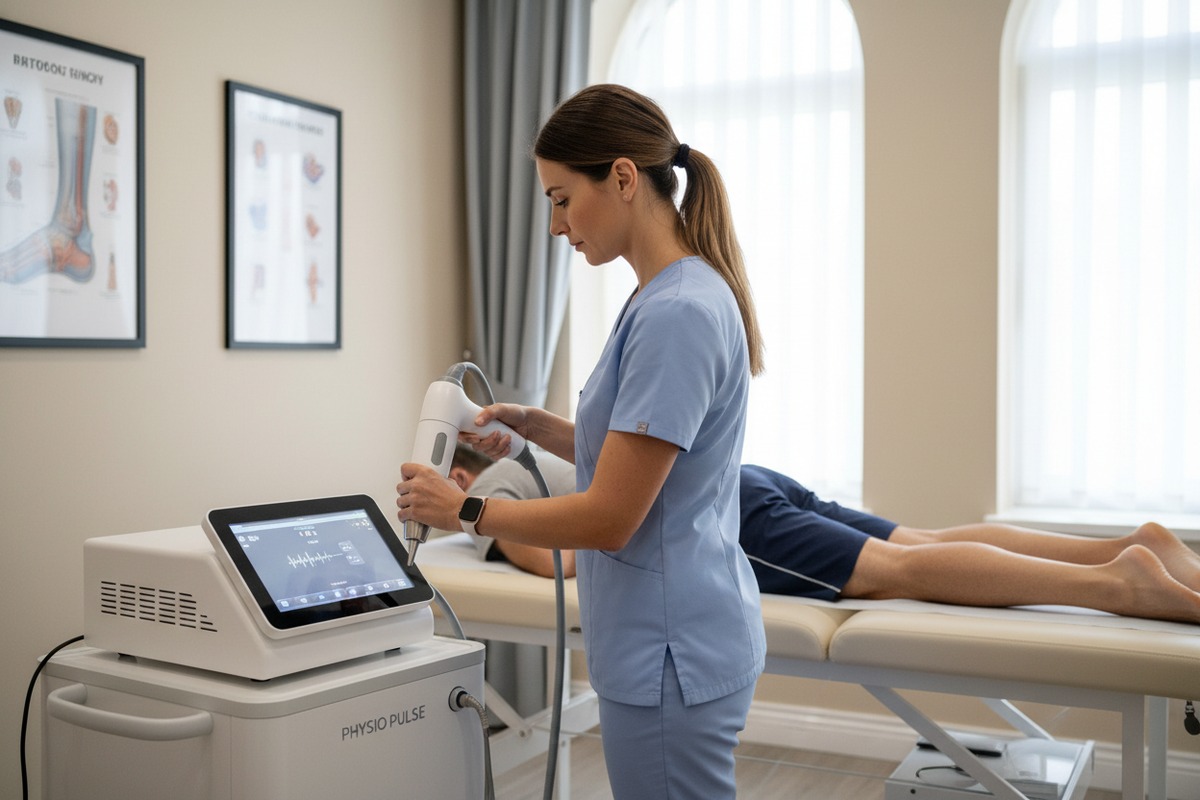
Why Acoustic Impedance Matters
Acoustic impedance determines how shockwaves transfer from the probe into human tissue. Mismatched impedance causes energy reflection. Energy reflects back instead of penetrating forward. Treatment effectiveness drops dramatically.
Soft tissue and orthopedic probes require different impedance matching. Soft tissue interfaces with skin and muscle. Orthopedic probes must transmit through multiple tissue layers to reach bone. Each application demands specific engineering.
Quality Control Questions to Ask
During our own supplier audits, we use this checklist. Apply it to any shockwave probe supplier you evaluate:
| QC Checkpoint | What to Request | Red Flag |
|---|---|---|
| Incoming material inspection | Raw material test certificates | No documentation available |
| Acoustic impedance testing | Test protocol and sample reports | "We don't test impedance" |
| Assembly inspection | In-process QC checklist | Single end-of-line test only |
| Calibration verification | Equipment calibration certificates | Expired or missing certificates |
| Final testing | 100% functional test records | Sample testing only |
| Batch traceability | Lot number tracking system | No traceability system |
Manufacturing Process Transparency
Legitimate suppliers welcome questions about their manufacturing process. They show factory certifications proudly. They explain quality systems clearly.
Ask your supplier: "Can you describe your QC process from raw material to finished probe?" A good answer includes multiple inspection points. It mentions specific testing equipment. It references ISO 13485 or equivalent medical device quality standards.
Our facility maintains ISO 13485 certification 7. We conduct incoming inspection on all components. We test acoustic performance at assembly. We perform 100% functional testing before shipment. We provide batch traceability for every probe.
Third-Party Verification Options
Do not rely solely on supplier claims. Request third-party inspection reports. Many buyers arrange pre-shipment inspections through independent agencies. These inspections verify that products match specifications before they leave the factory.
Ask: "Do you allow third-party inspections during production?" Suppliers who refuse likely have something to hide. Quality-focused manufacturers welcome external verification. It builds trust and catches problems early.
Our company actively encourages pre-shipment inspections. We coordinate with inspection agencies regularly. We provide full factory access during production. This transparency protects both us and our customers.
Conclusion
Choosing between soft tissue and orthopedic probes requires specific technical knowledge. Ask suppliers for penetration depth data 8, energy density specifications, wave generation methods, and quality control documentation. Verify claims with third-party testing. Your patients and your brand reputation depend on these details.
Footnotes
1. Explains energy flux density (mJ/mm²) and its importance in shockwave therapy. ↩︎
2. Provides an overview of shockwave treatment and device types. ↩︎
3. Describes methods for generating focused and radial shockwaves. ↩︎
4. Highlights standards for acoustic impedance testing in medical devices. ↩︎
5. Defines radial pressure wave therapy, its mechanism, and treatment areas. ↩︎
6. Explains focused shockwave therapy, its mechanism, and benefits. ↩︎
7. Authoritative source explaining the ISO 13485 quality management system. ↩︎
8. Compares radial and focused shockwave therapy, detailing penetration depth. ↩︎

 English
 Español de México
 Deutsch
 Français
 العربية
 Русский
Join the Conversation
Have a question or insight to share? We read every comment — whether you're a distributor, salon owner, or just curious about the technology. Your real-world experience helps others make better decisions. Drop your thoughts below.