

Every week, our customer service team receives calls from salon owners frustrated with their current equipment suppliers RMA procedures 1. They bought machines that broke down. Then they discovered their supplier had no clear process for handling complaints. This costs them money, clients, and reputation.
To properly ask suppliers about complaint SOPs, request their written documentation covering RMA procedures, response timelines, remote diagnosis protocols, replacement policies, and warranty terms. Evaluate their compliance with FDA 21 CFR Part 820.198 and ISO 13485:2016 standards. A professional supplier will provide specific metrics on average resolution times and clearly defined escalation paths.
Below, we break down exactly what questions to ask and what answers to expect root cause analysis 2. These insights come from years of handling international orders and refining our own complaint resolution processes.
How do I evaluate if a shockwave therapy machine manufacturer has a professional SOP for my technical complaints?
When our engineering team designs complaint handling workflows, we think about the salon owner waiting for answers CAPA implementation 3. A machine sitting broken in your treatment room means lost revenue every single day. The difference between professional and amateur suppliers shows in their documentation Defect rate 4.
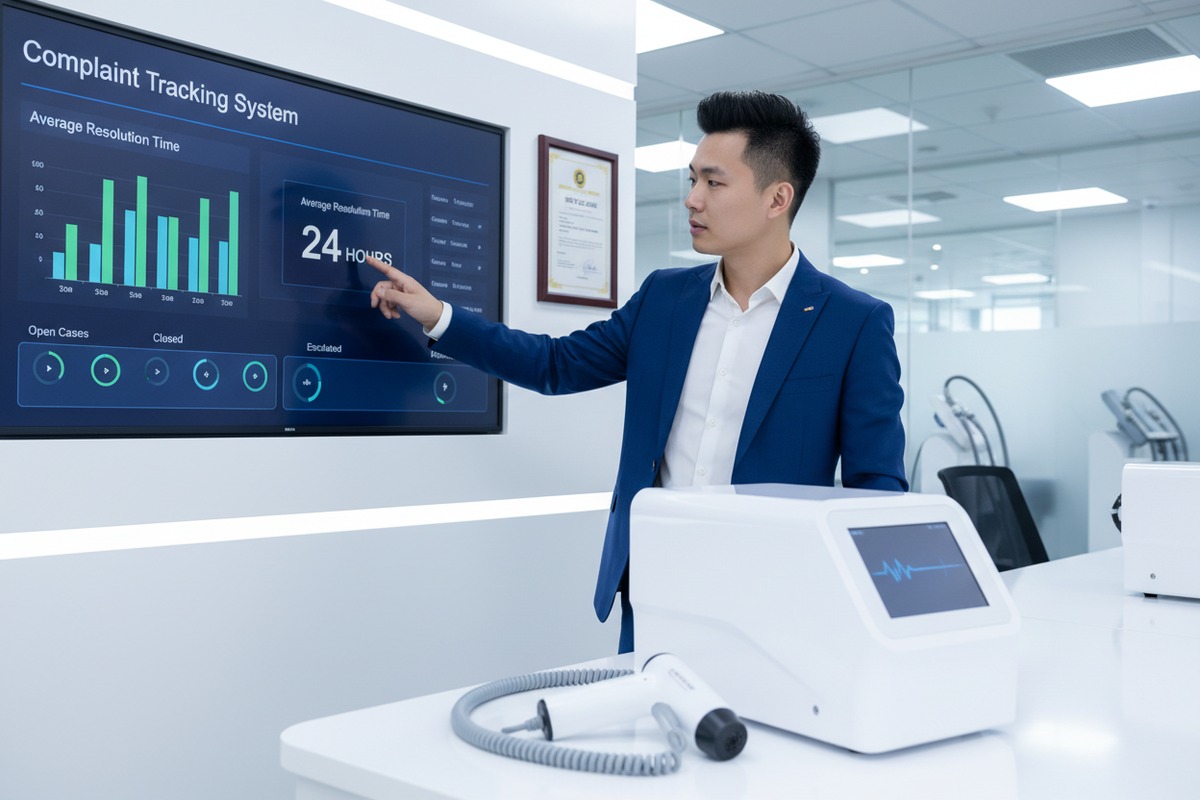
A manufacturer has professional complaint SOPs when they provide written procedures covering intake, assessment, root cause analysis, CAPA implementation, and resolution timelines. Look for ISO 13485:2016 certification, dedicated complaint tracking systems, and clear escalation paths. Request their average response time metrics and ask for references from existing customers who have filed complaints.
What Documentation Should Exist
Professional suppliers maintain several key documents. These include complaint intake forms, investigation protocols, and corrective action templates. When we built our system, we created standardized forms that capture all necessary information upfront.
Ask suppliers to show you their complaint form. It should request:
- Machine serial number
- Purchase date and warranty status
- Detailed problem description
- Video or photo evidence
- Steps already attempted to resolve the issue
If a supplier cannot produce a standardized form, their process likely depends on individual employees rather than systems. This creates inconsistency.
Key Regulatory Standards to Verify
| Standard | What It Covers | Why It Matters |
|---|---|---|
| FDA 21 CFR Part 820.198 5 | Complaint files and investigation requirements | Required for US market compliance |
| FDA 21 CFR Part 803 6 | Medical device reporting obligations | Ensures serious issues get reported |
| ISO 13485:2016 7 | Quality management system for medical devices | International gold standard |
| CE Marking Requirements 8 | European conformity standards | Required for EU market entry |
Request certificates. Legitimate suppliers display these proudly. Our facility underwent rigorous auditing to achieve these certifications because they matter to our customers.
Questions That Reveal True Capability
Ask these specific questions:
- "Can you walk me through what happens from the moment I report a problem until it's resolved?"
- "Who specifically handles complaints? What is their training background?"
- "How do you track complaints? Can I see your ticketing system?"
- "What is your average time from complaint submission to diagnosis?"
- "How do you use complaint data to improve products?"
Watch how they answer. Professionals respond with specifics. They cite numbers, reference systems, and offer documentation. Unprofessional suppliers give vague reassurances.
Root Cause Analysis Capability
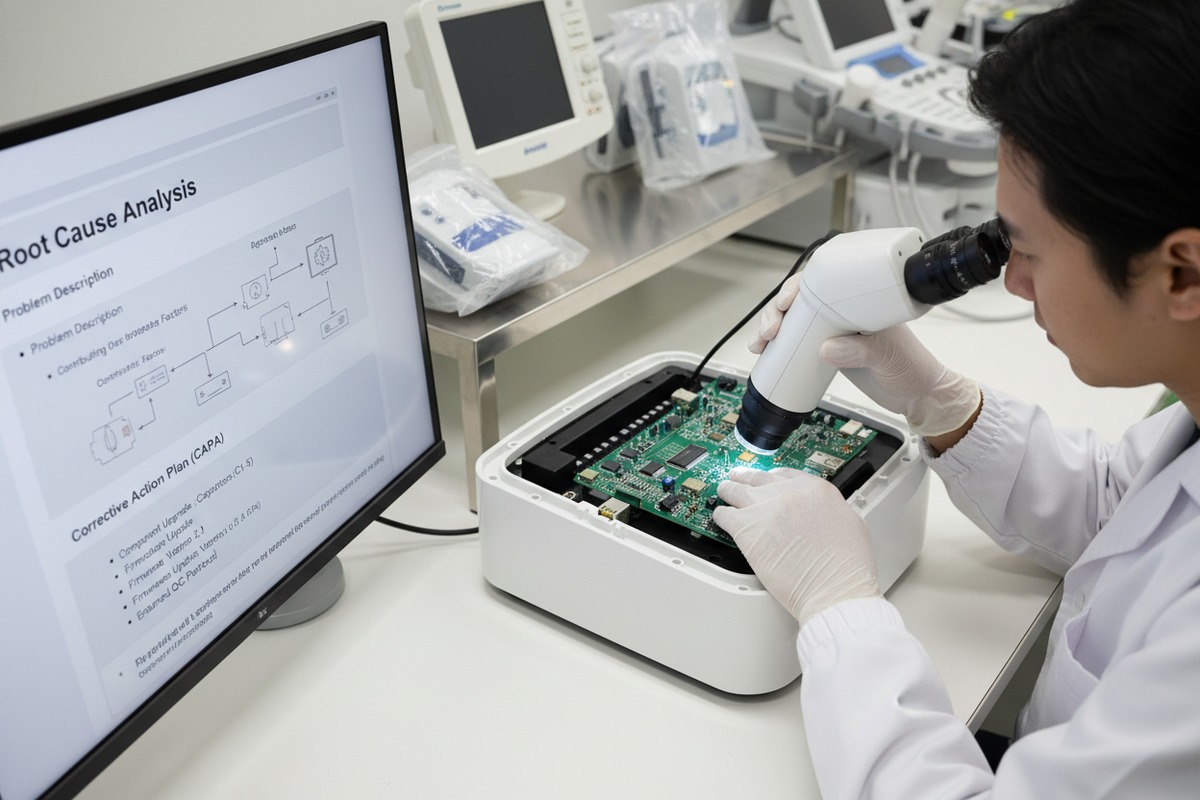
The best suppliers do not just fix problems. They prevent recurrence. Ask about their CAPA process—Corrective and Preventive Actions.
In our facility, when we see the same complaint twice, our quality team investigates. They identify why it happened and implement changes. This might mean adjusting assembly procedures, changing component suppliers, or updating testing protocols.
Request examples. Ask: "Can you describe a recurring complaint you identified and how you fixed it?" A good answer includes specific details about the problem, investigation steps, and implemented solutions.
What specific questions should I ask to ensure my supplier provides fast support for product malfunctions?
Our support team learned that speed matters more than almost anything else when machines malfunction. Your clients have appointments. They expect treatments. A broken machine creates cascading problems—cancelled bookings, refund requests, and damaged trust.
Ask suppliers these questions: "What is your guaranteed response time for initial contact?" "Do you offer remote diagnosis via video?" "What percentage of issues do you resolve without requiring shipping?" "Do you stock replacement parts or manufacture them on demand?" "Is there an expedited escalation path for critical situations?" Document their answers in writing before purchasing.

Remote Diagnosis Protocol
The industry has shifted toward remote troubleshooting. Approximately 90% of reported problems are modular—loose cables, faulty power supplies, blown fuses. These do not require shipping the entire machine back.
When we receive a complaint, our engineers first request video evidence. We have specific guidelines:
- Film the error code or display screen
- Show the machine's behavior when powered on
- Demonstrate the specific function that fails
- Film any unusual sounds or visual issues
Our average video review turnaround is 24 hours. Some suppliers take a week. This difference matters.
Timeline Expectations Table
| Support Stage | Professional Standard | Red Flag Timeline |
|---|---|---|
| Initial response acknowledgment | Within 4 hours | More than 24 hours |
| Video review and diagnosis | 24-48 hours | More than 5 days |
| Replacement part shipment | 48-72 hours after diagnosis | More than 2 weeks |
| Full resolution (typical case) | 5-7 business days | More than 3 weeks |
Get these numbers in writing. Add them to your purchase agreement. Suppliers who hesitate to commit to timelines may not have systems to support them.
Parts Availability Assessment
Ask: "Do you stock common replacement parts, or do you manufacture them when needed?"
Stocked parts ship immediately. Made-to-order parts create delays. In our warehouse, we maintain inventory of the twenty most commonly needed components. Power supplies, display modules, treatment heads, cables—these sit ready to ship.
Request a list of stocked components. Ask about lead times for non-stocked parts. This information predicts your actual downtime when problems occur.
Communication Channel Options
Different situations need different communication methods. For routine updates, email works fine. For urgent issues, you need faster options.
Ask about:
- Dedicated phone support line
- WhatsApp or messaging app support
- Ticketing system with status tracking
- Assigned account manager contact
Our customers appreciate having multiple ways to reach us. When a machine fails before a busy weekend, they need answers fast. Email alone is not enough.
Escalation Path for Critical Issues
Some complaints need special handling. High-volume clinics cannot afford extended downtime. Ask if suppliers offer expedited support tiers.
Questions to ask:
- "Do you offer a white-glove service for urgent situations?"
- "What qualifies for expedited handling?"
- "Is there additional cost for priority support?"
- "Can I purchase an extended service agreement with faster response times?"
Some suppliers reserve faster support for larger accounts. Others offer it as a paid upgrade. Know your options before problems occur.
How can I verify that a supplier's quality control process will minimize the complaints I get from my salon clients?
On our production floor, we catch problems before they reach you. Quality control is not about fixing complaints—it is about preventing them. When our testing protocols identify a defective component, that component never ships. Your clients never experience the failure.
Verify supplier quality control by requesting documentation of their testing protocols, inspection checkpoints, and defect rate metrics. Ask for their incoming material inspection procedures, in-process testing methods, and final quality assurance steps. Request data on their complaint rate per thousand units shipped and compare this across potential suppliers. Factory audits or third-party inspection reports provide additional verification.
Multi-Stage Inspection Framework
Quality happens at multiple stages. Multi-Stage Inspection Framework 9 Problems caught early cost less to fix. Problems caught late—or not caught at all—become your problem.
| Inspection Stage | What Gets Checked | Why It Matters |
|---|---|---|
| Incoming Materials | Component specifications, supplier certificates | Prevents defective parts from entering production |
| In-Process Testing | Assembly accuracy, functional testing | Catches errors during manufacturing |
| Final QA | Complete functionality, cosmetic inspection | Ensures finished product meets standards |
| Pre-Shipment | Packaging integrity, documentation completeness | Protects product during transit |
Ask suppliers to describe each stage. Request specific testing procedures. In our facility, every machine undergoes 47 individual tests before shipping. We document each test result.
Metrics That Matter
Request quantified data:
- Defect rate: How many units per thousand have issues? Industry leaders achieve under 2%.
- First-pass yield: What percentage of units pass all tests on the first attempt? Higher is better.
- Complaint rate: How many complaints per thousand units shipped? Track this over time.
- Warranty claim rate: What percentage of units require warranty service?
These numbers reveal true quality. Suppliers who track them care about improvement. Suppliers who cannot provide them probably do not measure quality systematically.
Predictive Quality Systems
Advanced suppliers use data to predict and prevent failures. Ask about:
- AI-powered analytics that identify patterns in complaint data
- Predictive maintenance recommendations based on usage patterns
- Automated alerts when component batches show higher failure rates
When we analyze our complaint data, patterns emerge. A specific capacitor from a particular supplier batch might show higher failure rates. We identify this quickly, trace affected units, and proactively reach out to customers before failures occur.
Third-Party Verification Options
Do not rely solely on supplier claims. Independent verification adds confidence.
Options include:
- Factory audit by a third-party inspection company
- Pre-shipment inspection for each order
- Review of third-party test reports and certifications
- Customer references who can speak to actual quality experience
We welcome customer visits to our facility. Seeing production firsthand builds trust. Suppliers who discourage visits may have something to hide.
Continuous Improvement Evidence
Quality is not static. Good suppliers improve constantly.
Ask: "How has your complaint rate changed over the past three years?"
Request trend data. Ask about specific improvements implemented. In our case, we reduced power supply failures by 60% after identifying a component weakness and switching suppliers. We improved packaging after seeing transit damage complaints. Each complaint teaches us something.
What are the key details I need in a supplier's replacement policy to protect my brand's reputation?
When our customers face machine failures, their brand reputation is on the line—not ours. Your clients blame you, not your supplier in China. This reality drives how we structure replacement policies. We think about protecting your relationship with your customers.
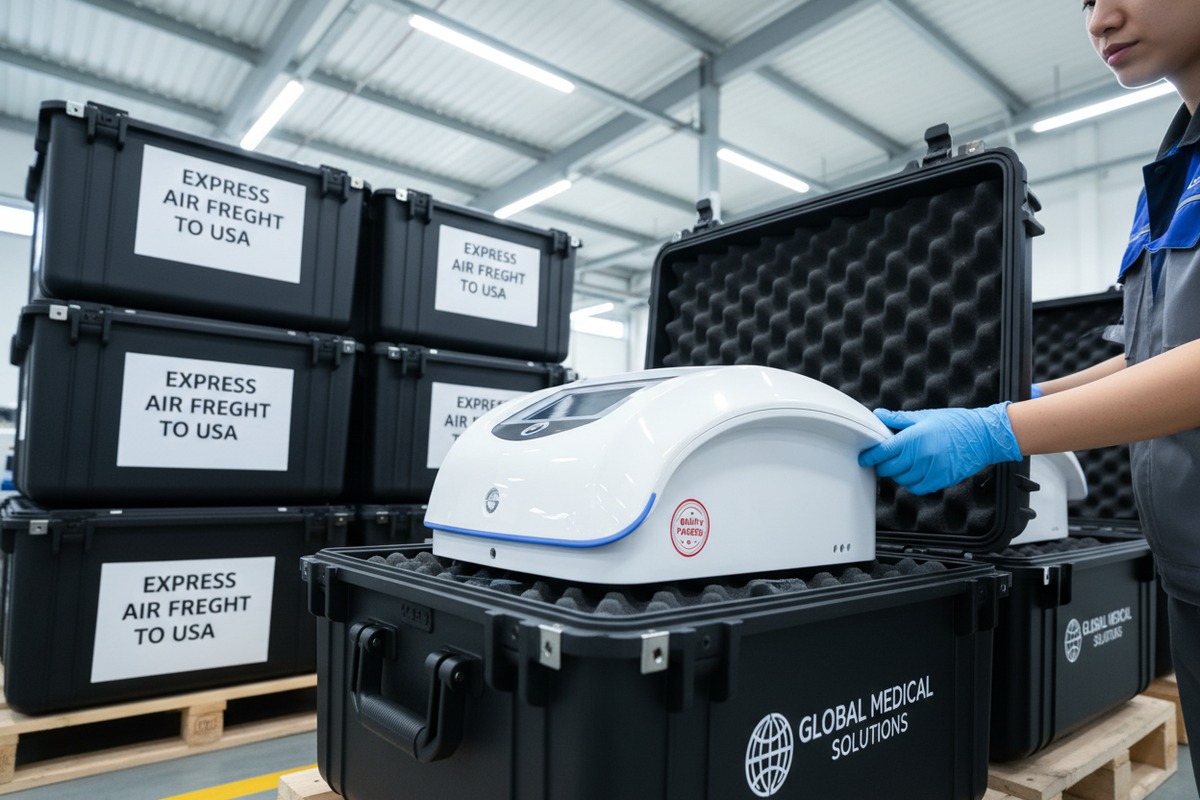
Key replacement policy details include: warranty duration and coverage scope, defect reporting deadlines, modular versus full-unit replacement criteria, refund versus credit options, shipping cost responsibility, and DOA handling procedures. Get these terms in writing before purchase. Verify reporting windows—typically 7 days for obvious defects and 7 days from discovery for hidden defects. Understand what actions void warranty coverage.
Warranty Coverage Specifics
Not all warranties are equal. Dig into details.
| Warranty Element | Questions to Ask | What to Look For |
|---|---|---|
| Duration | "How long is the full warranty period?" | 12-24 months is standard |
| Coverage Scope | "What specific components are covered?" | All functional components should be included |
| Exclusions | "What voids the warranty?" | Reasonable exclusions only |
| Geographic Scope | "Does warranty apply in my country?" | Confirm coverage for your location |
| Transferability | "Can I transfer warranty to my customers?" | Important for resellers |
Some suppliers offer shorter warranties on specific components. Treatment heads might have 6-month coverage while electronics have 12 months. Understand these distinctions.
Defect Reporting Windows
Legal frameworks often require reporting defects within specific timeframes. Miss these windows, and you may lose warranty protection.
Standard requirements:
- Obvious defects: Report within 7 days of delivery
- Hidden defects: Report within 7 days of discovery
- Continued use: Some warranties void if you continue using a machine after discovering a defect
Document everything immediately upon delivery. Test machines thoroughly within the first week. Our receiving checklist helps customers verify functionality quickly.
Modular Versus Full Replacement
Understanding when suppliers replace parts versus entire machines affects your planning.
Most issues involve modular components:
- Power supplies
- Display modules
- Treatment handpieces
- Control boards
- Cables and connectors
Full replacement typically occurs for:
- Dead-on-arrival units
- Multiple component failures
- Manufacturing defects affecting core chassis
- Issues unrepairable through modular approach
Ask: "Under what circumstances do you replace the entire machine versus sending replacement parts?"
Some suppliers require video proof of unit destruction before shipping replacements. They ask you to cut the power cord or damage the screen on camera. This eliminates return shipping costs but limits your options. Clarify this policy upfront.
Refund and Credit Policies
When replacement is not suitable, financial resolution becomes necessary.
Common arrangements:
- Cash refunds for claims under $1,000
- Store credit for larger amounts
- Partial refunds for partially functional units
- Credit toward upgraded models
Negotiate these terms before purchasing. Get them in writing. Ask: "Under what circumstances do you offer cash refunds versus store credit?"
Shipping Cost Allocation
Return shipping for heavy medical equipment gets expensive. Clarify responsibility upfront.
Questions to ask:
- "Who pays return shipping for defective units?"
- "Who pays shipping for replacement parts?"
- "Are there weight or size limits on covered shipping?"
- "Do policies differ during warranty versus post-warranty?"
Some suppliers cover outbound shipping for replacements but require you to pay return shipping for defective units. Others cover everything during warranty. Know before problems arise.
Loaner Equipment Availability
Extended downtime damages your business. Ask about loaner programs.
Questions to ask:
- "Do you offer loaner machines during repairs?"
- "What is the cost for loaner equipment?"
- "How quickly can a loaner be shipped?"
- "What happens if I need to keep the loaner longer than expected?"
Loaner availability can justify choosing a slightly more expensive supplier if it protects your revenue during equipment issues.
Conclusion
Asking the right questions before purchasing shockwave therapy equipment protects your investment and your reputation. Evaluate SOPs, verify response times, assess quality systems, and document replacement terms. A thorough vetting process saves significant trouble later.
Footnotes
1. Explains Return Material Authorization process and its importance. ↩︎
2. Replaced HTTP 403 with a Wikipedia page providing a general, authoritative definition and overview of root cause analysis. ↩︎
3. Details CAPA process, requirements, and importance in the medical device industry. ↩︎
4. Replaced HTTP unknown with a definition and explanation of defect rate specifically in the context of manufacturing and quality control. ↩︎
5. Direct link to the US FDA regulation on complaint files for medical devices. ↩︎
6. FDA’s official guide to Medical Device Reporting (MDR) under 21 CFR Part 803. ↩︎
7. FDA’s page on Quality Management System Regulation, referencing ISO 13485:2016. ↩︎
8. BSI, a Notified Body, explains CE marking requirements for medical devices. ↩︎
9. Academic paper discussing quality inspection planning in multistage manufacturing processes. ↩︎

 English
 Español de México
 Deutsch
 Français
 العربية
 Русский
