

Every week, our engineering team receives inquiries from distributors who feel burned by suppliers making bold R&D claims CAD/CAE software systems 1. They bought machines marketed as “independently developed” only to find generic components inside. The frustration is real. Without proper verification, you risk your brand reputation and customer trust.
To verify independent R&D claims for shockwave therapy machines, you must examine design patents through official databases, request complete engineering documentation including technical drawings and test reports, evaluate the manufacturer’s in-house engineering capabilities, and watch for red flags indicating generic equipment resale.
This guide walks you through each verification step. We will share practical methods our team uses when working with international partners who demand transparency.
How can I verify that my supplier actually owns the design patents for their shockwave machines?
Many suppliers claim patent ownership without providing proof. When our sales team encounters this question, we understand the underlying concern. You need legal certainty before investing in a product line.
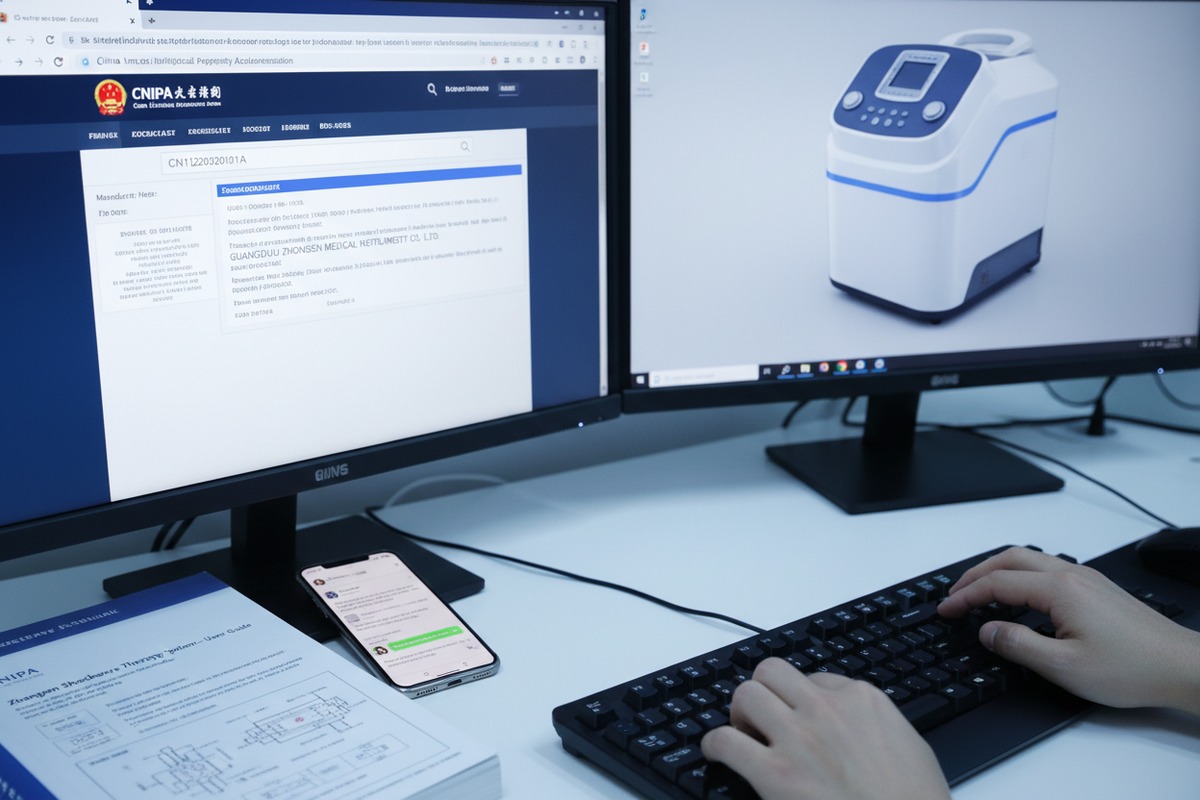
Verify patent ownership by requesting the exact patent numbers, then cross-reference them on official databases like USPTO, EPO, or CNIPA. Check that the patent holder name matches your supplier's legal entity and confirm the patent status is active, not expired or abandoned.
Understanding Patent Types
Not all patents carry equal weight. Design patents protect appearance and aesthetic features. Utility patents protect functional innovations. When evaluating shockwave therapy machines, both matter but serve different purposes.
A design patent means the supplier owns the visual look of the device. This protects your investment if you want exclusive styling. A utility patent covers how the technology actually works. This indicates genuine engineering innovation.
Step-by-Step Patent Verification Process
First, ask your supplier for specific patent numbers. Vague claims like "patented technology" without numbers are warning signs. Real patent holders know their numbers by heart.
Second, visit the appropriate patent database. For US patents, use USPTO 2's Patent Public Search. For European patents, use Espacenet. For Chinese patents, use CNIPA 3.
Third, verify the following details match:
| Verification Point | What to Check | Red Flag |
|---|---|---|
| Patent Holder Name | Must match supplier's legal company name | Name mismatch or individual name only |
| Patent Status | Should show "Active" or "Granted" | Shows "Expired," "Abandoned," or "Pending" |
| Filing Date | Should be several years old for mature technology | Filed very recently with no proven track record |
| Patent Scope | Should describe the actual product you are buying | Describes different device or theoretical concept |
| Expiration Date | Should have years remaining | Expires soon, limiting your exclusivity |
Design Patent vs. Marketing Reality
Our engineering department has seen cases where patents describe aspirational products that never reached production. The patent exists legally, but the marketed device uses different technology entirely.
Always request photos of the patented design alongside the actual product. Compare them carefully. Minor variations are acceptable, but fundamentally different appearances suggest the patent does not cover what you are buying.
International Patent Coverage
A Chinese patent only protects within China. If you sell in the United States, you need US patent coverage. Ask your supplier which jurisdictions their patents cover. Limited geographic coverage may affect your competitive protection in key markets.
What specific engineering documents should I ask for to prove independent R&D?
During factory audits, we often show visiting buyers our documentation systems. Real R&D leaves a paper trail. Without proper documentation, claims of independent development remain unverifiable.
Request design history files, technical drawings with revision history, component specifications with supplier traceability, test protocols and results, and risk management documentation. Legitimate manufacturers maintain these records for regulatory compliance and can share relevant portions under NDA.

The Design History File
Medical device regulations require manufacturers to maintain Design History Files 4. These contain every design decision, test result, and change made during development. A manufacturer with genuine R&D capabilities can produce these documents.
Ask specifically for:
- Design input documents showing original requirements
- Design output documents showing how requirements were met
- Verification test repo 5rts proving specifications were achieved
- Validation test reports proving the device works for intended use
Technical Drawing Requirements
Original equipment manufacturers create their own technical drawings. Look for these indicators of authentic in-house design:
| Document Type | What It Proves | What to Look For |
|---|---|---|
| Assembly Drawings | Overall design ownership | Company name in title block, original drawing numbers |
| Component Drawings | Individual part design | Detailed dimensions, tolerances, material specifications |
| Revision History | Active development process | Multiple revisions with dates and change descriptions |
| BOM (Bill of Materials) | Supply chain control | Specific part numbers, approved vendor lists |
| Circuit Schematics | Electronic design capability | Original circuit design, not copied reference designs |
Test Reports and Certifications
Independent R&D means independent testing. Ask for test reports from accredited laboratories. Look for ISO/IEC 17025 certification 6 on the testing lab. This international standard ensures testing competence.
For shockwave machines specifically, request:
- IEC 60601-1 electrical safety 7 test reports
- EMC (electromagnetic compatibility) test reports
- Acoustic output measurements and calibration records
- Durability and life cycle testing results
Risk Management Documentation
ISO 14971 8 requires medical device manufacturers to document risk management. This includes hazard identification, risk analysis, and risk control measures. A manufacturer with real R&D capability has these documents.
The risk management file should show thoughtful analysis of shockwave-specific risks like acoustic energy output control, tissue damage prevention, and user safety features.
Traceability Systems
Our quality team maintains complete component traceability. Every part in our machines traces back to specific suppliers, lot numbers, and incoming inspection records. This level of documentation only exists when a manufacturer controls their own production.
Ask to see:
- Incoming quality inspection records
- Component lot traceability matrices
- Supplier qualification documents
- Non-conformance and corrective action records
How do I evaluate if a manufacturer can handle my custom technical requirements for shockwave therapy?
When customers visit our facility, they tour our R&D department and meet our engineers directly. This interaction reveals more than any document review. True customization capability requires specific resources and expertise.
Evaluate customization capability by examining the manufacturer's engineering team qualifications, CAD/CAE software systems, prototyping equipment, previous customization projects, and their process for handling technical change requests from concept through production validation.
Engineering Team Assessment
A manufacturer claiming R&D capability should have qualified engineers. Ask about their engineering team structure. Look for:
- Electrical engineers for control system customization
- Mechanical engineers for housing and applicator design
- Software engineers for interface and protocol modifications
- Quality engineers for validation and verification
Request engineer credentials when possible. Degrees, certifications, and years of experience matter. A team of junior technicians cannot handle complex customization projects.
Design and Prototyping Capabilities
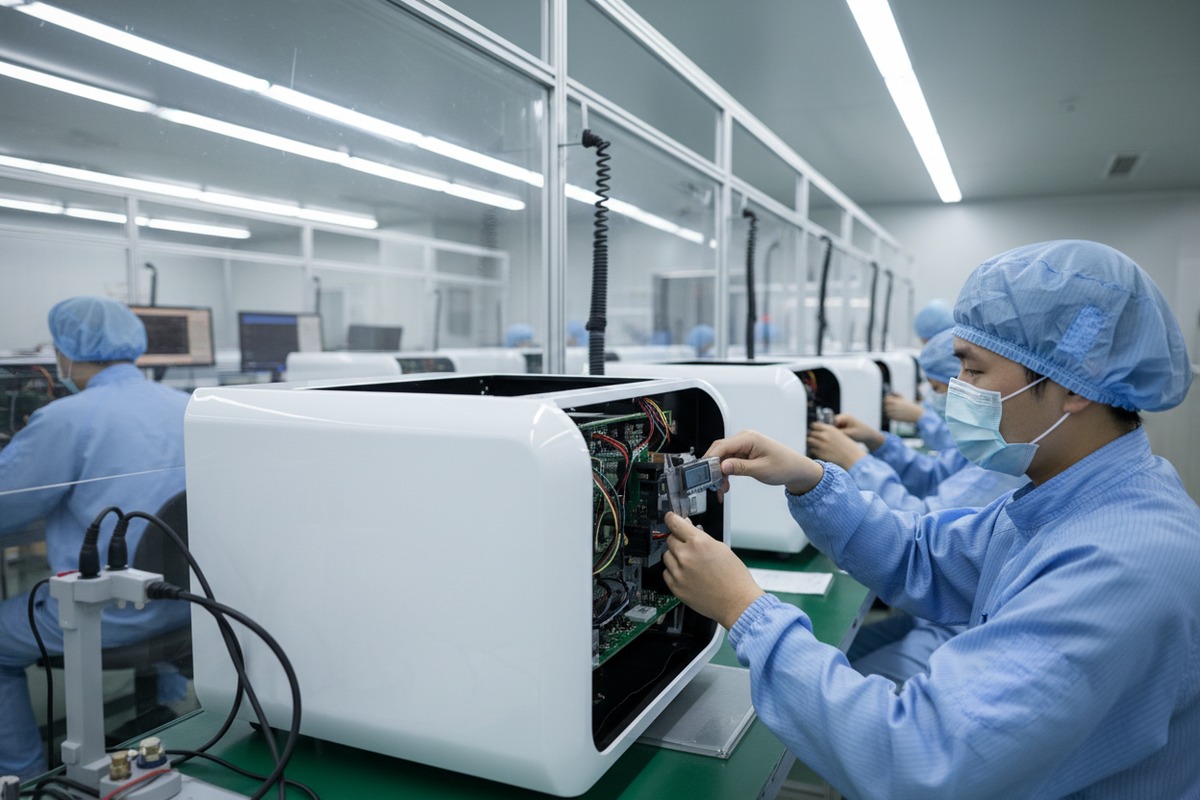
Real R&D requires real tools. During facility visits, look for:
| Capability | Equipment/Resource | Why It Matters |
|---|---|---|
| CAD Design | SolidWorks, AutoCAD, or equivalent | Enables design modifications and new part creation |
| Simulation | FEA software, circuit simulation tools | Validates designs before physical prototyping |
| Rapid Prototyping | 3D printers, CNC machines | Creates test samples quickly for iteration |
| Testing Equipment | Oscilloscopes, acoustic measurement tools | Verifies customizations meet specifications |
| Clean Room | Controlled environment for sensitive assembly | Required for quality medical device production |
Customization Process Evaluation
Ask how they handle customization requests. A structured process indicates mature capability. Look for these stages:
Stage 1: Requirements Definition – They should ask detailed questions about your needs, intended use, and market requirements.
Stage 2: Feasibility Analysis – They should evaluate technical feasibility and provide honest feedback about limitations.
Stage 3: Design Proposal – They should present design concepts with specifications, timelines, and costs.
Stage 4: Prototype Development – They should create functional prototypes for your evaluation.
Stage 5: Validation Testing – They should conduct testing to verify the customization meets requirements.
Stage 6: Production Transfer – They should have a process for moving validated designs into production.
Reference Projects
Ask for examples of previous customization projects. Real manufacturers have portfolios. They can describe challenges faced, solutions developed, and outcomes achieved. Vague responses suggest limited actual experience.
Request references from other customers who received customization work. Speaking directly with other buyers reveals the truth about capability and reliability.
Communication and Technical Support
Customization requires ongoing communication. Evaluate how quickly and accurately they respond to technical questions. Our team aims to answer technical inquiries within 24 hours with substantive information.
A manufacturer who struggles to explain their own technology probably did not develop it.
What are the red flags that my supplier is just reselling generic shockwave equipment?
Our industry has many trading companies posing as manufacturers. They buy generic machines and add their logos. Identifying these resellers protects your investment and brand integrity.
Red flags include inability to provide technical documentation, identical products appearing under multiple brand names, refusal of factory visits, lack of engineering staff, no design modification capability, and prices significantly below market average without clear cost justification.
Identical Products Under Multiple Brands
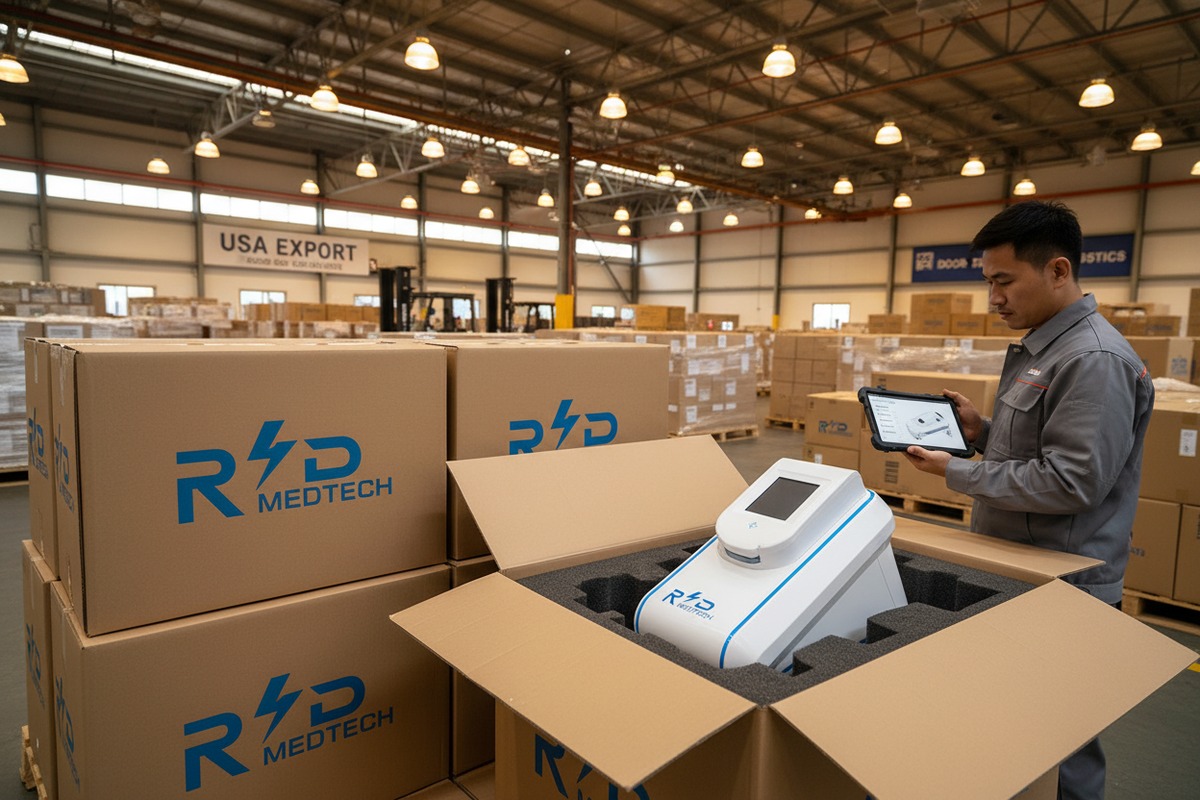
Search product images on Alibaba, Google Images, and industry trade shows. If the exact same machine appears under different brand names, you are likely looking at generic equipment from a common source.
Check these details:
- Control panel layout and button arrangement
- Housing shape and proportions
- Applicator handle design
- Screen interface appearance
- Packaging style
Minor differences suggest OEM branding of the same base product. Completely identical appearances confirm generic sourcing.
Price Analysis Red Flags
Genuine R&D costs money. Development, testing, tooling, and documentation require investment. This investment must be recovered through pricing.
| Price Indicator | What It Suggests |
|---|---|
| Price 30%+ below competitors | Likely generic product with no R&D cost recovery |
| Unable to justify pricing | Does not understand true costs, indicating non-manufacturer |
| Dramatic price drops when pushed | No real cost basis, just margin negotiation |
| Same price regardless of quantity | Not connected to actual production costs |
Documentation Failures
Ask for documents that only manufacturers possess. Resellers cannot provide:
- Original CAD files for mechanical components
- Firmware source code or version history
- Component qualification test reports from their own testing
- Design change orders showing engineering decisions
When suppliers claim documents are "confidential" or "not available," probe further. Manufacturers can share documentation under appropriate agreements. Total refusal suggests they do not possess what they claim.
Factory Visit Responses
Insist on factory visits. Genuine manufacturers welcome visitors. Trading companies make excuses:
- "Our factory is being renovated"
- "COVID restrictions prevent visits"
- "We only show factory to confirmed orders"
- "The factory is in a restricted area"
When visits happen, verify the facility matches the supplier. Check employee uniforms, signage, and documentation for consistent company naming. Some trading companies arrange tours of contract factories they do not actually control.
Technical Knowledge Gaps
Ask detailed technical questions during negotiations:
- What is the focal zone diameter at -6dB?
- What peak pressure does the pneumatic system generate?
- How does your applicator coupling mechanism work?
- What microcontroller platform runs your firmware?
Real manufacturers answer confidently with specific details. Resellers give vague responses, defer to "engineers who are unavailable," or provide obviously incorrect information.
Supply Chain Control Indicators
Manufacturers control their supply chains. Ask about:
- Key component suppliers and qualification criteria
- Incoming inspection procedures
- Assembly process controls
- Quality testing at each production stage
Detailed answers with specific examples indicate genuine manufacturing control. Generic responses suggest the supplier is disconnected from actual production.
Conclusion
Verifying R&D claims requires systematic investigation across patents, documentation, capabilities, and supplier behavior. The effort protects your brand and your customers. Use these verification methods before committing to any shockwave therapy equipment supplier.
Footnotes
1. Provides a comprehensive overview of CAD and CAE in engineering. ↩︎
2. Official website of the United States Patent and Trademark Office. ↩︎
3. Official English website of the China National Intellectual Property Administration. ↩︎
4. Official FDA guidance on design controls for medical devices. ↩︎
5. Official website of the European Patent Office. ↩︎
6. Official page for the international standard for testing and calibration laboratories. ↩︎
7. Official page for the international standard for medical electrical equipment safety. ↩︎
8. Official page for the international standard for risk management of medical devices. ↩︎

 English
  Español de México
  Deutsch
  Français
  العربية
  Русский