
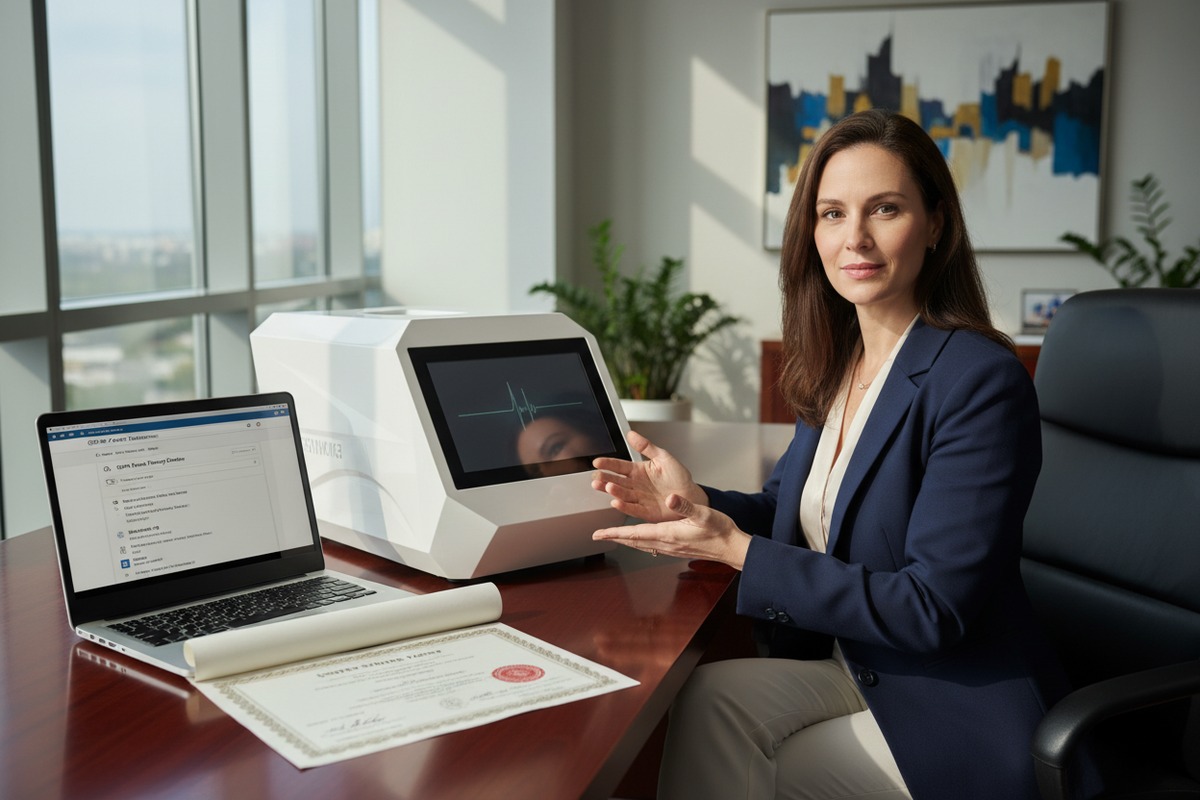
Our engineering team has seen it happen too many times. A buyer invests heavily in a shockwave therapy machine from China, only to receive a cease-and-desist letter months later. The problem? Hidden patent infringement 1. This risk is real, and the consequences can destroy your brand overnight.
To check for IP infringement when sourcing shockwave therapy machines from China, verify the supplier’s patent ownership through CNIPA database searches, conduct freedom-to-operate analyses for your target markets, request comprehensive technical documentation, and implement contractual IP warranties with indemnification clauses.
The medical device sector saw 16,000 patent infringement cases in China in 2020 alone. Understanding how to navigate this landscape is critical for protecting your business. Let me walk you through the specific steps we use when working with our international partners.
How can I verify that my Chinese supplier actually owns the design patents for their shockwave therapy machines?
When we first started exporting shockwave therapy equipment, verifying patent ownership was one of the biggest challenges our clients faced. Many suppliers claim ownership but lack proper documentation. The result? Buyers unknowingly purchase infringing products.
To verify a Chinese supplier's design patent ownership, request their patent registration certificates, search the CNIPA database using the patent numbers provided, confirm the patent holder name matches the company's registered business name, and verify the patent status is active and not expired or invalidated.
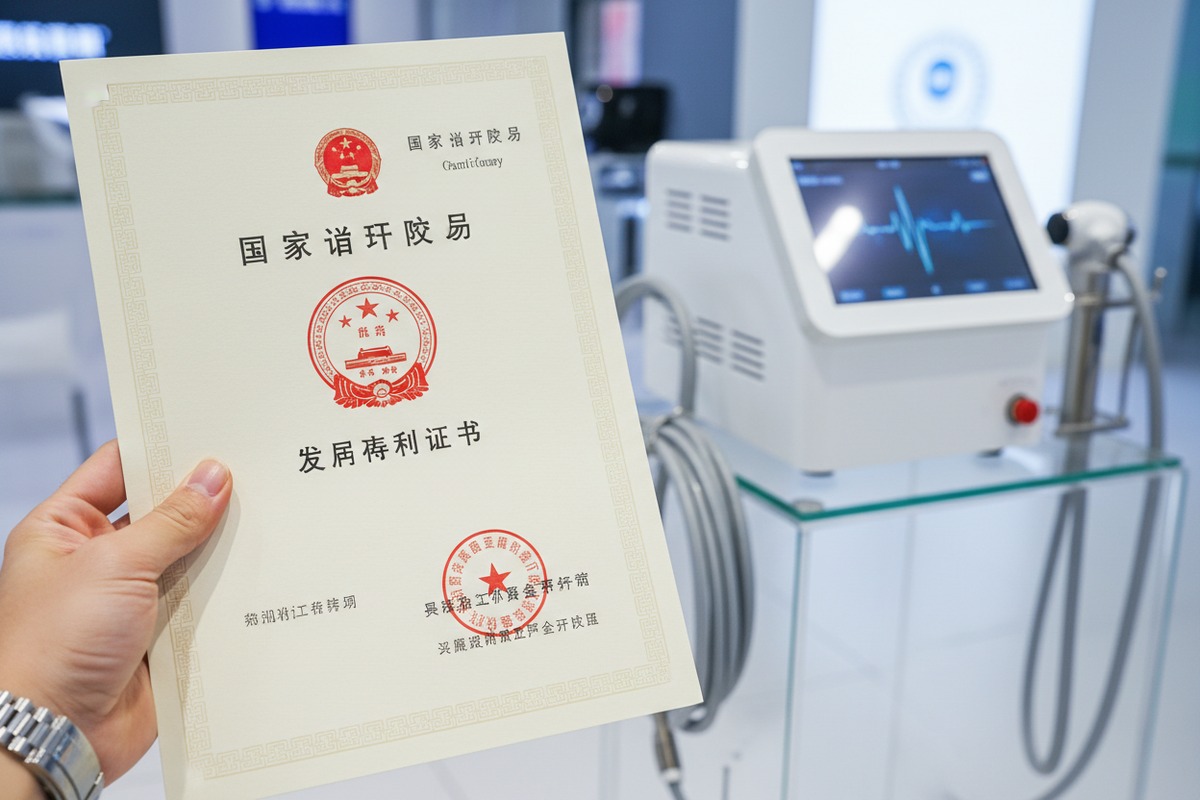
Understanding China's Patent System
China operates under a "first-to-file" system. This means whoever files first owns the patent, regardless of who invented it first. This differs from some Western systems. When our R&D team develops new designs, we file immediately to protect our work.
There are three types of patents in China:
| Patent Type | Duration | Examination | Best For |
|---|---|---|---|
| Invention Patent 2 | 20 years | Substantive review | Core technology, complex innovations |
| Utility Model | 10 years | Preliminary review only | Minor technical improvements |
| Design Patent | 15 years | Preliminary review only | Product appearance, aesthetics |
For shockwave therapy machines, design patents cover the exterior appearance. These include the sleek white chassis, the angular housing, and the control panel layout. Utility models might cover the handpiece connection mechanism or the cooling system design.
Step-by-Step Verification Process
First, request the actual patent certificates from your supplier. A legitimate manufacturer will provide these without hesitation. At our facility, we maintain organized records of all our design registrations and share them openly with serious buyers.
Second, visit the CNIPA website (English version available). Enter the patent number exactly as shown on the certificate. The database will display the patent holder's name, filing date, and current status.
Third, cross-reference the patent holder name with the supplier's business license. These must match exactly. Some dishonest suppliers show patents owned by other companies. This is a major red flag.
Common Red Flags to Watch
Be cautious if a supplier cannot produce patent certificates within 48 hours. Legitimate manufacturers have these documents readily available. Also watch for patents that have expired or been invalidated. The CNIPA database 3 shows this information clearly.
Another warning sign is when multiple suppliers show identical patent numbers. This suggests the patents belong to neither party, or one is simply copying another's documentation.
What steps should I take to ensure my private-label shockwave device doesn't infringe on existing US patents?
Our US clients often ask this question before placing orders. They understand that Chinese patents and US patents are completely separate systems. A product that is legal in China might infringe patents in the United States. This creates significant liability for importers.
To ensure your private-label shockwave device doesn't infringe US patents, conduct a freedom-to-operate search through the USPTO database, hire a US patent attorney to analyze potentially conflicting patents, request detailed technical specifications from your manufacturer, and compare each technical feature against existing patent claims.
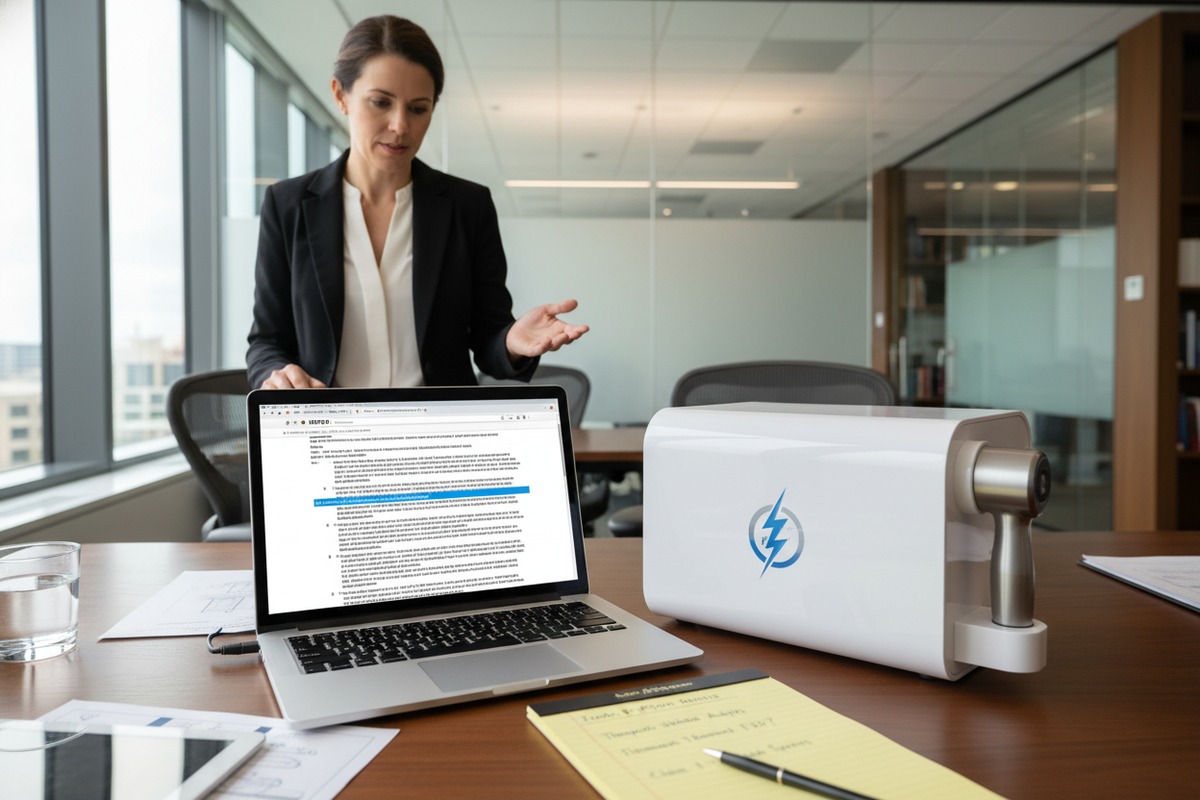
Why US Patents Require Separate Analysis
When we prepare products for our American partners, we always emphasize this point: Chinese IP clearance means nothing in the US market. The US Patent and Trademark Office 4 (USPTO) maintains its own database. Patents registered there grant exclusive rights only within US territory.
Major shockwave therapy technology patents exist in the US market. These cover specific mechanisms like:
- Electromagnetic pulse generation methods
- Pneumatic pressure wave systems
- Focused versus radial wave delivery
- Handpiece ergonomic designs
- Digital control interfaces
Conducting a Freedom-to-Operate Analysis
A freedom-to-operate (FTO) analysis determines whether your product might infringe existing patents. freedom-to-operate analysis 5 This is different from patentability analysis. FTO asks: "Can I sell this without being sued?"
| Analysis Type | Purpose | Cost Range | Recommended For |
|---|---|---|---|
| Preliminary Patent Search | Identify obvious conflicts | $500-2,000 | Initial sourcing decisions |
| Comprehensive FTO Analysis | Detailed legal opinion | $5,000-15,000 | Before large orders |
| Full Patent Landscape Study | Map all relevant patents | $15,000-50,000 | New market entry |
For most importers, a comprehensive FTO analysis provides adequate protection. This involves a patent attorney reviewing your product specifications against relevant patent claims.
Working with Your Chinese Supplier
Request complete technical documentation from your supplier. At our production facility, we provide full specification sheets that include internal component details, circuit diagrams, and mechanical drawings. This information enables accurate patent comparison.
Ask specifically about the shockwave generation method. Different technologies carry different patent risks. Radial pressure wave technology has broader patent clearance in many markets compared to focused shockwave systems.
Modifying Designs to Avoid Infringement
Sometimes, minor design modifications can navigate around existing patents. Our engineering team has experience adjusting control interfaces, housing shapes, and internal configurations to help clients achieve patent clearance. This is part of our ODM service offering.
However, never modify safety-critical components without proper testing. Any changes must maintain regulatory compliance and product effectiveness.
How do I check if the internal technology of a shockwave machine from China violates any global patents?
Many buyers focus only on external design patents. They forget that internal technology carries equal or greater risk. When our quality control team inspects units before shipment, we examine both visible features and internal mechanisms. You should demand the same thoroughness from any supplier.
To check if internal technology violates global patents, request detailed technical drawings and component lists from the manufacturer, identify the core technology mechanism used, conduct patent searches in each target market database, and engage patent professionals to compare internal features against patent claims.
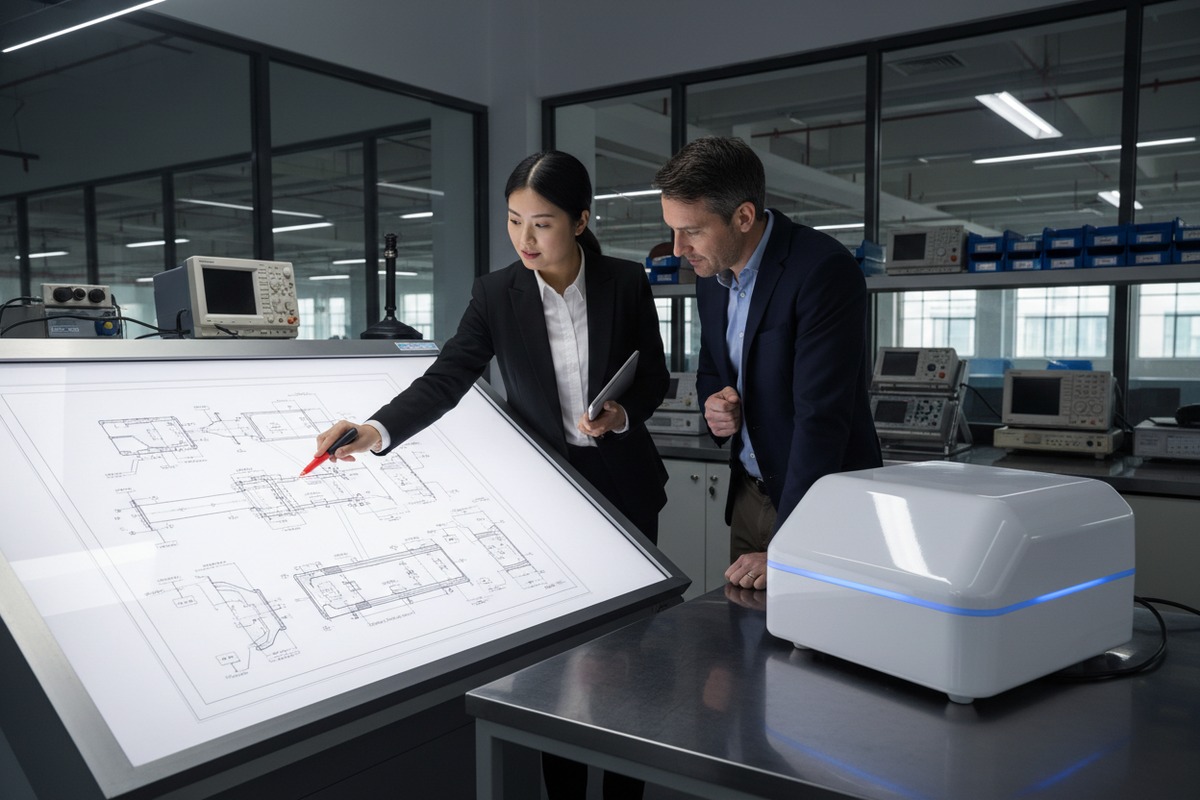
Understanding Internal Technology Risks
Shockwave therapy machines contain several patentable technologies inside their housings. The sleek white exterior you see conceals complex engineering. Each component may be covered by different patents in different countries.
Key internal technologies include:
Shockwave Generation Mechanisms
| Technology Type | How It Works | Patent Density | Risk Level |
|---|---|---|---|
| Electromagnetic | Coil generates magnetic pulse | High | Elevated |
| Pneumatic (Ballistic) | Compressed air drives projectile | Medium | Moderate |
| Piezoelectric | Crystal deformation creates wave | High | Elevated |
| Electrohydraulic | Spark discharge in water | Lower | Moderate |
Each mechanism type has different patent landscapes. Our production line primarily uses pneumatic technology because it offers favorable patent clearance in most markets. However, we always encourage buyers to verify independently.
Component-Level Patent Analysis
Beyond the generation mechanism, individual components may have patent protection. These include:
- Control software algorithms
- Display interface designs
- Energy adjustment systems
- Treatment tip geometries
- Cooling system configurations
Request a complete bill of materials from your supplier. This document lists every component inside the machine. Then work with patent professionals to assess each critical component.
Multi-Jurisdictional Search Strategy
If you sell in multiple countries, you need patent searches in each market. A product clear in the US might infringe European patents. Here is a practical approach:
Start with your primary market. For most of our clients, this is the United States. Conduct thorough searches there first. Then expand to secondary markets based on sales volume.
The European Patent Office 6 (EPO) database covers EU patents. Individual country offices handle national patents. Japan, Korea, and Australia have separate databases requiring individual searches.
Using Patent Professionals Effectively
Do not attempt global patent searches alone. Patent landscapes for medical devices are complex. Hire professionals with specific experience in therapeutic medical equipment.
Provide your patent attorney with complete technical documentation. Include photographs of internal components, circuit diagrams, and software descriptions. Incomplete information leads to incomplete analysis.
What specific documentation should I request from a manufacturer to protect my brand from future IP legal issues?
Throughout our years of exporting to North America and Europe, we have developed a comprehensive documentation package for serious buyers. Proper documentation serves two purposes: it enables your due diligence, and it provides evidence if disputes arise later. Never accept vague assurances when documents are available.
To protect your brand from IP legal issues, request patent registration certificates with CNIPA verification, design origin declarations, component sourcing documentation, IP indemnification clauses in your purchase agreement, manufacturer's IP insurance certificates, and detailed technical specifications for third-party verification.

Essential Documentation Checklist
Create a standard documentation request that you send to every potential supplier. This demonstrates professionalism and quickly separates serious manufacturers from risky ones.
| Document Category | Specific Items | Purpose |
|---|---|---|
| Patent Documentation | Registration certificates, CNIPA search results, patent holder verification | Confirms ownership claims |
| Business Credentials | Business license, export permits, manufacturing certifications | Verifies legal status |
| Technical Specifications | Drawings, component lists, software documentation | Enables patent comparison |
| Quality Certifications | ISO 13485, CE marking, FDA registration | Confirms regulatory compliance |
| Contractual Protections | IP warranties, indemnification clauses, NDA agreements | Provides legal recourse |
Contractual IP Protections
Beyond documentation, your purchase agreement must include specific IP provisions. At our company, we include standard IP warranties in our contracts. These state that products do not infringe third-party rights to our knowledge.
Key contractual elements include:
IP Warranty Clause: The manufacturer warrants that products do not infringe valid patents in specified territories.
Indemnification Clause: The manufacturer agrees to defend and indemnify the buyer against third-party IP claims.
Disclosure Requirement: The manufacturer must disclose any known IP conflicts or pending disputes.
Audit Rights: The buyer retains rights to audit manufacturing processes and component sources.
Supply Chain Transparency
Request documentation not just from your primary manufacturer, but from critical component suppliers. Copycat manufacturers often use infringing components sourced from questionable suppliers.
Ask for certificates of origin for key components like the shockwave generator, control boards, and treatment handpieces. Legitimate manufacturers maintain clear supply chain records.
Ongoing Protection Measures
Documentation is not a one-time event. Establish ongoing monitoring and verification processes. Market conditions change. Patents expire. New patents issue. Your protection strategy must adapt.
Consider registering your own trademarks and designs in China under the first-to-file system 7. This prevents suppliers from registering your brand and blocking your future business. We have seen this happen to unprepared buyers.
Set up alerts for new patent publications in your product category. Services like Google Patents and commercial patent monitoring tools can automate this process.
When Documentation Is Insufficient
Sometimes, even complete documentation cannot eliminate risk. In these cases, consider IP insurance products that protect against infringement claims. The cost is relatively low compared to litigation expenses.
Also maintain reserves for potential legal defense. The Echosens v. Wuxi Hisky case mentioned in industry reports resulted in a 30 million RMB judgment. While this case is exceptional, it illustrates potential exposure.
Conclusion
Protecting your brand from IP infringement when sourcing shockwave therapy machines requires systematic verification, proper documentation, and contractual safeguards. Take these steps seriously before placing orders. The investment in due diligence is minimal compared to potential litigation costs and brand damage.
Footnotes
1. Provides a clear legal definition of patent infringement. ↩︎
2. Details the types of patents available in China, including invention patents. ↩︎
3. Official website for China National Intellectual Property Administration. ↩︎
4. Official website for the United States Patent and Trademark Office. ↩︎
5. Explains the purpose and process of a freedom-to-operate analysis. ↩︎
6. Official website for the European Patent Office. ↩︎
7. Authoritative Wikipedia article explaining the ‘first-to-file’ patent system, relevant to the article’s comparison with Western systems. ↩︎
8. Provides examples and explanation of intellectual property indemnification clauses. ↩︎

 English
  Español de México
  Deutsch
  Français
  العربية
  Русский