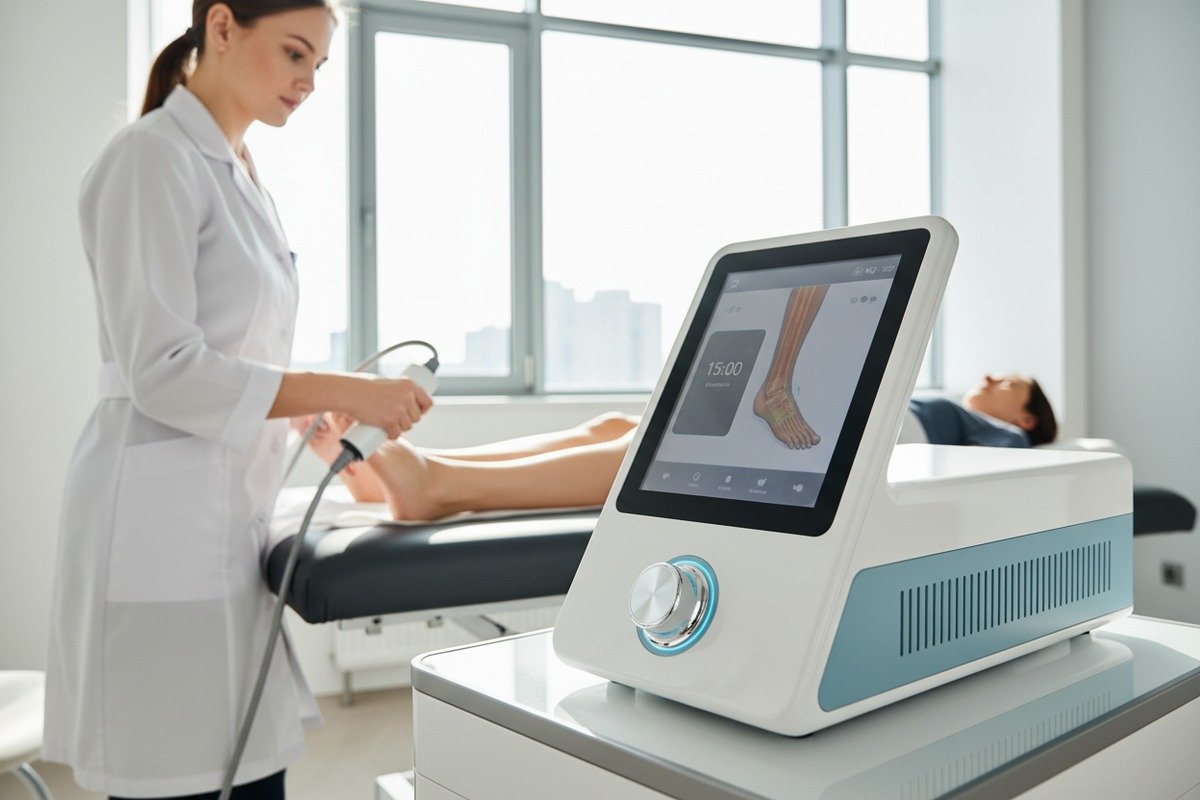
When we first started designing Geräte für die Stoßwellentherapie 1 on our production floor, clinic owners kept asking us the same question. They needed precise timing to schedule appointments. They wanted to maximize patient throughput without sacrificing treatment quality. This uncertainty creates real business headaches for practitioners everywhere.
A standard shockwave therapy treatment session typically lasts between 5 and 30 minutes, with most sessions falling in the 10-20 minute range. The actual shockwave application takes 3-5 minutes, while the complete appointment including preparation and post-treatment guidance extends the total clinic time.
Understanding session duration helps you plan your clinic schedule effectively. Let me walk you through everything you need to know about treatment timing, session frequency, and how to optimize your practice workflow.
How long should I expect a standard shockwave therapy session to last?
Our engineering team has tested hundreds of Behandlungsprotokollen 2 while developing our devices. We noticed significant variations in how different clinics structure their sessions. This inconsistency often confuses practitioners who are new to offering shockwave therapy services.
A standard shockwave therapy session lasts 10-20 minutes for most conditions. The active shockwave application typically requires only 3-5 minutes, but total appointment time includes patient intake, gel application, positioning, treatment delivery, and post-session instructions.
Breaking Down the Treatment Timeline
The session length depends on several interconnected factors. Let me explain each component of a typical appointment.
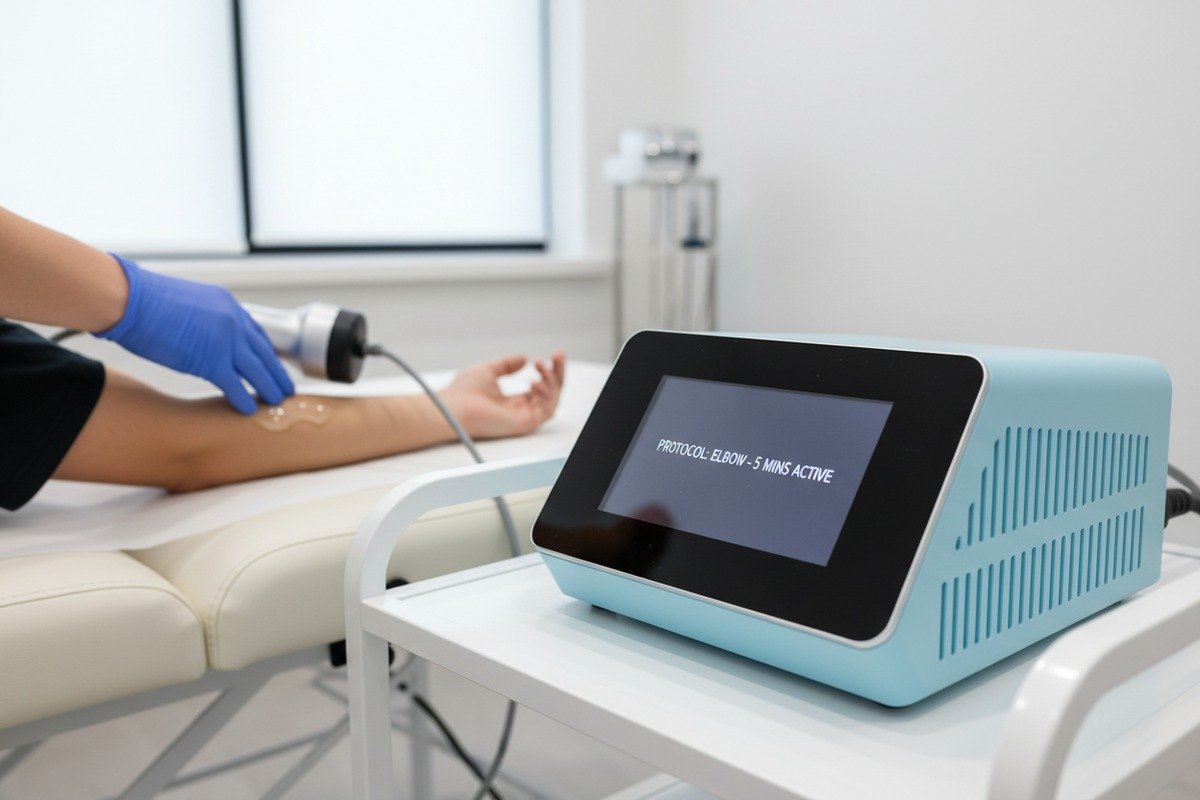
First, patient preparation takes 2-5 minutes. This includes reviewing the treatment area, applying conductive gel 3, and positioning the patient correctly. Our devices feature intuitive touchscreen interfaces that display anatomical diagrams 4, helping practitioners identify optimal treatment zones quickly.
Second, the actual shockwave application runs 3-10 minutes depending on the condition. During this phase, the handheld applicator delivers approximately 2000 shockwaves per session. The intensity can be adjusted based on patient feedback.
Third, post-treatment guidance requires 3-5 minutes. Practitioners explain aftercare instructions and schedule follow-up appointments.
Session Duration by Treatment Type
| Behandlungsbereich | Aktive Behandlungszeit | Total Appointment Time |
|---|---|---|
| Heel Pain (Plantar Fasciitis) | 3-5 Minuten | 15-20 Minuten |
| 3 Sitzungen (3 Wochen) | 5-10 Minuten | 15-20 Minuten |
| Shoulder Tendinitis | 5-8 Minuten | 20-25 Minuten |
| Tennisarm | 3-5 Minuten | 15-20 Minuten |
| Hip Bursitis | 5-10 Minuten | 20-30 Minuten |
Focused vs. Radial Shockwave Differences
The type of shockwave therapy affects session length. Fokussierte Stoßwellentherapie 5 penetrates deeper into tissue and requires more precise targeting. This approach typically takes longer because practitioners must carefully direct energy to specific anatomical structures.
Radiale Stoßwellentherapie 6 disperses energy over a broader area. Sessions tend to be shorter since less precision targeting is needed. Many physiotherapy clinics prefer radial devices for treating superficial conditions.
When we calibrate our devices during quality testing, focused therapy protocols average 20-30 minutes while radial protocols typically finish in 10-20 minutes.
How many sessions do I need to schedule for my clients to see optimal results?
Through our experience working with clinic owners across the United States and Europe, we have gathered substantial feedback about treatment outcomes. Many practitioners initially underestimate the importance of multiple sessions. Single treatments rarely deliver lasting results for chronic conditions.
Most patients require 3-6 shockwave therapy sessions to achieve optimal results. Sessions are typically spaced 5-10 days apart or weekly to allow tissue healing between treatments. Studies show 87% success rates at 6-month follow-up when patients complete full treatment courses.

Understanding the Healing Timeline
Shockwave therapy works by stimulating your body's natural repair mechanisms 7. The acoustic waves create controlled microtrauma that triggers regenerative processes. This healing takes time.
Immediate pain relief occurs in some patients after the first session. However, tissue regeneration continues for weeks afterward. Full benefits typically appear 4-11 weeks after completing the treatment course.
Our quality control team tracks feedback from clinics using our equipment. The data consistently shows that patients completing 3-6 sessions report significantly better outcomes than those stopping after 1-2 treatments.
Recommended Treatment Protocols
| Bedingung | Number of Sessions | Session Spacing | Expected Results Timeline |
|---|---|---|---|
| Plantar-Fasziitis | 3-5 Sitzungen | Wöchentlich | 4-8 weeks post-treatment |
| Chronic Tendinitis | 3-6 sessions | 5-10 days apart | 6-12 weeks post-treatment |
| 3 Sitzungen (3 Wochen) | 6 Sitzungen | Twice weekly | 4-6 weeks post-treatment |
| Kalkschulter | 3-4 Sitzungen | Wöchentlich | 8-12 weeks post-treatment |
| Muscle Trigger Points | 2-4 Sitzungen | Wöchentlich | 2-4 weeks post-treatment |
Why Single Sessions Fall Short
Some practitioners question whether multiple sessions are truly necessary. The evidence strongly supports completing full treatment courses.
A long-term study on shoulder tendinitis demonstrated 87% success rates when patients received multiple sessions over a structured timeline. Single-session treatments showed significantly lower effectiveness.
The body needs time between sessions to respond to the stimulation. Spacing treatments 5-10 days apart allows inflammation to subside while healing processes continue. Compressing multiple sessions into a short period can actually reduce effectiveness.
Patient Compliance Considerations
From our conversations with clinic owners, patient compliance 8 represents a major challenge. Explaining the importance of completing full treatment courses improves outcomes substantially.
Patients who stop after experiencing initial relief often see symptoms return. Those who complete recommended sessions report longer-lasting benefits, sometimes extending months to years.
We recommend providing written treatment plans at the first consultation. Clear expectations help patients commit to the full course.
Can I adjust the treatment duration based on the specific condition I am treating?
When we design treatment protocols for our device software, we build flexibility into every parameter. Our touchscreen interface allows practitioners to customize session length, intensity, and shockwave count. This adaptability matters because different conditions genuinely require different approaches.
Yes, treatment duration should be adjusted based on the specific condition being treated. Superficial conditions like heel pain may require only 3-5 minutes of active treatment, while deeper orthopedic issues may need 10-15 minutes. Patient tolerance and treatment goals also influence optimal session length.
Condition-Specific Protocol Guidelines
Different anatomical structures respond to varying treatment intensities and durations. Understanding these differences helps practitioners deliver effective care.
Superficial conditions like plantar fasciitis and tennis elbow respond well to shorter, focused treatments. The affected tissues sit close to the skin surface, requiring less energy penetration. Sessions typically complete in 15-20 minutes total.
Deeper structures like hip bursitis or chronic shoulder conditions need longer treatment times. More shockwaves must reach tissues that sit further beneath the surface. These sessions often extend to 25-30 minutes.
Adjusting for Patient Tolerance
Patient comfort plays an important role in treatment effectiveness. Most people describe shockwave therapy as tolerable, experiencing tapping sensations and mild discomfort.
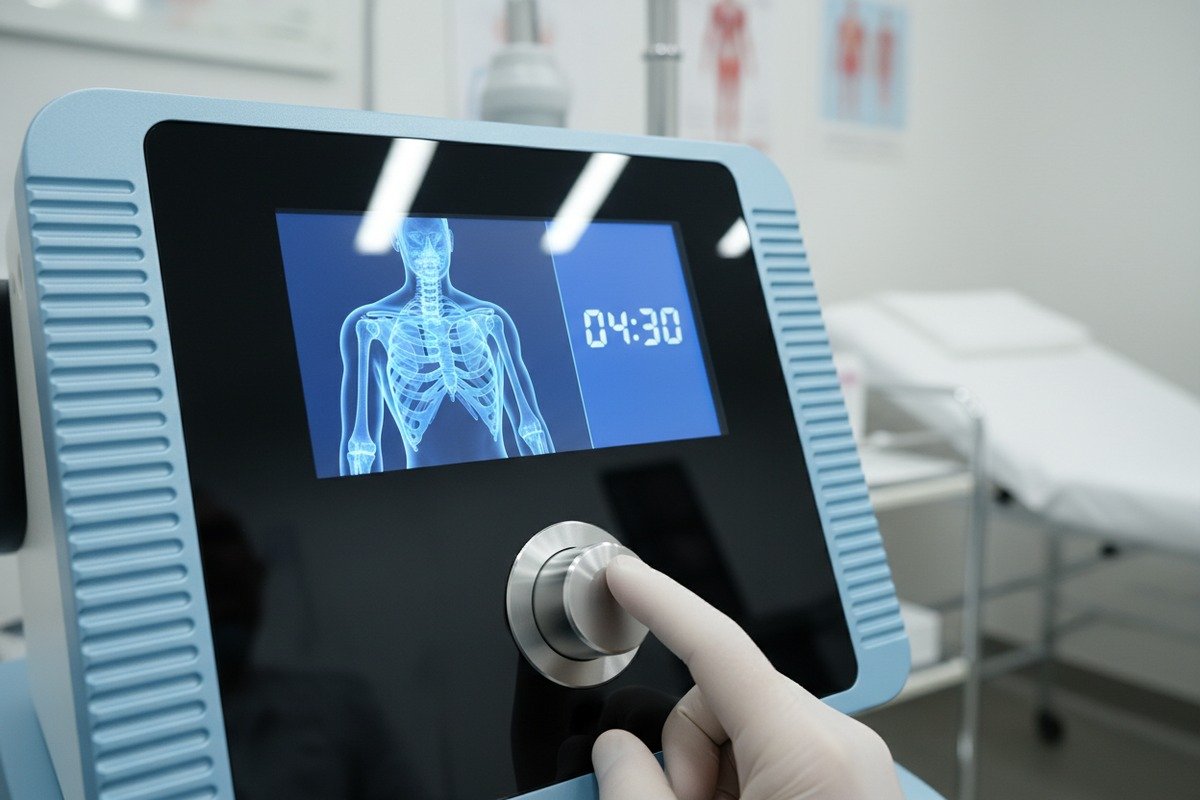
However, pain tolerance varies significantly between individuals. Our devices feature adjustable intensity settings controlled through a single metallic knob. Practitioners can start at lower intensities and gradually increase based on patient feedback.
For patients with low pain tolerance, consider these adjustments:
- Start with lower intensity settings
- Use shorter initial sessions to build tolerance
- Allow brief pauses during treatment if needed
- Extend total sessions slightly to deliver adequate shockwaves at comfortable intensities
Treatment Parameters by Condition
| Zustandskategorie | Active Treatment Duration | Recommended Shockwaves | Intensity Level |
|---|---|---|---|
| Superficial Tendinopathies | 3-5 Minuten | 1500-2000 | Niedrig bis mittel |
| Deep Tissue Conditions | 8-12 Minuten | 2500-3500 | Mittel bis hoch |
| 3 Sitzungen (3 Wochen) | 5-10 Minuten | 2000-3000 | Niedrig bis mittel |
| Calcific Deposits | 5-8 Minuten | 2000-2500 | Mittel bis hoch |
| Triggerpunkttherapie | 2-4 minutes per area | 500-1000 pro Punkt | Niedrig bis mittel |
Integrating with Comprehensive Care
Many clinics integrate shockwave therapy into broader treatment programs. When combined with rehabilitation exercises, manual therapy, or other modalities, the overall appointment extends beyond shockwave application alone.
This integration can improve outcomes. A portion of each session might include demonstrating complementary exercises or discussing activity modifications. The "session" becomes part of a comprehensive therapeutic approach rather than an isolated treatment.
Our experience working with physiotherapy clinics shows that combined approaches often produce better patient satisfaction and clinical results.
How will the session length affect my daily appointment capacity and business efficiency?
Our sales team regularly discusses scheduling optimization with clinic owners. This topic comes up in nearly every conversation about equipment purchases. Smart practitioners understand that treatment duration directly impacts revenue potential and patient access.
Session length significantly affects daily appointment capacity. With 15-20 minute sessions, a single treatment room can accommodate 15-20 shockwave patients daily. Efficient protocols using focused 10-15 minute sessions can increase capacity to 25+ patients without compromising treatment quality.

Calculating Your Treatment Capacity
Understanding appointment math helps you plan staffing and revenue projections. Let me break down realistic scheduling scenarios.
A typical 8-hour clinic day provides approximately 480 minutes of treatment time. However, you must account for breaks, administrative tasks, and room turnover.
Realistic available treatment time usually falls around 360-400 minutes daily. Dividing this by average session length reveals your capacity.
Daily Capacity by Session Length
| Average Session Length | Buffer Time | Appointments Per Hour | Daily Capacity (8 hrs) |
|---|---|---|---|
| 10 Minuten | 5 Minuten | 4 patients | 24-28 patients |
| 15 Minuten | 5 Minuten | 3 patients | 18-21 patients |
| 20 Minuten | 5 Minuten | 2.5 patients | 15-18 patients |
| 30 Minuten | 5 Minuten | 1.7 patients | 10-12 patients |
Efficiency Optimization Strategies
Several approaches can maximize your treatment capacity without sacrificing quality.
First, streamline patient intake procedures. Our devices display anatomical diagrams that speed up treatment zone identification. Using standardized intake forms reduces consultation time.
Second, prepare treatment rooms between appointments. Having gel, positioning aids, and documentation ready minimizes transition delays.
Third, consider dedicated shockwave treatment blocks. Grouping similar appointments reduces mental switching and improves workflow efficiency.
Fourth, train staff on efficient protocols. When our clients invest in proper training, session times often decrease by 3-5 minutes without affecting outcomes.
Revenue Impact Analysis
Shorter sessions with maintained effectiveness directly increase revenue potential. Consider this example:
Reducing average session time from 25 minutes to 18 minutes adds approximately 5-7 additional appointment slots daily. At typical treatment fees, this represents substantial monthly revenue increases.
However, quality must remain the priority. Rushing treatments to maximize volume ultimately damages patient outcomes and clinic reputation. The goal is efficiency, not speed.
Balancing Quality and Throughput
The most successful clinics we work with find a balance point. They optimize workflows to reduce wasted time while ensuring each patient receives thorough care.
Our integrated LCD screens displaying technical data help practitioners monitor treatment parameters in real-time. This technology supports both efficiency and quality control.
Patient experience matters for long-term business success. Clinics reporting high patient satisfaction tend to schedule slightly longer appointments, building loyalty that generates referrals.
Schlussfolgerung
Shockwave therapy sessions typically last 10-20 minutes, with 3-6 treatments needed for optimal results. Adjust duration based on specific conditions and patient needs. Smart scheduling can significantly boost your clinic's efficiency while maintaining excellent patient care standards.
Fußnoten
1. Provides an overview of STORZ Medical shockwave therapy devices, their history, and applications. ︎
2. PMC article details best practices and considerations for ESWT treatment protocols. ︎
3. Product page for a conductive gel specifically developed for shockwave therapy devices. ︎
4. Wikipedia provides a comprehensive overview of anatomical charts and their uses. ︎
5. PMC article explains the mechanisms and applications of focused shockwave therapy. ︎
6. MDPI journal article details the mechanism of action for radial extracorporeal shockwave technology. ︎
7. PMC article discusses the biological effects of ESWT on tendon tissue and regeneration. ︎
8. Wikipedia explains medical adherence, its importance, and factors influencing patient compliance. ︎

 English
  Español de México
  Deutsch
  Français
  العربية
  Русский