Jede Woche kalibriert unser Produktionsteam Dutzende von Stoßwellentherapie 1 Geräten, bevor wir sie an Kliniken weltweit versenden. Eine Frage kommt immer wieder von Ärzten und Patienten gleichermaßen: Wie lange sollte man zwischen den Sitzungen warten? Wenn man dies falsch einschätzt, kann das Zeit, Geld und Heilungspotenzial verschwenden.
Das empfohlene Intervall zwischen Stoßwellentherapie-Sitzungen beträgt in der Regel eine Woche oder 5-7 Tage. Die meisten Patienten benötigen insgesamt 3-5 Sitzungen im wöchentlichen Abstand für optimale Ergebnisse. Patienten über 60 Jahren können jedoch von einem Abstand von zwei Wochen profitieren, um eine ausreichende Geweberegenerationszeit zu ermöglichen.
Wenn Sie verstehen, warum diese Intervalle wichtig sind, können Sie das Beste aus Ihrer Behandlung herausholen. Lassen Sie mich Sie unten durch die wissenschaftlichen und praktischen Details führen.
Wie oft sollte ich meine Stoßwellentherapie-Sitzungen für maximale Wirksamkeit planen?
Wenn wir unsere Stoßwellengeräte während der Qualitätskontrolle testen, befolgen wir strenge Protokolle, die klinischen Best Practices entsprechen. Dennoch fragen sich viele Patienten immer noch, ob wöchentliche Sitzungen wirklich der optimale Zeitpunkt sind oder nur ein praktisches Planungsmuster.
Für maximale Wirksamkeit planen Sie Ihre Stoßwellentherapie-Sitzungen einmal pro Woche und halten Sie 5-7 Tage zwischen den Behandlungen ein. Ein vollständiger Kurs umfasst in der Regel 3-5 Sitzungen. Dieser wöchentliche Abstand ermöglicht es den Entzündungs- und Regenerationsprozessen Ihres Körpers, vollständig zu wirken, bevor die nächste Behandlung einen weiteren Heilungszyklus anregt.
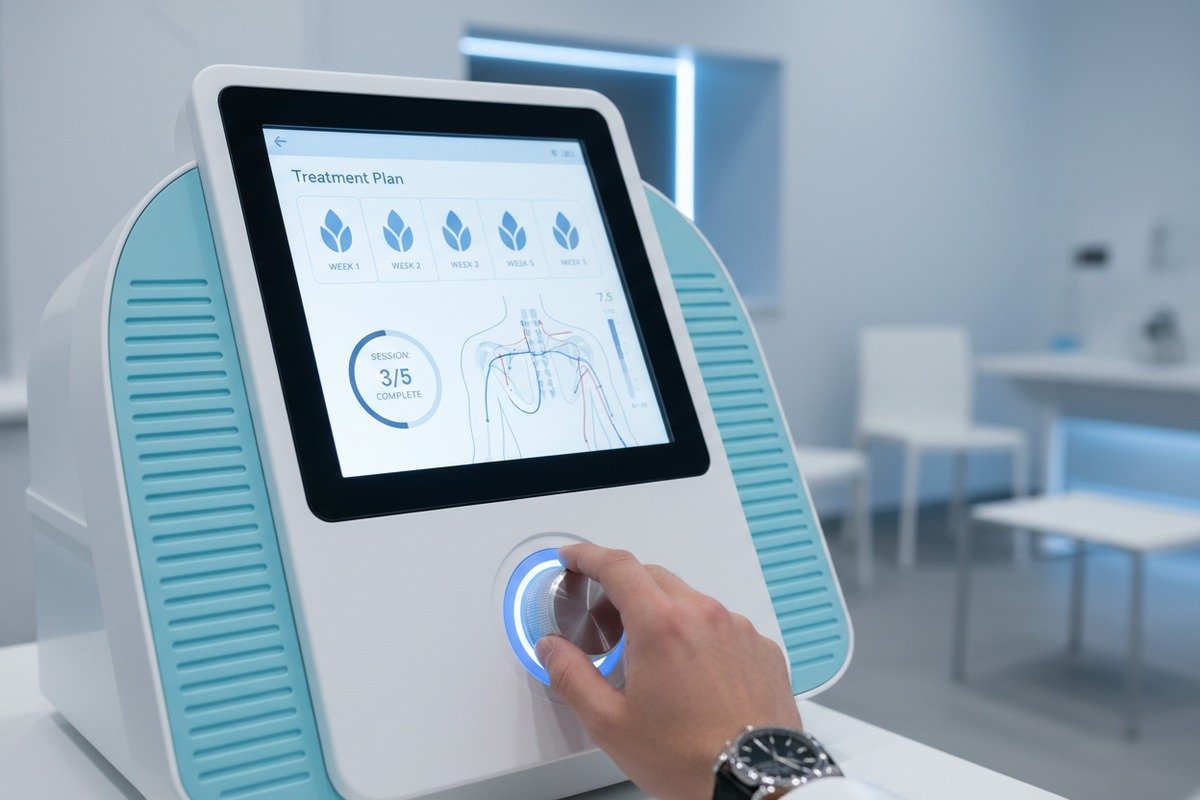
Die Wissenschaft hinter wöchentlichen Intervallen
Ihr Körper heilt nicht während der Stoßwellensitzung selbst. Die Behandlung löst eine kontrollierte Entzündungsreaktion 2 aus, die die Gewebereparatur in Gang setzt. Dieser Reparaturprozess braucht Zeit, um sich richtig zu entfalten.
Hier ist, was während dieses einwöchigen Fensters passiert:
- Tage 1-2: Akute Entzündungsreaktion beginnt
- Tage 3-4: Neubildung von Blutgefäßen beginnt
- Tage 5-7: Kollagenproduktion 3 und Gewebereparatur beschleunigen sich
Wenn Sie eine weitere Behandlung zu früh erhalten, unterbrechen Sie diese natürliche Abfolge. Wenn Sie zu lange warten, verlieren Sie den kumulativen Effekt, der sich mit jeder Sitzung aufbaut.
Standard-Behandlungsprotokolle
| Bedingungstyp | Benötigte Sitzungen | Empfohlenes Intervall | Gesamtdauer der Behandlung |
|---|---|---|---|
| Plantar-Fasziitis 4 | 3-5 Sitzungen | 7 Tage | 3-5 Wochen |
| Tennisarm | 3-5 Sitzungen | 7 Tage | 3-5 Wochen |
| Rotatorenmanschettenprobleme | 4-6 sessions | 7 Tage | 4-6 Wochen |
| Chronische Rückenschmerzen | 4-6 sessions | 7 Tage | 4-6 Wochen |
| Kalzifizierende Tendinitis 5 | 5-6 Sitzungen | 7 Tage | 5-6 Wochen |
Was die Forschung zeigt
Klinische Studien unterstützen durchweg das einwöchige Intervall. Über 80 % der Patienten berichten, dass sie schmerzfrei sind oder eine signifikante Schmerzreduktion erfahren, wenn sie diesen Zeitplan befolgen. Eine internationale Überprüfung ergab eine Erfolgsquote von 77 % bei chronischen Erkrankungen, die auf andere Behandlungen nicht angesprochen hatten.
Die wichtigste Erkenntnis hierbei ist, dass eine überstürzte Vorgehensweise die Ergebnisse nicht verbessert. Tatsächlich erinnert unser Ingenieurteam die Klinikbesitzer oft daran, dass das Gerät nur ein Teil der Gleichung ist. Die Einhaltung der Abstandsempfehlungen durch den Patienten ist genauso wichtig wie die Technologie selbst.
Warum muss ich mehrere Tage zwischen meinen Stoßwellentherapien warten?
Unser Service-Team erhält häufig Anrufe von ungeduldigen Patienten, die Sitzungen verdoppeln möchten. Wir verstehen den Wunsch, die Dinge zu beschleunigen. Schmerzen sind frustrierend, und Warten fühlt sich passiv an, wenn man handeln möchte.
Sie müssen mehrere Tage zwischen den Behandlungen warten, da die Stoßwellentherapie die natürliche Heilungsreaktion Ihres Körpers auslöst. Dieser Prozess erfordert 5-7 Tage, um jeden Zyklus von Entzündung, Blutgefäßwachstum und Gewebereparatur abzuschließen. Eine zu frühe Behandlung unterbricht die Heilung, anstatt sie zu beschleunigen.
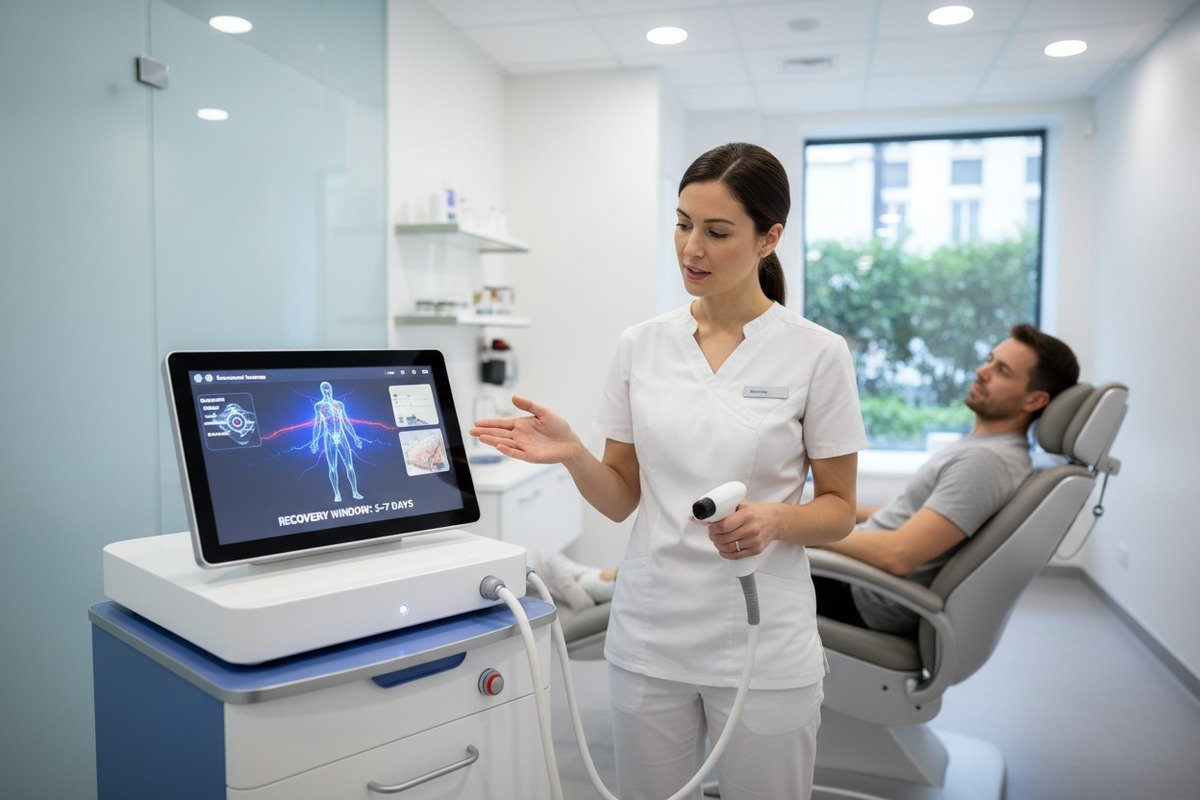
Verständnis der Heilungskaskade
Stoßwellentherapie sendet akustische Wellen in geschädigtes Gewebe. Diese Wellen erzeugen Mikrotraumata, die die Reparaturmechanismen Ihres Körpers aktivieren. Stellen Sie es sich wie das Drücken eines Reset-Knopfes bei einer ins Stocken geratenen Heilung vor.
Die Kaskade entfaltet sich in Phasen:
Phase 1: Entzündungsphase (Tage 1-3)
Die Durchblutung des behandelten Bereichs nimmt zu. Weiße Blutkörperchen kommen an, um geschädigte Zellen zu beseitigen. Wachstumsfaktoren fluten das Gewebe. Diese Phase fühlt sich unangenehm an, ist aber unerlässlich.
Phase 2: Proliferationsphase (Tage 3-5)
Neue Blutgefäße bilden sich durch einen Prozess namens Angiogenese 6. Fibroblasten produzieren Kollagen. Stammzellen wandern zur Verletzungsstelle. Das Gewebe beginnt sich neu aufzubauen.
Phase 3: Remodellierungsphase (Tage 5-7+)
Neues Gewebe reift und stärkt sich. Kollagenfasern reorganisieren sich entlang von Belastungslinien. Das Gewebe wird funktioneller.
Warum die Unterbrechung dieses Prozesses die Ergebnisse beeinträchtigt
Wenn Sie eine weitere Stoßwellensitzung hinzufügen, bevor dieser Zyklus abgeschlossen ist, beginnen Sie im Wesentlichen wieder bei Null. Die neue Entzündungsreaktion überlagert die bereits laufende Reparaturarbeit.
| Intervalllänge | Auswirkung auf die Heilung | Klinisches Ergebnis |
|---|---|---|
| 2-3 Tage | Stört die Entzündungsphase | Schlechte Reaktion |
| 4-5 Tage | Stört die Proliferation | Suboptimale Ergebnisse |
| 7 Tage | Ermöglicht vollständige Zyklusabschließung | Optimale Ergebnisse |
| 10-14 Tage | Kann kumulative Wirkung verlieren | Variable Ergebnisse |
Die Nachbehandlungsregeln
Während Ihrer Wartezeit unterstützen oder behindern bestimmte Aktivitäten die Heilung:
Vermeiden Sie für 24-48 Stunden:
- NSAR wie Ibuprofen 7 (sie blockieren hilfreiche Entzündungen)
- Eisbeutel (gleicher Grund)
- Hochintensives Training
- Tiefengewebsmassage im behandelten Bereich
Tun Sie stattdessen:
- Sanfte Bewegung und Dehnung
- Ausreichende Flüssigkeitszufuhr
- Guter Schlaf
- Leichte Aktivität nach Verträglichkeit
Diese Einschränkungen bestehen, da die durch die Stoßwellentherapie ausgelöste Entzündungsreaktion beabsichtigt und therapeutisch ist. Eine Unterdrückung widerspricht dem Zweck der Behandlung.
Kann ich meine Genesung beschleunigen, indem ich die Häufigkeit meiner Sitzungen erhöhe?
Wenn wir unsere Stoßwellengeräte an Kliniken versenden, legen wir detaillierte Protokollanleitungen bei. Trotzdem hören wir von Praktikern, deren Patienten auf mehr Sitzungen drängen. Der Wunsch ist emotional verständlich, aber die Biologie erzählt eine andere Geschichte.
Nein, die Erhöhung der Sitzungsfrequenz beschleunigt die Genesung nicht. Forschungen zeigen, dass häufigere Behandlungen die Heilung tatsächlich verlangsamen können, indem sie die natürlichen Reparaturprozesse des Körpers stören. Das übliche wöchentliche Intervall besteht, weil die Geweberegeneration vorhersehbaren biologischen Zeitplänen folgt, die nicht überstürzt werden können.
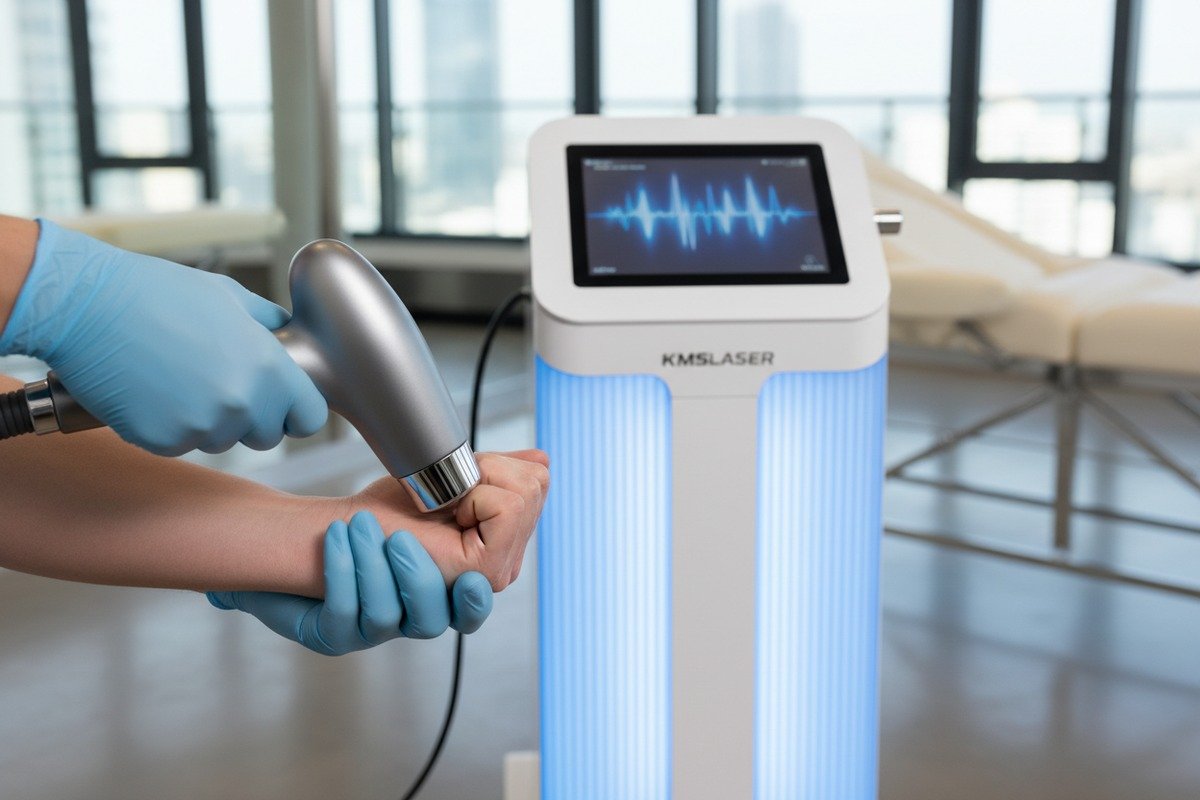
Warum mehr nicht besser ist
Dieses Konzept frustriert viele Patienten. In den meisten Lebensbereichen führt mehr Aufwand zu schnelleren Ergebnissen. Sport funktioniert so. Lernen funktioniert so. Stoßwellentherapie funktioniert nicht.
Ihr Körper hat zu jedem Zeitpunkt eine begrenzte Kapazität für die Gewebereparatur. Jede Stoßwellensitzung mobilisiert Ihre Heilungsressourcen. Diese Ressourcen benötigen Zeit, um ihre Arbeit zu verrichten, bevor sie erneut in Anspruch genommen werden.
Betrachten Sie diese Analogie: Wenn Sie Samen pflanzen, wachsen sie nicht schneller, wenn Sie sie öfter gießen. Übermäßiges Gießen schädigt sie sogar. Ebenso erzeugt eine Überbehandlung von Gewebe übermäßige Entzündungen ohne zusätzlichen Heilungsnutzen.
Was bei zu häufigen Sitzungen passiert
| Sitzungsabstand | Biologische Wirkung | Patientenerfahrung |
|---|---|---|
| Alle 2-3 Tage | Chronische Entzündung | Erhöhte Schmerzen, Schwellungen |
| Alle 4-5 Tage | Unvollständige Gewebereparatur | Minimale Verbesserung |
| Alle 7 Tage | Vollständiger Heilungszyklus | Stetige Verbesserung |
| Alle 14 Tage (Alter 60+) | Verlängerte Erholungszeit | Geeignet für ältere Patienten |
Der kumulative Effekt erklärt
Stoßwellentherapie wirkt kumulativ. Jede richtig getaktete Sitzung baut auf der vorherigen auf. Deshalb erzielen 3-5 Sitzungen bessere Ergebnisse als eine einzelne Behandlung, unabhängig von der Intensität.
Der kumulative Nutzen ergibt sich aus:
- Fortschreitende Gewebereformation mit jedem Zyklus
- Erhöhte Blutgefäßdichte im Laufe der Zeit
- Gradual breakdown of calcifications
- Nerve desensitization reducing pain signals
Rushing the process does not multiply these benefits. It prevents them from developing properly.
When to Expect Results
Here is a realistic timeline:
- After session 1: Some patients notice immediate relief; others feel temporary soreness
- After sessions 2-3: Most patients report meaningful improvement
- After completing treatment: Continued improvement for 6-12 weeks
- Maximum benefit: Often 2-3 months after final session
The delayed timeline surprises many patients. Your most impressive results may appear long after your last appointment. This delayed response reflects the time needed for complete tissue remodeling.
Wie wirkt sich mein spezifischer Zustand auf das Intervall aus, das ich zwischen den Behandlungen einhalten sollte?
Our engineers design shockwave devices to treat many different conditions. However, not all conditions respond identically. When clinics contact us for protocol guidance, we always emphasize that individualized approaches outperform rigid formulas.
Ihre spezifische Erkrankung beeinflusst die Behandlungsintervalle durch Faktoren wie Gewebetyp, Dauer der Verletzung und Schweregrad. Akute Tendinitis kann anfangs auf Sitzungen alle paar Tage ansprechen, während chronische Erkrankungen in der Regel volle wöchentliche Abstände erfordern. Das Alter des Patienten spielt ebenfalls eine Rolle – Personen über 60 profitieren oft von Intervallen von zwei Wochen.
Condition-Specific Considerations
Verschiedene Gewebe haben unterschiedliche Regenerationsgeschwindigkeiten. Sehnen heilen langsamer als Muskeln. Chronische Zustände mit Verkalkung erfordern mehr Zeit zwischen den Sitzungen als akute Entzündungen.
Sehnenbeschwerden (Plantarfasziitis, Achillessehnentendinopathie)
Sehnen haben eine begrenzte Blutzufuhr, was die Heilung verlangsamt. Das übliche 7-Tage-Intervall funktioniert hier gut. Die Kollagensynthese in Sehnen erreicht ihren Höhepunkt etwa am 5.-7. Tag, was wöchentliche Behandlungen ideal macht, um auf früheren Fortschritten aufzubauen.
Muskelbeschwerden
Muskeln haben eine ausgezeichnete Blutzufuhr und können in einigen Fällen etwas kürzere Intervalle tolerieren. Dennoch bleibt ein wöchentlicher Abstand die Standardempfehlung, um vollständige Heilungszyklen zu gewährleisten.
Verkalkungsbedingte Zustände
Der Abbau von Kalziumablagerungen braucht Zeit. Einige Praktiker verlängern die Intervalle bei verkalkender Tendinitis leicht, um eine allmähliche Resorption von Kalziumpartikeln zu ermöglichen.
Altersbedingte Anpassungen
| Altersgruppe | Empfohlenes Intervall | Grund |
|---|---|---|
| Unter 40 | 7 Tage | Robuste Heilkapazität |
| 40-60 | 7 Tage | Standard-Erholungszeit |
| Über 60 | 10-14 Tage | Langsamere Geweberegeneration |
| Ältere Menschen mit Komorbiditäten | 14 Tage | Verlängerter Erholungsbedarf |
Unsere Qualitätskontrolldaten aus dem klinischen Feedback zeigen, dass Patienten über 60 durch wöchentliche Behandlungen durchweg bessere Ergebnisse erzielen. Ihr Gewebe benötigt einfach mehr Zeit, um jeden Heilungszyklus abzuschließen.
Chronische vs. akute Erkrankungen
Chronische Erkrankungen, die seit Monaten oder Jahren bestehen, verhalten sich anders als kürzlich aufgetretene Verletzungen:
Akute Erkrankungen (weniger als 6 Wochen alt)
- Können schnell ansprechen
- Profitieren manchmal von anfänglich engeren Abständen (alle 3-4 Tage für die ersten beiden Sitzungen)
- Dann Übergang zu wöchentlichen Intervallen
- Benötigen oft weniger Gesamtsitzungen
Chronische Erkrankungen (älter als 3 Monate)
- Erfordern die Verpflichtung des Patienten zur vollständigen Behandlung
- Standardmäßige wöchentliche Intervalle sind unerlässlich
- Benötigen möglicherweise 5-6 Sitzungen anstelle von 3-4
- Ergebnisse brauchen länger, um zu erscheinen
Die Rolle des Therapietyps
Ob Sie eine fokussierte oder radiale Stoßwellentherapie erhalten, beeinflusst ebenfalls den optimalen Abstand:
Fokussierte Stoßwellentherapie
- Dringt tiefer in das Gewebe ein
- Intensiver am Brennpunkt
- Standardmäßige 7-Tage-Intervalle empfohlen
- Oft für tiefere Strukturen verwendet
Radial-Stoßwellentherapie
- Breitere, oberflächlichere Behandlung
- Geringere Spitzendrücke
- Dasselbe 7-Tage-Intervall gilt typischerweise
- Kann mit fokussierter Therapie kombiniert werden
Die Unterscheidung ist wichtig, da unterschiedliche Energiemuster unterschiedliche Gewebereaktionen hervorrufen. Unsere Gerätekonstruktionen berücksichtigen diese Unterschiede, aber die grundlegende Heilungsbiologie bleibt ähnlich.
Personalisierung Ihres Protokolls
Wahre Wirksamkeit beruht auf personalisierten Ansätzen und nicht auf festen Zahlen. Arbeiten Sie mit Ihrem Behandler zusammen, um Anpassungen vorzunehmen basierend auf:
- Wie Sie auf frühere Sitzungen reagiert haben
- Ihr allgemeiner Gesundheitszustand
- Aktivitätslevel und körperliche Anforderungen
- Ob Sie die Richtlinien nach der Behandlung befolgen
- Vorhandensein von erschwerenden Faktoren
Schlussfolgerung
Das empfohlene einwöchige Intervall zwischen den Stoßwellentherapie-Sitzungen hat gute biologische Gründe. Vertrauen Sie dem Prozess, folgen Sie den Anweisungen Ihres Arztes und denken Sie daran, dass Ihre besten Ergebnisse oft Wochen nach Abschluss der Behandlung sichtbar werden.
Fußnoten
1. Bietet einen umfassenden Überblick über die Stoßwellentherapie und ihre Anwendungen. ︎
2. Autoritative .gov-Quelle, die eine klare und prägnante Definition der Entzündungsreaktion liefert. ︎
3. Autoritative .gov-Quelle (NIH/NCBI Bookshelf), die eine detaillierte Erklärung der Kollagensynthese, des Prozesses der Kollagenproduktion, liefert. ︎
4. Bietet autoritative Informationen zu Symptomen, Ursachen und Risikofaktoren der Plantarfasziitis. ︎
5. Bietet umfassende Informationen zur kalzifizierenden Tendinitis, einschließlich Ursachen, Symptomen und Behandlung. ︎
6. Bietet einen detaillierten Überblick über die Angiogenese, die Bildung neuer Blutgefäße. ︎
7. Autoritative .gov-Quelle (NIH/NCBI Bookshelf), die einen umfassenden Überblick über NSAR, ihren Wirkmechanismus und die ausdrückliche Erwähnung von Ibuprofen bietet. ︎
8. Erklärt die grundlegenden Stadien und Mechanismen der Gewebereparatur. ︎

 English
  Español de México
  Deutsch
  Français
  العربية
  Русский