When we develop shockwave devices for partners worldwide, questions about wattage and power supply compatibility appear in nearly every technical review.
Shockwave therapy machines typically fall in the 50W–350W range for most radial ESWT units and 200W–1000W for some focused models, and the wattage matters because it determines energy output stability, clinic power-supply requirements, and electrical safety compliance.
To help you plan sourcing and registration, I will break down why wattage matters, common power ranges, how to verify specifications, and how power consumption affects compliance.
Why is the wattage specification relevant for device performance and clinic power-supply planning?
When reviewing ODM files with our engineering team, we always check wattage because it affects both treatment consistency and installation safety.
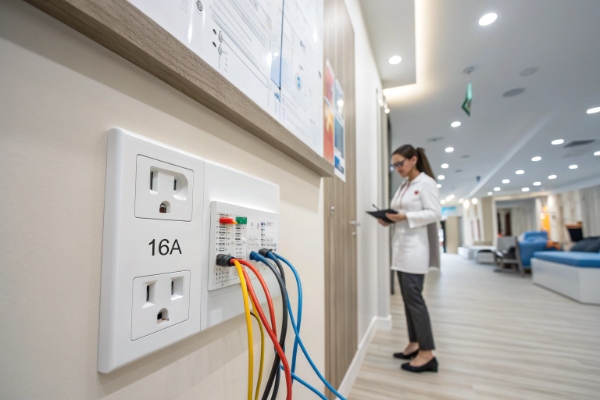
Wattage matters because it determines how much electrical energy the machine needs to generate stable shockwave pulses 1, how much heat it produces, what plug type it requires, and whether the clinic’s power circuits can support continuous operation without voltage drops.
How Wattage Relates to Performance
Stable Pulse Output
Shockwave generators—air-compressor, ballistic, or electromagnetic—need stable electrical input to deliver consistent pressure (bar) or energy (mJ/mm²). If wattage is too low, energy output may fluctuate.
Thermal Management
Higher-wattage systems generate more internal heat. Clinics with small treatment rooms must consider airflow or placement near ventilation.
Duty Cycle
Machines with stronger motors or larger compressors handle longer treatment sessions without overheating.
Impact on Clinic Power Planning
Clinics must check:
- Existing circuit capacity (10A vs 16A)
- Whether multiple devices run on the same outlet
- Voltage availability (110V vs 220V regions) 2
Example: Why Wattage Matters
| السبب | What Wattage Affects |
|---|---|
| Treatment stability | Pressure/energy output consistency |
| Room setup | Heat output and ventilation needs |
| Power compatibility | Voltage, plug type, amperage |
| Duty cycle | Ability to run back-to-back sessions |
Many buyers underestimate these factors until installation day—so verifying wattage early saves time, cost, and stress.
What typical power-consumption ranges do shockwave machines fall into?
In most supplier technical sheets we review, power varies based on generator type, size, and motor capacity.
Most shockwave machines consume between 50W and 350W for radial models, while more advanced or focused ESWT systems may reach 500W–1000W, especially those with electromagnetic generators 3 or large compressors.

Typical Power Ranges by Device Type
Radial / Pneumatic Shockwave (Most Common)
- 50W–350W operating power
- Typically uses a built-in air compressor
- Suitable for most physiotherapy and aesthetic clinics
Focused Shockwave (Higher Precision)
- 200W–1000W
- Larger transformers, electromagnetic drivers, cooling systems
Hybrid or Multi-Modal Systems
- Systems that include ultrasound or EMS in the same unit may have higher peak draw.
Table: Typical Power Consumption Across ESWT Types
| Device Type | Typical Wattage | الملاحظات |
|---|---|---|
| Portable radial ESWT | 50W–150W | Light compressors, small motors |
| Standard clinical radial | 150W–350W | Most common in clinics |
| High-end radial | 300W–500W | Larger compressor, stronger duty cycle |
| Focused ESWT (electromagnetic) | 500W–1000W | Highest precision and energy stability |
Why Ranges Vary
- Larger motors = higher wattage
- More stable output = more energy consumption
- Added cooling fans or dual channels increase load
Knowing the expected wattage helps importers prepare customs declarations and helps clinics plan electrical circuits.
How should importers verify power ratings and local voltage compatibility?
During OEM projects I often guide buyers through power verification because incorrect voltage or plug specification can delay shipments or cause device failures.
Importers should verify wattage and voltage by checking the nameplate, electrical test reports, safety certifications, and manufacturer documentation, ensuring the machine matches local voltage (110V or 220V) and plug standards before final production.
Steps to Verify Power and Voltage
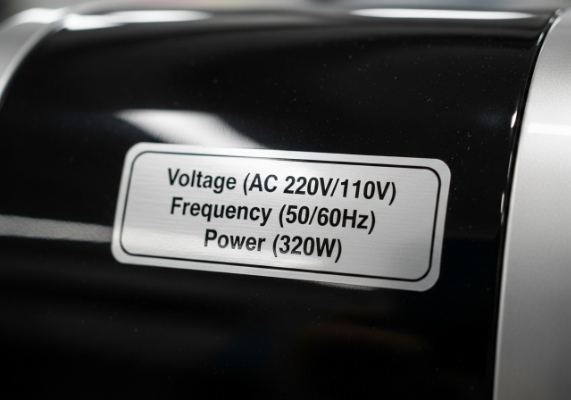
1. Check the Device Nameplate
This is the official, legally accepted specification. It must list:
- Voltage range (110V, 220V, or 110–230V dual)
- Wattage (W) or VA
- Frequency (50/60Hz)
- Current (A)
2. Review Electrical Safety Reports
Labs test the device under maximum load. Reports show:
- Real measured consumption
- Thermal behavior
- Voltage tolerance
3. Confirm Plug and Socket Type
Different markets use different plug standards 4 (Type A, B, C, G). These must match the clinic’s region.
4. Ask for a Voltage Diagram
We often provide this during ODM development to avoid misunderstanding before production tooling is finalized.
Power Verification Checklist
| Verification Item | لماذا يهم |
|---|---|
| Nameplate rating | Legal compliance and accurate specification |
| تقارير الاختبار | Safety under full load |
| Plug type | Local compatibility |
| Voltage setting method | Manual switch or auto-switching |
A Common Mistake to Avoid
Some buyers assume all devices support 110–230V. Many radial ESWT units support this—but not all. Always verify before bulk production.
What impact does power consumption have on energy efficiency and compliance?
When we prepare documentation for CE, EMC, or UL submissions, power consumption always appears in lab reports because it ties directly into heating, safety, and electromagnetic behavior.
Power consumption affects cooling requirements, electrical safety classification, EMC behavior, and overall energy efficiency; compliance tests require accurate wattage values, and lower consumption generally means easier approvals and fewer thermal risks during long clinical sessions. 5
Impact on Compliance
Electrical Safety (IEC 60601-1)
Higher wattage = more heat → more stringent thermal tests 6.
EMC (IEC 60601-1-2)
Higher power circuits may produce stronger electromagnetic interference, requiring more shielding to comply with معايير الأجهزة الطبية. 7
UL / CE / ETL
Reports must match the exact wattage shown on the nameplate. Any mismatch can cause certification failure.
Impact on Energy Efficiency
- Lower wattage units reduce clinic electricity cost.
- Less heat generation improves patient comfort.
- Energy-efficient compressors extend device lifespan 8.
Table: Compliance Impact by Power Consumption
| Power Level | Impact on Safety & Compliance |
|---|---|
| Low–Moderate (<350W) | Easier thermal control and simpler EMC requirements |
| Mid-High (350–700W) | Needs stronger cooling and shielding |
| Very High (>700W) | Highest compliance burden and larger power circuits |
Why This Matters for Importers
If your market requires CE, UL, or regional approvals, consistent wattage across:
- nameplate
- manual
- test reports 9
is mandatory. Any mismatch causes inspection delays.
الخاتمة
Understanding wattage helps you plan clinic installation, verify compliance, choose the right model, and avoid problems with customs or regulators when importing shockwave therapy machines. 10
الحواشي
1. Study emphasizing the link between consistent electrical input (power) and the stability of the mechanical pulse output in ESWT devices. ︎
2. IEC resource detailing the differences and specifications of electrical voltages and frequencies used worldwide (e.g., 110V vs 220V). ︎
3. Physiotherapy guide explaining the mechanism of different shockwave types, including higher-power electromagnetic generators. ︎
4. IEC resource providing a visual guide and technical specifications for the various plug and socket standards used globally. ︎
5. Resource detailing the electromagnetic compatibility (EMC) requirements under IEC 60601-1-2 for medical electrical equipment. ︎
6. Guide to IEC 60601 testing, specifically mentioning thermal evaluation, which is critical for higher-wattage medical devices. ︎
7. FDA guidance document addressing EMC considerations for medical devices, stressing the importance of effective shielding in high-power systems. ︎
8. Research linking proper maintenance and consistent operation (which relies on stable power) to the long-term lifespan of therapeutic medical devices. ︎
9. TUV SUD guide on the necessity of comprehensive testing and accurate documentation (test reports) for IEC 60601 compliance. ︎
10. US government resource detailing the complex regulatory clearance process required for importing medical devices into international markets like Australia. ︎

 English
  Español de México
  Deutsch
  Français
  العربية
  Русский