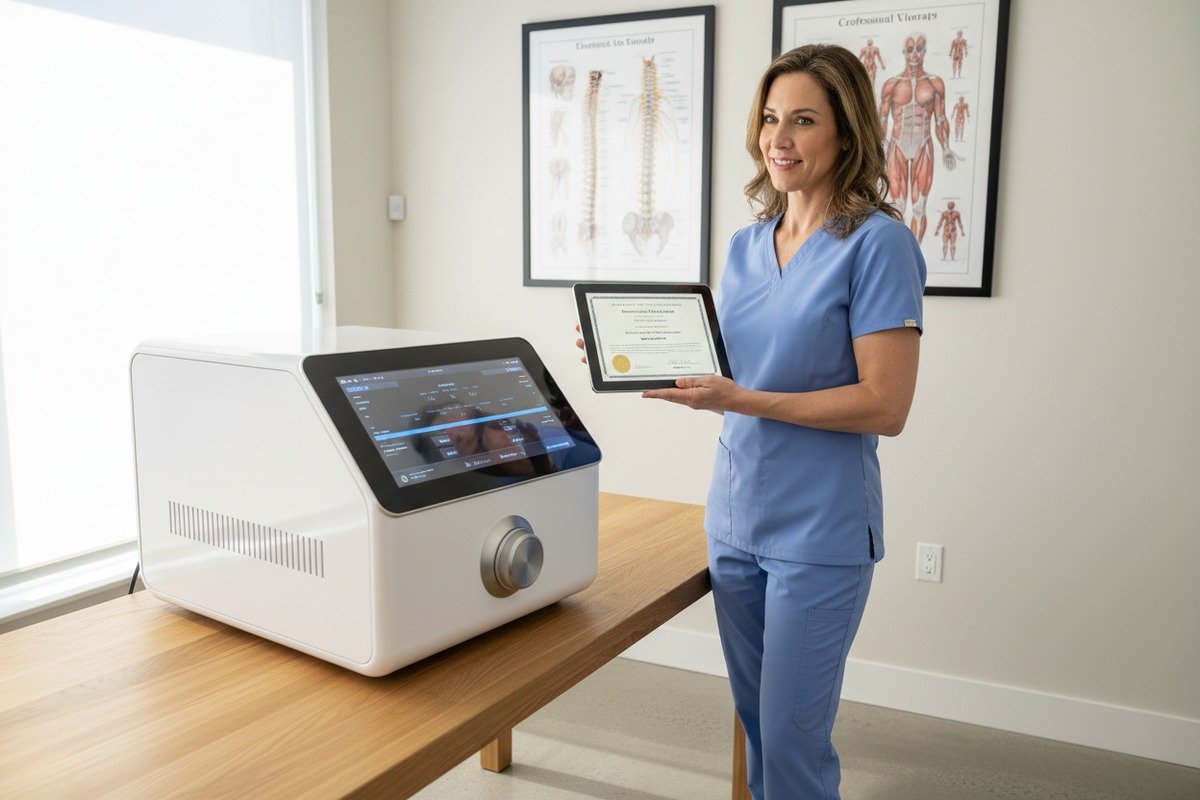
When our engineering team developed our latest shockwave therapy units, clinic owners kept asking the same question: “Can I legally use this device?” The confusion is real. Regulations vary wildly between states, countries, and device types FDA Class I devices 1. Many buyers invest thousands of dollars only to discover compliance issues later.
Whether you need a professional license to operate a shockwave therapy machine depends on the device classification, your location, and intended use. FDA Class I devices typically require no license, while Class II/III medical devices often mandate operation by licensed healthcare professionals such as physicians, physical therapists, or chiropractors.
This guide breaks down everything you need to know about licensing, training, and compliance medical procedure 2. We will cover specific requirements, staff qualifications, regulatory compliance, and liability management. Let us dive in.
What specific professional licenses do I need to legally operate a shockwave machine in my clinic?
Our production facility ships shockwave devices to clinics across North America and Europe. We have learned that licensing confusion causes real problems for buyers. Some clinics purchase equipment they cannot legally operate. Others miss profitable opportunities because they assume restrictions that do not exist.
The specific licenses required depend on your device's FDA classification and your state regulations. Class I radial devices often need no professional license. Class II/III focused ESWT devices typically require operation by licensed physicians, physical therapists, chiropractors, or podiatrists working within their scope of practice.
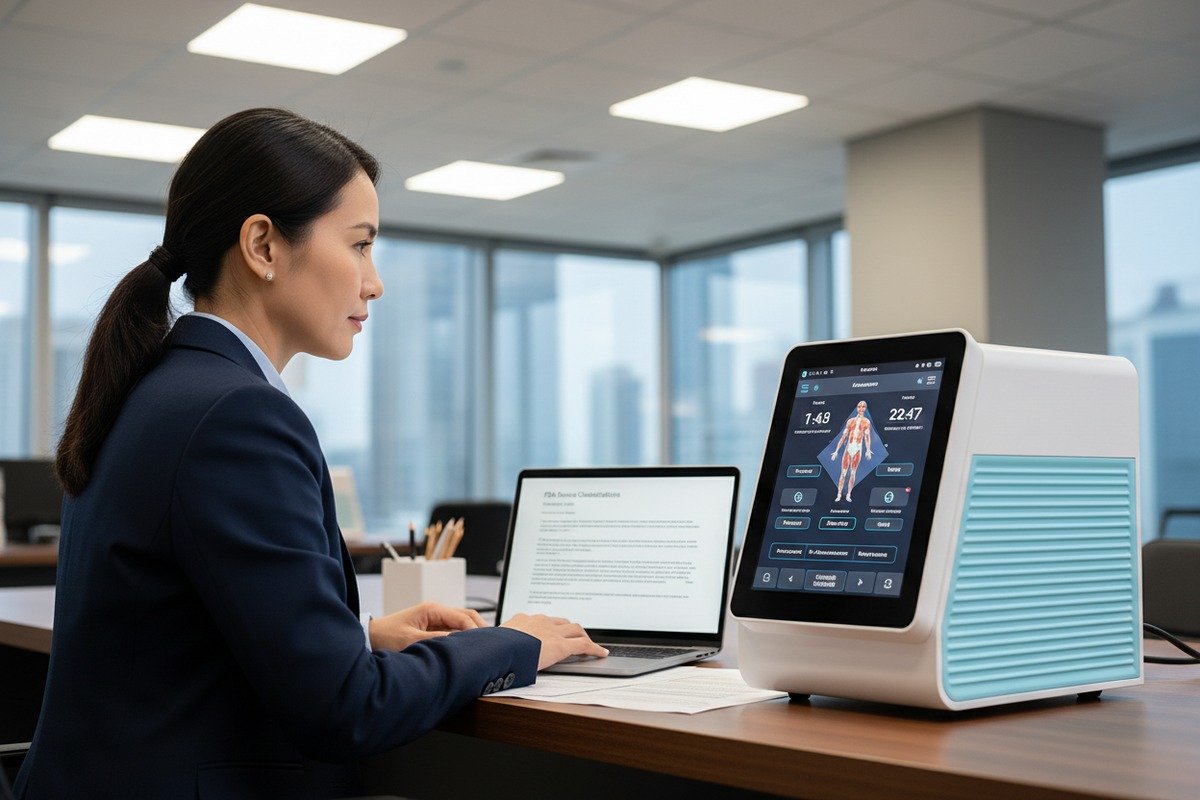
Comprendre les classifications des appareils de la FDA
The FDA classifies shockwave devices into three categories. Each category carries different regulatory burdens. Understanding these classifications helps you make informed purchasing decisions.
| Classe FDA | Risk Level | Exemples | License Requirement |
|---|---|---|---|
| Classe I | Faible | Radial pressure wave devices, some ED therapy units | Generally no license required |
| Classe II | Modérée | Focused ESWT for fasciite plantaire 3, tennis elbow | Licensed healthcare professional typically required |
| Classe III | Haut | High-energy lithotripsy devices | Physician supervision mandatory |
Class I devices are considered low-risk. The FDA allows these devices to operate without extensive oversight. Many radial shockwave devices fall into this category. They work well for general soft tissue treatments.
Class II devices require more scrutiny. The FDA has cleared specific uses like plantar fasciitis and lateral epicondylitis. Operating these devices usually requires a licensed professional. The specific license depends on your state's portée de la pratique 4 laws.
State-by-State Variations
Licensing requirements differ dramatically between states. California has strict medical board oversight. Texas allows broader practice scope for chiropractors. New York requires specific training documentation.
| État | Physical Therapists | Chiropracteurs | Licensed Aestheticians |
|---|---|---|---|
| Californie | Yes, with CE credits | Yes, within scope | No, medical devices excluded |
| Texas | Oui | Yes, broader scope | Limited, non-medical only |
| Florida | Oui | Oui | Non |
| New York | Oui, avec documentation | Yes, with training | Non |
Before purchasing any device, contact your state medical board 5. Ask specific questions about shockwave therapy within your license scope. Get answers in writing. This documentation protects you later.
Profession-Specific Guidelines
Different healthcare professions have different scope limitations. Physical therapists can typically use shockwave for musculoskeletal conditions. Chiropractors often have broader allowances for pain management. Massage therapists face the strictest limitations.
When we help clinics select appropriate devices, we always ask about their professional licenses first. This prevents compliance problems down the road. A device that works perfectly for a physical therapy clinic may create legal issues for a wellness spa.
Can my staff perform shockwave therapy treatments if they only have an aesthetician certification?
During our quality control inspections, we often discuss staffing questions with clinic owners. Many want to delegate shockwave treatments to aestheticians. This approach has significant limitations that affect both compliance and patient safety.
Aestheticians with only a standard certification typically cannot perform shockwave therapy independently. Most states classify shockwave as a medical procedure outside the aesthetician scope of practice. However, aestheticians may assist licensed professionals under direct supervision in some jurisdictions.
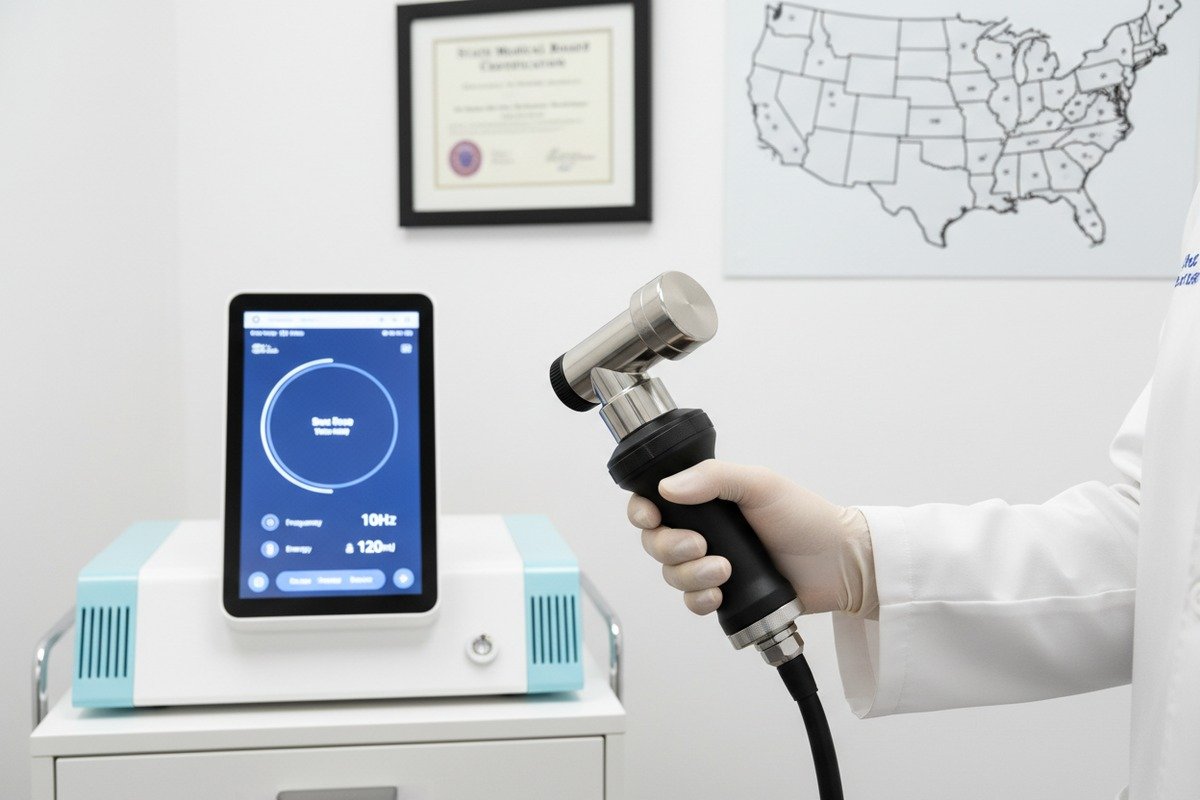
Scope of Practice Limitations
Aesthetician licenses focus on skin care and beauty treatments. They cover facials, waxing, and cosmetic procedures. Medical devices like shockwave machines fall outside this scope in most states.
The distinction matters legally. If an aesthetician performs medical treatments without proper licensing, both the individual and the clinic face liability. Insurance claims may be denied. Malpractice suits become more difficult to defend.
Supervision Models That Work
Some states allow supervised treatment models. A licensed professional maintains oversight while trained staff performs treatments. This model requires clear protocols.
| Supervision Level | Definition | Exigences typiques |
|---|---|---|
| Direct Supervision 6 | Licensed professional physically present during treatment | Professional in same room or immediate area |
| General Supervision | Licensed professional available but not present | Professional on-site, protocols documented |
| Remote Supervision | Professional available via telehealth | Clear communication channels, documented review |
Direct supervision offers the safest approach. The licensed professional remains responsible for treatment decisions. Staff members assist with setup, positioning, and basic operation. The professional monitors outcomes and adjusts parameters.
Training Requirements for Support Staff
Even with supervision, staff need proper training. Our engineering team recommends minimum training standards for anyone touching shockwave equipment.
Basic training should cover device operation, safety protocols, and contraindication recognition 7. Staff must know when to stop treatment and call the supervising professional. Emergency procedures should be practiced regularly.
Many training programs require 2,200 hours of massage therapy education before accepting shockwave certification students. This ensures a foundation in anatomy, physiology, and patient handling. Programs like AIRPWT™ restrict enrollment to licensed or qualified therapists only.
Alternative Staffing Solutions
If your staff lacks qualifying licenses, consider alternatives. Hire licensed physical therapy assistants. They can perform treatments under PT supervision. Some states allow licensed massage therapists with advanced training.
Another option involves restructuring treatment protocols. Have the licensed professional perform the actual shockwave treatment. Aestheticians handle patient intake, preparation, and aftercare. This keeps everyone within their legal scope while maintaining efficient workflows.
How do I ensure my business is compliant with local medical board regulations for shockwave devices?
Our export team handles compliance documentation for clinics in dozens of jurisdictions. We have seen excellent clinics fail audits over paperwork issues. We have also watched prepared clinics breeze through inspections. The difference comes down to systematic compliance management.
To ensure compliance, contact your state medical board directly, document all device certifications, maintain operator training records, establish treatment protocols, secure appropriate liability insurance, and conduct regular internal audits. Compliance is an ongoing process, not a one-time checklist.
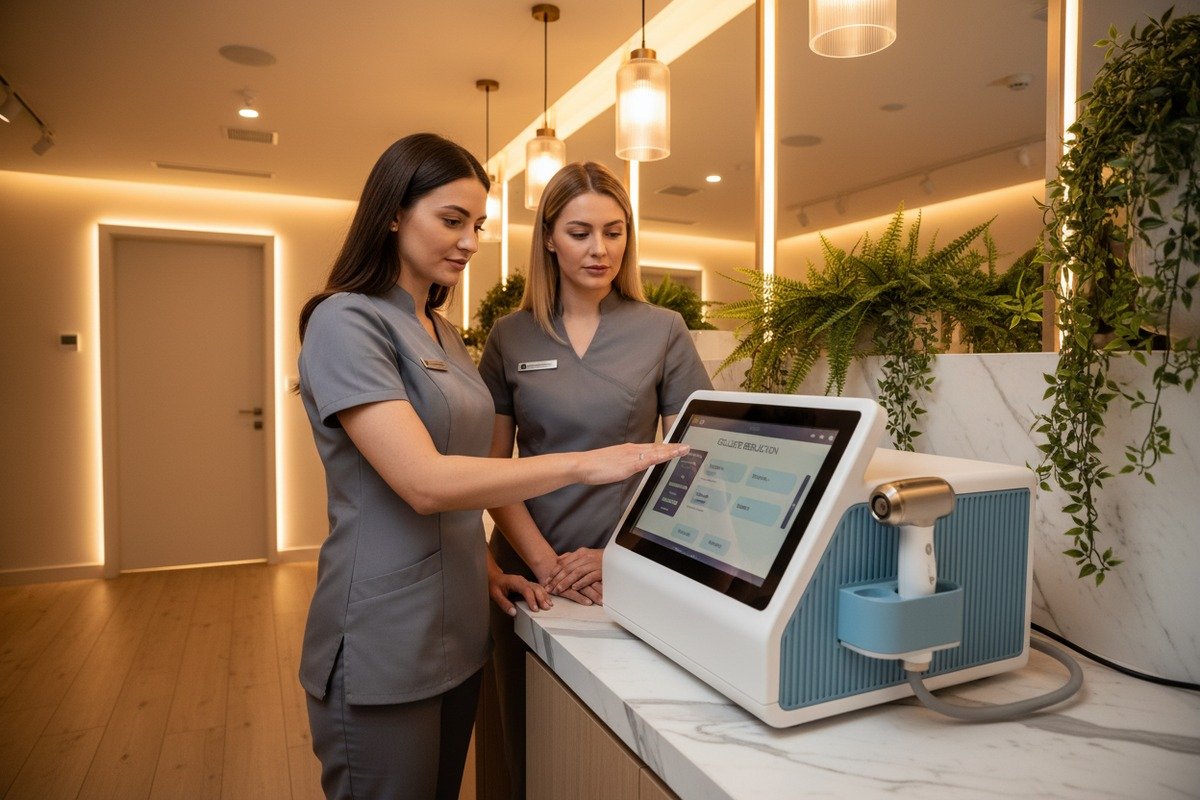
Step-by-Step Compliance Checklist
Start with your state medical board. Request written guidance on shockwave therapy regulations. Ask about device registration requirements. Inquire about treatment documentation standards.
Next, gather device documentation. This includes FDA clearance letters, 510(k) numbers, and manufacturer certifications. Our quality control team provides comprehensive documentation packages with every unit shipped. Keep these files organized and accessible.
Documentation Requirements
Medical boards expect thorough records. Treatment logs should include patient information, treatment parameters, and outcomes. Consent forms must explain risks and benefits clearly. Training certificates need current dates and recognized issuing organizations.
| Type de document | Fréquence de mise à jour | Storage Requirement |
|---|---|---|
| Device FDA clearance | Once, at purchase | Permanent file |
| Operator training certificates | Annual renewal typical | 5-7 years minimum |
| Treatment logs | Per treatment | State-specific, often 7 years |
| Maintenance records | Per service | Device lifetime plus 2 years |
| Consent forms | Par patient | Duration of care plus statute period |
Digital storage systems help manage these requirements. Cloud-based platforms offer backup protection and easy retrieval. Just ensure la conformité HIPAA 8 for patient-related documents.
Considérations relatives à l'assurance
Liability insurance serves as both protection and compliance validation. Many insurers require specific protocols before covering shockwave treatments. Meeting their requirements often exceeds minimum state standards.
Contact your professional liability carrier before adding shockwave services. Ask about coverage limits, exclusions, and required documentation. Some carriers require additional riders for new treatment modalities. Others may increase premiums based on device classification.
Building Relationships with Regulators
Proactive communication with regulatory bodies prevents problems. Notify your medical board when adding shockwave services. Invite inspectors to see your setup before issues arise. This approach demonstrates good faith compliance efforts.
When our clients face regulatory questions, we provide technical documentation and treatment protocols. We cannot give legal advice, but we can support your compliance efforts with accurate device information. Building these documentation practices early protects your business long-term.
Surveillance continue de la conformité
Regulations change. State boards update requirements. FDA classifications evolve. Stay informed through professional associations, industry newsletters, and direct board communications.
Schedule quarterly compliance reviews. Check training certificate expirations. Verify insurance coverage remains adequate. Update protocols based on new guidance. This systematic approach prevents compliance gaps from developing unnoticed.
What kind of specialized training do I need to provide my team to minimize liability risks?
When we calibrate treatment parameters during production testing, patient safety drives every decision. The same principle applies to training. Proper education protects patients and reduces your liability exposure. Cutting corners on training creates risks that no insurance policy fully covers.
Minimizing liability requires hands-on device training from certified programs, anatomy and physiology education, contraindication recognition skills, emergency response protocols, and ongoing continuing education. Training should be documented, regularly updated, and verified through competency assessments.

Core Training Components
Effective training programs cover multiple competency areas. Device operation represents just one piece. Clinical decision-making, patient communication, and safety protocols matter equally.
| Composante de formation | Objectif | Durée typique |
|---|---|---|
| Device operation | Safe and effective use | 4-8 hours hands-on |
| Anatomy and physiology | Treatment targeting | Prerequisite education |
| Contraindication assessment | Patient safety screening | 2-4 heures |
| Protocoles de traitement | Consistent outcomes | 4-6 heures |
| Procédures d'urgence | Gestion des risques | 2 hours minimum |
| Documentation practices | Protection juridique | 1-2 heures |
Hands-on training proves essential. Online courses provide theoretical foundations. But operating shockwave equipment requires physical practice. Trainees need supervised patient treatments before independent practice.
Recognized Certification Programs
Several organizations offer respected shockwave certifications. The Shockwave Society of North America provides multi-level programs. AIRPWT™ certifications require professional license prerequisites. These credentials signal competency to patients, insurers, and regulators.
Continuing education credits accompany many training programs. California PT Board approval carries 2.00 CE hours for many courses. CE Broker states recognize various programs. Ohio PTA certifications add credibility for physical therapy assistants.
Contraindication Recognition
Patient screening prevents complications. Staff must identify conditions that contraindicate shockwave treatment. This knowledge reduces adverse events and associated liability claims.
Common contraindications include pregnancy, blood clotting disorders, active infections, and malignancies near treatment sites. Certain medications also affect treatment decisions. Training should emphasize thorough intake assessments.
Emergency Response Preparation
Despite precautions, complications occur. Vasovagal responses happen occasionally. Severe pain reactions require immediate response. Staff must know exactly what to do when problems arise.
Emergency protocols should be written, posted, and practiced. Regular drills keep skills sharp. Documentation of training drills demonstrates proactive risk management if litigation occurs.
Competency Verification Systems
Training alone does not minimize liability. You must verify that training produced competent practitioners. Competency assessments provide this verification.
Implement skills checklists for new operators. Require observed treatments before independent practice. Conduct periodic competency reviews. Document everything. This systematic approach demonstrates reasonable care if questions arise later.
Our technical support team provides detailed operation manuals and training resources with every device. However, clinical training remains the clinic's responsibility. Partner with recognized training organizations to build comprehensive competency programs.
Conclusion
Operating a shockwave therapy machine legally requires attention to device classification, professional licensing, staff qualifications, regulatory compliance, and proper training. The requirements vary by location and device type. When in doubt, consult your state medical board directly. Investing in proper compliance and training protects your patients, your staff, and your business.
Notes de bas de page
1. Explains the regulatory classification of low-risk medical devices by the FDA. ︎
2. Clarifies the definition and context of medical procedures in healthcare. ︎
3. Provides information on a common medical condition often treated by shockwave therapy. ︎
4. Defines the legal boundaries for healthcare professionals’ activities and duties. ︎
5. Authoritative source for state-specific medical regulations and licensing information. ︎
6. Replaced HTTP 502 link with a recent, authoritative article from a legal firm detailing CMS’s permanent changes to direct supervision. ︎
7. Defines medical contraindications, crucial for patient safety in treatments. ︎
8. Official government guidance on protecting patient health information and privacy. ︎

 English
  Español de México
  Deutsch
  Français
  العربية
  Русский