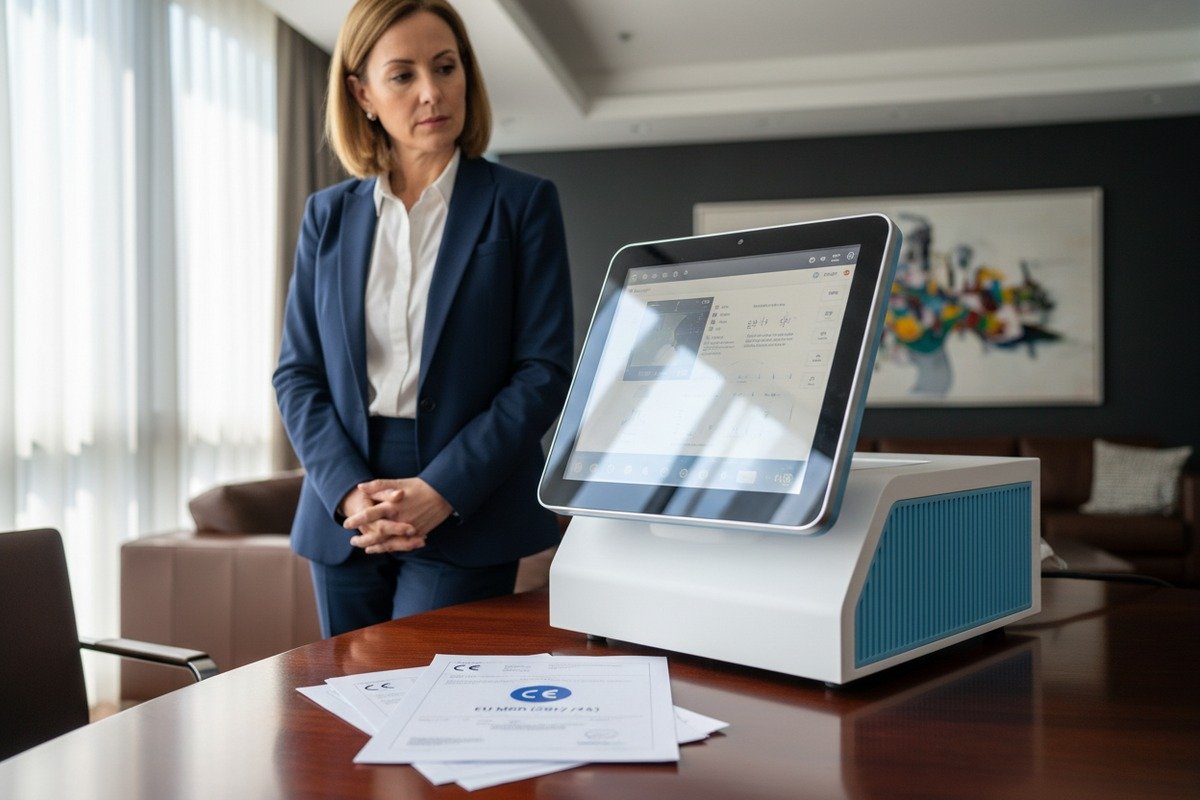
Lorsque notre équipe d'ingénierie a développé les dernières machines de thérapie par ondes de choc, nous avons rapidement compris que les acheteurs européens sont confrontés à un labyrinthe d'exigences réglementaires. Système de management de la qualité ISO 13485 1. Le marché de l'UE offre d'énormes opportunités, mais une seule erreur dans la vérification des fournisseurs peut entraîner des saisies douanières, des sanctions légales ou des produits dangereux atteignant les patients.
Pour vérifier qu'un fournisseur de machines de thérapie par ondes de choc répond aux normes européennes, confirmez le marquage CE valide avec un numéro d'organisme notifié, demandez la documentation de conformité MDR, vérifiez l'enregistrement EUDAMED, vérifiez les détails du représentant autorisé de l'UE pour les fournisseurs non européens, et auditez leur système de management de la qualité certifié ISO 13485 et leurs procédures de surveillance post-marché.
Ce guide vous accompagne à chaque étape de la vérification des fournisseurs. Sécurité électrique IEC 60601-1 2. Nous partageons des listes de contrôle pratiques, expliquons les dernières modifications réglementaires de 2026 et vous aidons à éviter des erreurs coûteuses qui peuvent retarder votre entrée sur le marché.
Comment puis-je confirmer que mon fournisseur de machine de thérapie par ondes de choc est conforme aux dernières normes MDR de l'UE ?
Notre équipe de documentation d'exportation traite des dizaines de dossiers de conformité MDR chaque mois. IEC 81001-5-1 3. Nous constatons les mêmes questions de la part des distributeurs européens de manière répétée. La confusion autour des exigences du MDR est compréhensible car la réglementation est complexe et en constante évolution. dossiers de gestion des risques selon ISO 14971 4.
Pour confirmer la conformité au MDR, vérifiez que le fournisseur détient une déclaration de conformité valide en vertu du règlement (UE) 2017/745, assurez-vous que son certificat CE comprend un numéro d'identification d'organisme notifié à quatre chiffres, confirmez l'enregistrement du dispositif dans EUDAMED et demandez son résumé de documentation technique, y compris les rapports d'évaluation clinique.
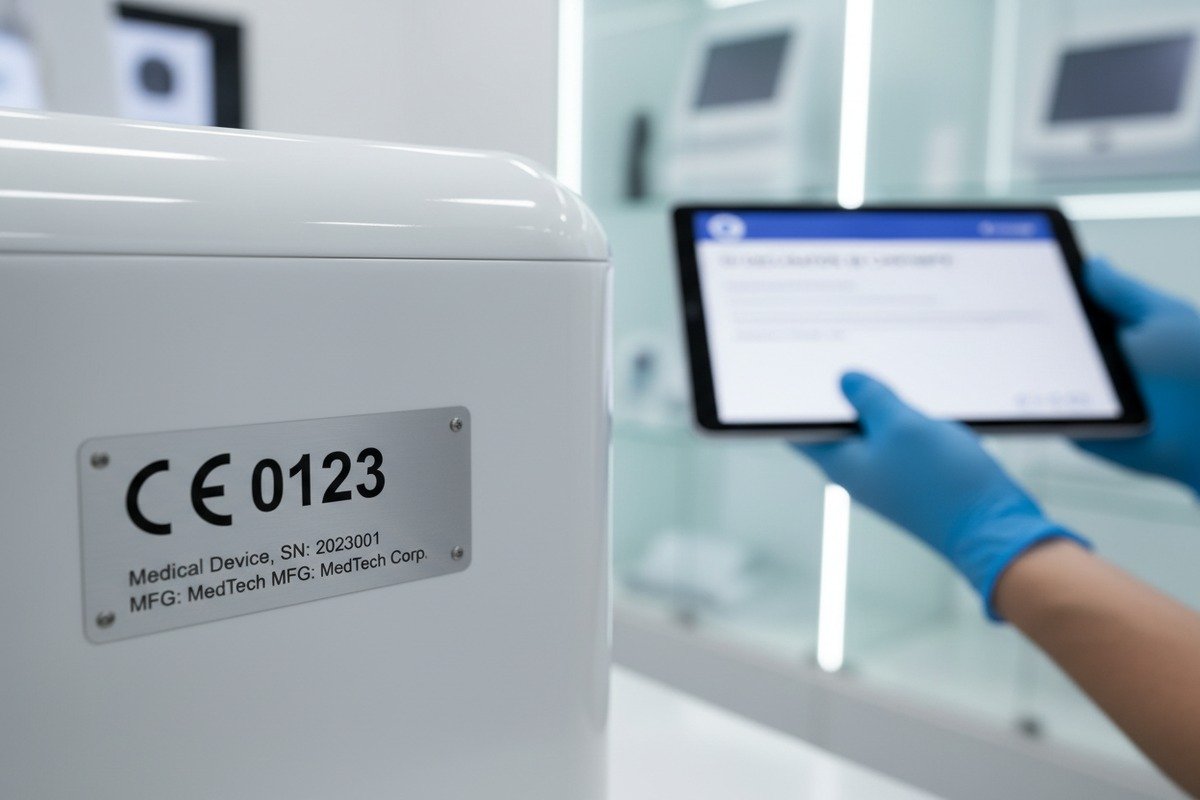
Comprendre la classification MDR de l'UE pour les appareils à ondes de choc
Le Dispositif Médical Règlement (UE) 2017/745 5 a remplacé les anciennes directives en mai 2021. Il s'applique à toutes les machines de thérapie par ondes de choc vendues en Europe. La classification détermine votre parcours de conformité.
Les machines de thérapie par ondes de choc entrent généralement dans la classe IIa ou IIb. La classification dépend de l'usage prévu. Les appareils destinés au traitement de la douleur non invasif sont généralement classés comme IIa. Ceux conçus pour la régénération tissulaire ou une puissance plus élevée entrent souvent dans la classe IIb.
Règles de classification MDR pour les machines à ondes de choc
| Règle MDR | Application aux appareils à ondes de choc | Classification typique |
|---|---|---|
| Règle 9 | Appareils thérapeutiques à énergie non invasive | Classe IIa |
| Règle 10 | Appareils thérapeutiques actifs présentant un danger potentiel | Classe IIb |
| Règle 11 | Logiciel contrôlant la délivrance d'énergie | de classe IIa ou IIb |
Documents clés de conformité MDR à demander
Votre fournisseur doit fournir plusieurs documents essentiels. Commencez par la Déclaration de Conformité UE. Ce document juridique stipule que le fabricant assume l'entière responsabilité de la conformité.
Ensuite, demandez le certificat CE délivré par un Organisme Notifié. Le certificat doit indiquer le numéro à quatre chiffres numéro d'Organisme Notifié 6. Croisez ce numéro dans la base de données NANDO de la Commission européenne. Cette vérification prend cinq minutes mais évite des problèmes majeurs.
Demandez le résumé de la documentation technique. Un fournisseur conforme peut fournir un aperçu de ses spécifications de conception, de ses dossiers de gestion des risques et de ses rapports d'évaluation clinique. Il peut ne pas partager le dossier technique complet en raison de la confidentialité, mais des résumés devraient être disponibles.
Vérification de l'enregistrement EUDAMED
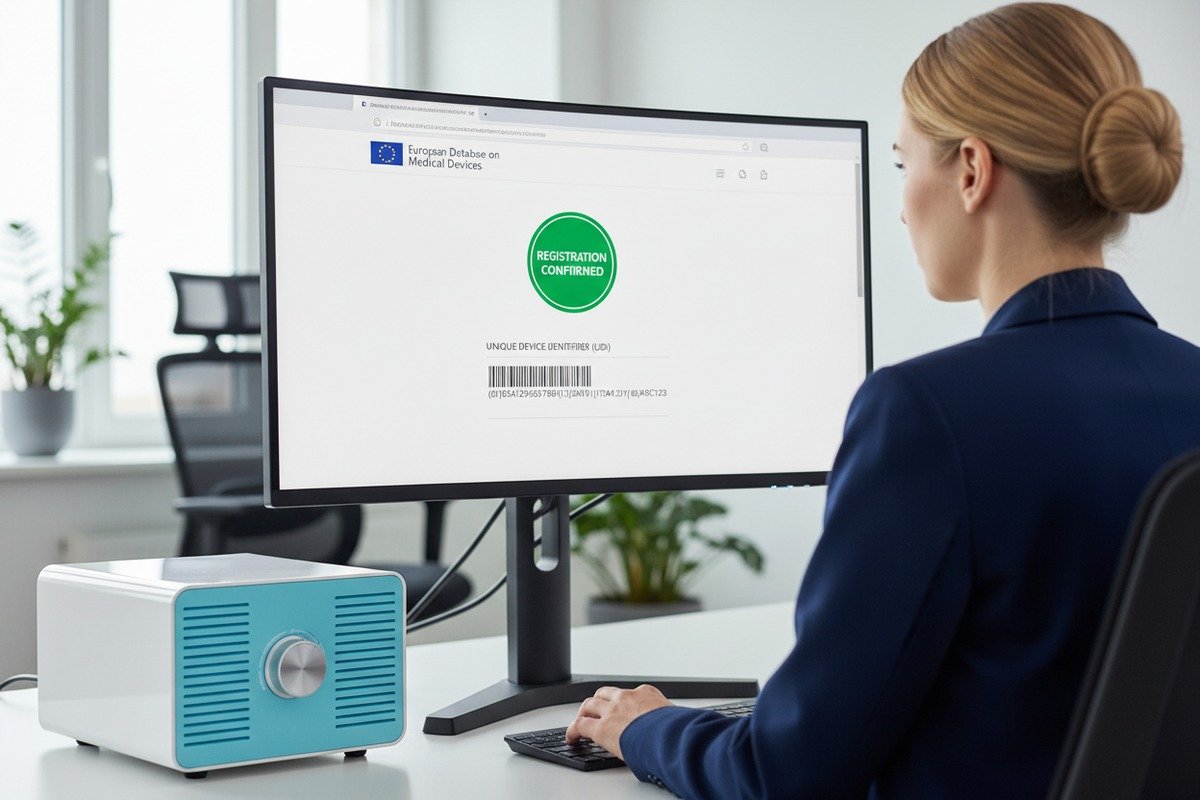
La base de données européenne sur les dispositifs médicaux (EUDAMED) est devenue pleinement opérationnelle en novembre 2025. La date limite de conformité est le 28 mai 2026. Vérifiez si votre fournisseur a enregistré ses dispositifs et obtenu des Identifiants Uniques de Dispositif (UDI).
EUDAMED offre de la transparence. Vous pouvez vérifier les certificats, les rapports de sécurité et les détails du fabricant. Si un fournisseur ne peut pas présenter Enregistrement EUDAMED 7 d'ici mi-2026, il présente probablement des lacunes en matière de conformité.
Quelles certifications spécifiques dois-je demander pour m'assurer que mon équipement de beauté importé est légal sur le marché européen ?
Dans notre usine de production, nous conservons les dossiers de certification pour chaque modèle d'appareil. Lorsque les distributeurs européens visitent, ils demandent toujours les certificats exacts nécessaires. La liste est plus courte que ce que la plupart des gens pensent, mais chaque document est essentiel.
Demandez ces certifications essentielles : Certificat de Conformité CE d'un Organisme Notifié reconnu, certificat de Système de Management de la Qualité ISO 13485, Déclaration de Conformité UE signée par le fabricant, et rapports de tests de sécurité électrique IEC 60601-1. Pour les appareils connectés, demandez également une documentation sur la cybersécurité conforme à la norme IEC 81001-5-1.
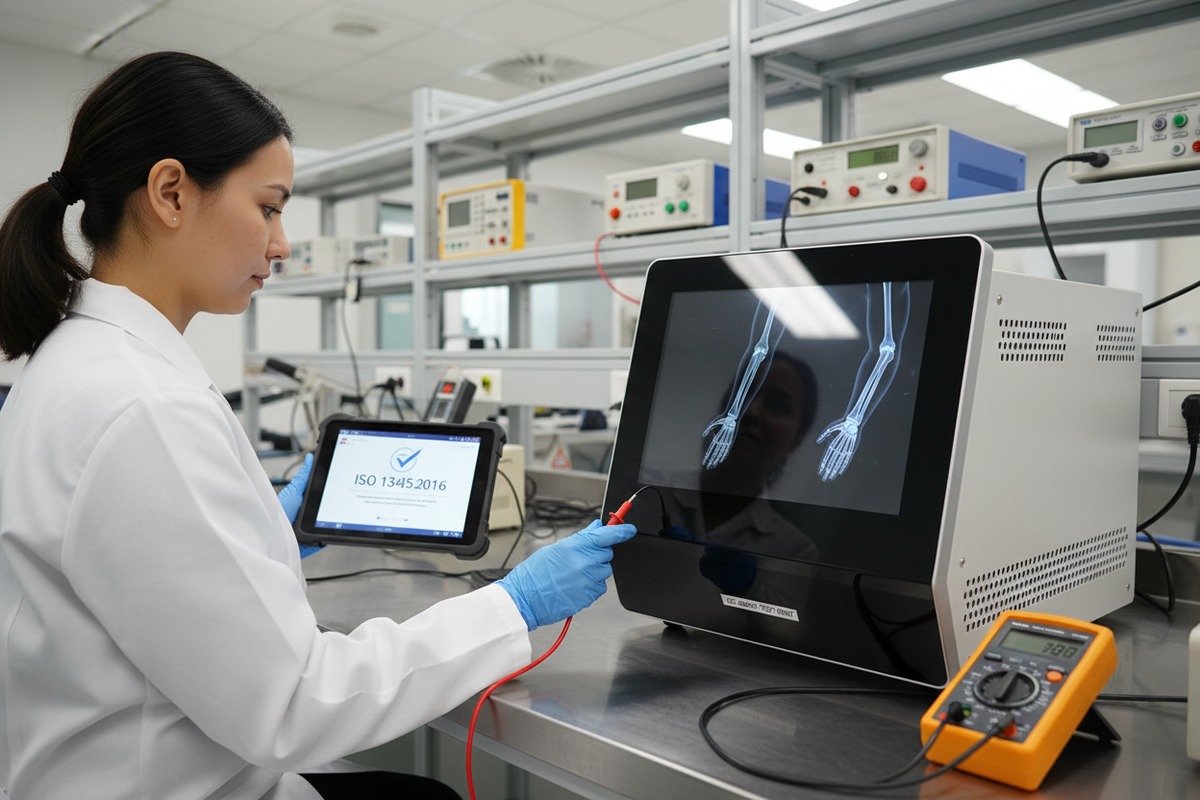
Liste de contrôle des certifications essentielles
Différentes certifications servent différents objectifs. Certaines sont légalement obligatoires. D'autres fournissent une présomption de conformité, rendant le processus d'approbation plus fluide.
Matrice des exigences de certification
| 3. Defines the standard for calibration accuracy and reliability, linking to national standards. | Statut obligatoire | Objectif | Organisme émetteur |
|---|---|---|---|
| Certificat CE | Obligatoire pour les classes IIa/IIb | Autorisation d'accès au marché | Organisme Notifié de l'UE |
| ISO 13485 | Fortement recommandé | Preuve de conformité du SMQ | Organisme de certification accrédité |
| Déclaration UE de conformité | Obligatoire | Déclaration de conformité légale | Auto-déclaration du fabricant |
| Rapport de test IEC 60601-1 | Requis pour la sécurité électrique | Preuve de conformité de sécurité | Laboratoire d'essai accrédité |
| Documentation IEC 62366-1 | Requis dans le cadre des GSPR | Ingénierie de l'utilisabilité : preuves | Interne ou tierce partie |
Détails du certificat CE à vérifier
Le certificat CE est votre document de vérification principal. Vérifiez ces éléments spécifiques :
Premièrement, confirmez le numéro de certificat et les dates de validité. Les certificats durent généralement de trois à cinq ans. Les certificats expirés signifient des produits non conformes.
Deuxièmement, vérifiez le numéro de l'Organisme Notifié. Il existe environ 50 Organismes Notifiés actifs dans l'UE. Chacun a un code unique à quatre chiffres. Recherchez dans la base de données NANDO pour confirmer que l'organisme est autorisé pour votre catégorie d'appareil.
Troisièmement, vérifiez la déclaration de portée. Le certificat doit couvrir spécifiquement les appareils de thérapie par ondes de choc ou des descriptions de produits équivalentes. Un certificat général peut ne pas s'appliquer à votre type d'appareil spécifique.
ISO 13485 et certification du système qualité
La certification ISO 13485 démontre que le fabricant exploite un système de management de la qualité conforme. Bien que non obligatoire légalement selon le MDR, elle offre une présomption de conformité aux exigences de qualité.
Notre équipe de contrôle qualité a obtenu la certification ISO 13485 il y a cinq ans. Le processus a été rigoureux mais précieux. Il a systématiquement amélioré nos contrôles de conception, la gestion des fournisseurs et le suivi de la production.
Demandez le certificat ISO 13485 et vérifiez la portée. La portée doit inclure la conception et la fabrication de dispositifs médicaux. Certains certificats ne couvrent que la distribution, ce qui est insuffisant pour les fabricants.
1. Replaced with an authoritative Wikipedia page on extracorporeal shockwave therapy, which encompasses the machines used for this treatment.
L'IEC 60601-1 est la norme principale de sécurité électrique pour les dispositifs médicaux. Les machines de thérapie par ondes de choc doivent être conformes à cette norme. Demandez le rapport de test complet d'un laboratoire accrédité.
Le rapport de test doit couvrir la sécurité électrique, la compatibilité électromagnétique (CEM) et les performances essentielles. Portez une attention particulière au modèle d'appareil spécifique testé. Les rapports pour différents modèles peuvent ne pas s'appliquer à votre achat prévu.
Comment puis-je vérifier que le processus de contrôle qualité de mon fabricant répond aux exigences européennes en matière de sécurité et de performance ?
Lorsque les acheteurs visitent notre usine de Guangzhou, nous les guidons à travers chaque point de contrôle qualité. Les questions qu'ils posent révèlent une lacune critique : la plupart des distributeurs ne savent pas quoi rechercher dans le processus de contrôle qualité d'un fabricant. Pourtant, le contrôle qualité détermine directement la sécurité des produits et votre responsabilité légale.
Vérifier le contrôle qualité du fabricant en auditant leur SMQ certifié ISO 13485, en examinant les procédures documentées pour l'inspection à réception, les contrôles en cours de fabrication et les tests finaux, en examinant leurs dossiers de gestion des risques conformément à la norme ISO 14971, et en confirmant qu'ils maintiennent des systèmes de surveillance post-marché avec des procédures d'escalade définies pour les problèmes de sécurité.
Audit du système de management de la qualité
Un SMQ documenté ne signifie rien si l'usine ne le suit pas. Les audits à distance sont courants maintenant, mais la vérification sur site reste la référence.
Lors de l'audit du SMQ d'un fournisseur, regardez au-delà du certificat. Demandez à voir les procédures spécifiques. Demandez des exemples de rapports d'inspection complétés. Vérifiez si des rapports de non-conformité existent et comment ils ont été résolus.
Points de vérification du processus de contrôle qualité
| Étape de CQ | Éléments clés de vérification | Red Flags to Watch |
|---|---|---|
| Inspection à réception | Enregistrements des tests de composants, certificats des fournisseurs | Traçabilité manquante, substitutions non documentées |
| Contrôle en cours de fabrication | Listes de contrôle d'assemblage, enregistrements d'étalonnage | Lacunes dans la documentation, étalonnage expiré |
| Tests finaux | Données de tests fonctionnels, mesures de sécurité | Tests par lot uniquement, pas d'enregistrements d'unités individuelles |
| Autorisation de libération | Validation par l'assurance qualité, examen de la documentation | Signatures manquantes, enregistrements antidatés |
Exigences en matière de gestion des risques
Le MDR exige une gestion complète des risques tout au long du cycle de vie du produit. L'ISO 14971 fournit le cadre. Votre fournisseur doit tenir à jour des dossiers de gestion des risques pour chaque type d'appareil.
Demandez un résumé du dossier de gestion des risques. Il doit inclure l'identification des dangers, l'estimation des risques, les mesures de maîtrise des risques et l'évaluation des risques résiduels. Pour les appareils à ondes de choc, portez une attention particulière aux risques liés à la sortie d'énergie, aux dommages tissulaires et à la sécurité électrique.
Notre équipe d'ingénierie met à jour les dossiers de gestion des risques chaque fois que nous modifions les paramètres de l'appareil. Cette pratique a permis de détecter plusieurs problèmes potentiels avant qu'ils n'atteignent la production. Un fournisseur dont les dossiers de risques sont obsolètes peut introduire des variations dangereuses.
Systèmes de surveillance post-marché
Le MDR renforce les exigences en matière de surveillance post-marché (PMS). Les fabricants doivent collecter et analyser activement les données des appareils sur le marché. Cela comprend les rapports d'incidents, les plaintes des clients et les tendances de performance.
Interrogez votre fournisseur sur son plan PMS. Les éléments clés comprennent :
- Procédures de traitement des plaintes avec des délais définis
- Rapports d'incidents aux autorités compétentes dans les délais légaux
- Rapports périodiques de sécurité (PSUR) pour les classes IIa et supérieures
- Procédures d'actions correctives de sécurité sur le terrain
Un fournisseur sans procédures PMS claires peut avoir du mal à réagir lorsque des problèmes surviennent. Cela vous expose à une responsabilité en tant qu'importateur.
Facteurs humains et ingénierie de l'utilisabilité
Les exigences générales de sécurité et de performance (GSPR) du MDR incluent l'utilisabilité. L'IEC 62366-1 régit l'ingénierie de l'utilisabilité pour les dispositifs médicaux. Des interfaces mal conçues provoquent des erreurs d'utilisation qui nuisent aux patients.
Pour les machines de lithotripsie, l'utilisabilité est très importante. L'interface de l'appareil doit afficher clairement les réglages d'énergie, les paramètres de traitement et les avertissements de sécurité. Demandez à votre fournisseur la documentation de validation de l'utilisabilité. Cela montre qu'ils ont testé l'interface avec des utilisateurs représentatifs.
Quelle documentation technique ai-je besoin de la part de mon partenaire OEM pour éviter les problèmes douaniers lors de l'expédition en Europe ?
Notre équipe logistique coordonne les expéditions vers les ports européens chaque semaine. Les retards douaniers coûtent cher et frustrent les clients. La cause la plus fréquente est une documentation manquante ou incorrecte. Avec une préparation adéquate, vous pouvez passer la douane en douceur à chaque fois.
Pour éviter les problèmes douaniers, obtenez auprès de votre partenaire OEM : la déclaration de conformité UE, le certificat CE avec le numéro de l'organisme notifié, le résumé de la documentation technique, les coordonnées du représentant autorisé, les informations UDI et les documents commerciaux indiquant des descriptions de produits conformes. Assurez-vous que tous les documents correspondent exactement aux produits expédiés.
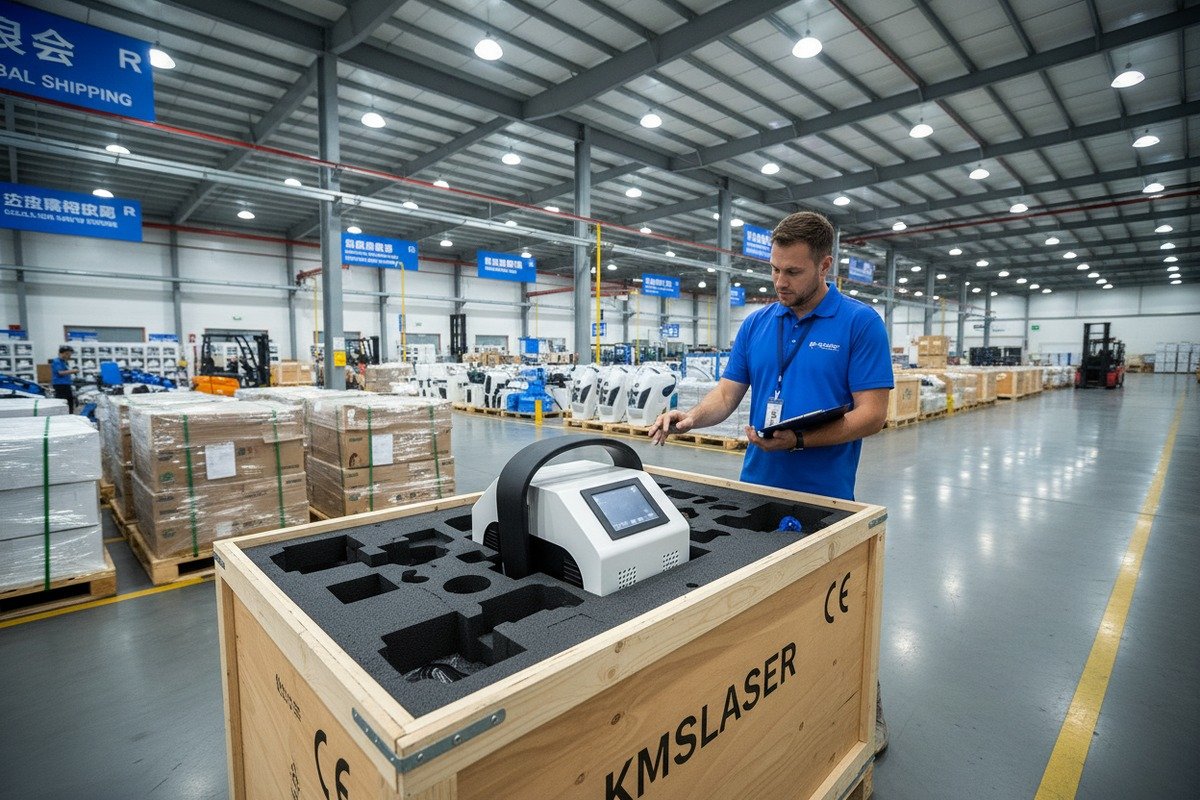
Dossier de documentation essentiel
Les autorités douanières européennes vérifient que les dispositifs médicaux répondent aux exigences du MDR avant d'autoriser l'entrée. Les documents manquants déclenchent des inspections, des retards et des saisies potentielles.
Préparez un dossier documentaire complet avant l'expédition. Incluez des copies de tous les certificats et déclarations. Assurez-vous que les descriptions des produits sur les factures commerciales correspondent exactement aux noms des dispositifs certifiés.
Liste de contrôle des documents douaniers
| Type de document | Objectif | Détails critiques à vérifier |
|---|---|---|
| Déclaration UE de conformité | Preuve de conformité légale | Date, signature, identification du dispositif, normes référencées |
| Certificat CE | Vérification de l'organisme notifié | Dates de validité, numéro de l'ON, portée correspond au produit |
| Résumé de la documentation technique | Preuve des spécifications du dispositif | Cohérent avec les produits expédiés |
| Facture commerciale | Déclaration de la valeur en douane | Les descriptions des produits correspondent aux certificats |
| Liste de colisage | Contenu de l'expédition | Les numéros de modèle correspondent à tous les documents |
| Coordonnées du représentant autorisé | Exigence de contact UE | Adresse valide, enregistrement auprès des autorités |
Exigences relatives au représentant autorisé de l'UE
Les fabricants non européens doivent désigner un représentant autorisé de l'UE. Ceci est obligatoire en vertu de l'article 11 du MDR. Le représentant sert de contact européen pour les autorités réglementaires.
Demandez les informations de votre fournisseur sur son représentant autorisé. Vérifiez que le représentant est légitime et enregistré. Certains fournisseurs utilisent des services de représentants non valides qui ne remplissent pas les fonctions réglementaires réelles.
Les coordonnées du représentant autorisé doivent figurer sur l'étiquette de l'appareil et dans la documentation. Les douanes peuvent vérifier ces informations lors du dédouanement.
Exigences UDI et de traçabilité
Les Système d'identifiant unique de dispositif (UDI) 9 permet la traçabilité des dispositifs tout au long de la chaîne d'approvisionnement. Chaque dispositif doit porter un UDI sur son étiquette. Les informations UDI doivent être enregistrées dans EUDAMED.
Vérifiez que les dispositifs expédiés portent les codes UDI appropriés. Vérifiez que les codes sont enregistrés et actifs dans EUDAMED. Les dispositifs sans enregistrement UDI valide peuvent faire l'objet d'un examen douanier, en particulier après la date limite de mai 2026.
Conformité de l'étiquetage des produits
Les douanes européennes inspectent les étiquettes pour les indicateurs de conformité. Les éléments d'étiquetage requis comprennent :
- Marquage CE avec le numéro de l'organisme notifié (pour les classes IIa/IIb)
- Nom et adresse du fabricant
- Nom et adresse du représentant autorisé
- Nom de l'appareil et numéro de modèle
- Porteur UDI (code-barres et format lisible par l'homme)
- Avertissements de sécurité dans les langues du pays de destination
Les éléments d'étiquetage incorrects ou manquants sont des problèmes douaniers courants. Notre équipe de production utilise une liste de contrôle avant expédition pour vérifier chaque élément d'étiquetage avant que les conteneurs ne quittent l'usine.
Gestion des considérations relatives à la période de transition
Les appareils existants certifiés selon les anciennes directives sont soumis à des délais de transition. Les nouveaux appareils mis sur le marché après mai 2021 doivent être entièrement conformes au MDR. Vérifiez attentivement les certificats de votre fournisseur.
Si un fournisseur s'appuie sur les dispositions transitoires, comprenez les limites. Les appareils bénéficiant de délais prolongés pourraient bientôt perdre l'accès au marché. Assurez-vous que votre planification des stocks tient compte de ces délais.
Conclusion
La vérification de votre fournisseur de machines de lithotripsie nécessite un examen systématique de la documentation, la validation des certificats et l'audit du système qualité. Utilisez les listes de contrôle de ce guide pour évaluer minutieusement les fournisseurs. Une vérification appropriée protège votre entreprise et garantit la sécurité des patients sur le marché européen.
Notes de bas de page
- BSI fournit un aperçu de l'ISO 13485 en tant que norme harmonisée pour les systèmes de management de la qualité des dispositifs médicaux. ︎
- Intertek fournit un aperçu de la norme IEC 60601-1 en tant que norme fondamentale pour la sécurité des équipements électriques médicaux. ︎
- TÜV SÜD explique la norme IEC 81001-5-1 en tant que norme de cybersécurité pour les logiciels de santé et les dispositifs médicaux. ︎
- Explique l'ISO 14971 en tant que norme internationale pour la gestion des risques dans les dispositifs médicaux. ︎
- Lien direct vers le texte officiel du Règlement sur les dispositifs médicaux (MDR) sur EUR-Lex. ︎
- Explique la base de données NANDO pour trouver les organismes notifiés et leurs numéros d'identification. ︎
- Page officielle de la Commission européenne détaillant EUDAMED et son utilisation obligatoire pour l'enregistrement des dispositifs. ︎
- Informations officielles sur les exigences du marquage CE pour les dispositifs médicaux dans l'UE. ︎
- Page officielle de la Commission européenne sur le système UDI pour les dispositifs médicaux, améliorant la traçabilité et la sécurité. ︎

 English
  Español de México
  Deutsch
  Français
  العربية
  Русский