When our engineering team designs the chassis for a new lymphatic drainage system 1, we know that stability is just as critical as the air compression technology 2 itself. Moving heavy equipment around a training academy creates stress points that cheap plastic wheels simply cannot handle. If a machine tips over or drifts during a student demonstration, it damages both the equipment and your professional reputation.
To evaluate caster quality for classroom mobility, you must verify the dynamic load capacity exceeds the machine’s total weight by at least 30% and choose non-marking polyurethane wheels for noise reduction. Additionally, ensure the braking system features a “total lock” mechanism that secures both wheel rotation and swivel movement to prevent instability during demonstrations.
Let’s break down the specific components you need to inspect to ensure your equipment rolls smoothly and stays safe.
How can I verify that the caster materials will support the weight of my pressotherapy machines during frequent classroom moves?
We often receive inquiries from academy owners who are frustrated because the wheels on their generic machines flattened after just a few months of use Safe Working Load (SWL) 3. In our factory testing lab, we have found that the static weight of the machine 4 is not the only factor; the dynamic stress of rolling over door thresholds and cables adds significant pressure to the wheel structure.
You can verify support by checking the caster’s dynamic load rating rather than just its static capacity, ensuring it handles at least four times the machine’s weight combined. Look for yokes made from stamped steel or reinforced nylon, and prioritize dual-ball bearing raceways which distribute the heavy load of pressotherapy devices more evenly than plain bearings.
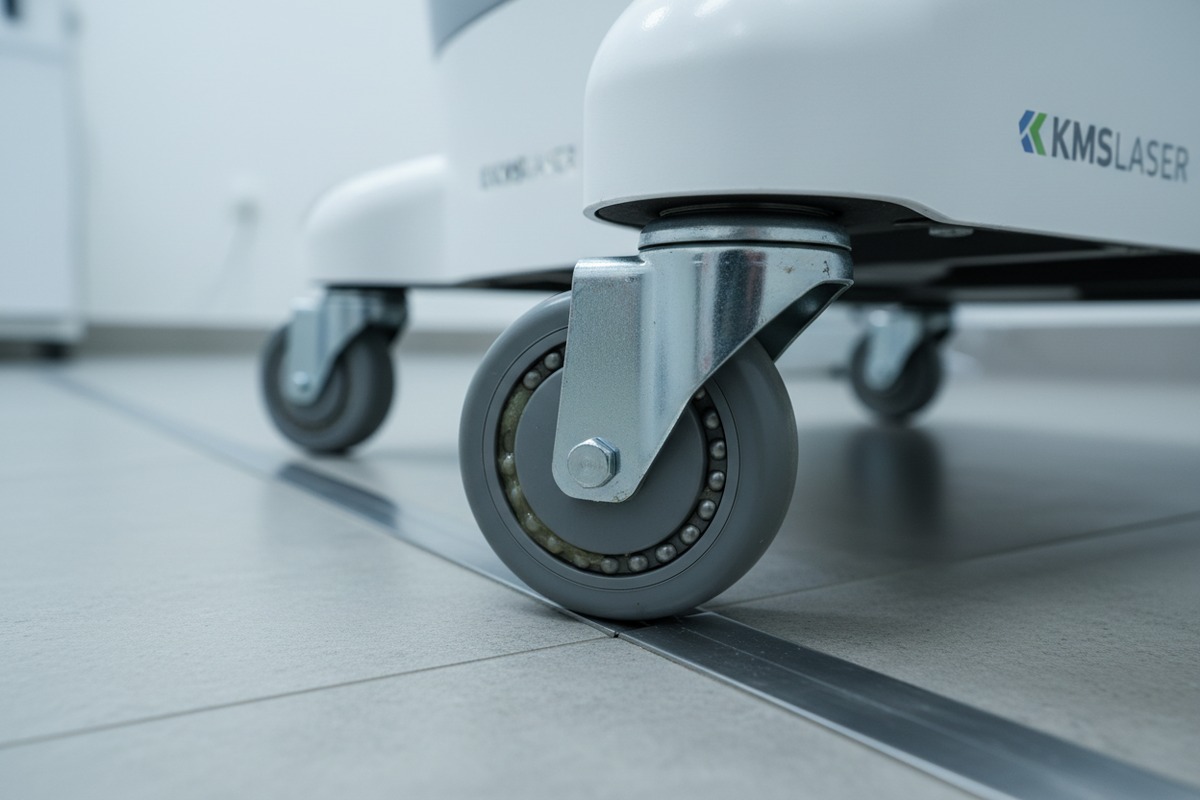
Understanding the Load Capacity Equation
When you look at a spec sheet for a pressotherapy machine, you might see a weight of 25kg to 40kg Safety Factor of 300% 5. It sounds manageable, but in a classroom setting, that weight acts differently. When a student pushes the machine quickly across a room and hits a bump, the force exerted on the leading caster can momentarily double Shore A Durometer scale 6.
To ensure durability, you must calculate the Safe Working Load (SWL) per caster. Do not simply divide the machine's weight by four Salt Spray Test (ASTM B117) 7. In the real world, floors are rarely perfectly level. Often, a four-wheel machine is only truly supported by three wheels at any given moment due to uneven tiles.
The Formula for Classroom Safety
We recommend using this formula when evaluating caster specs:
(Total Machine Weight + Estimated Maximum Payload) ÷ 3 = Minimum Load Capacity Per Caster.
For example, if your machine weighs 40kg and you store 5kg of accessories on it:
(40kg + 5kg) ÷ 3 = 15kg per caster.
While 15kg sounds low, this is the absolute minimum. For educational environments where equipment is moved daily, we advise a Safety Factor of 300%. This means you should look for casters rated for at least 45-50kg each.
Material Strength: Housing Matters
The wheel is important, but the housing (the yoke) holds it all together.
- Stamped Steel: This is the gold standard for classroom mobility. It resists bending when the machine is pushed sideways. We use zinc-plated steel 8 to prevent rust.
- Plastic/Nylon Composite: Common on cheaper units. These can crack if the machine collides with a doorframe.
- Welded Steel: Overkill for beauty machines, usually reserved for heavy industrial carts.
Comparison of Caster Bearing Types
The bearing determines how easily the wheel starts rolling under load.
| Bearing Feature | Performance in Classroom | Recommendation |
|---|---|---|
| Plain Bearing | High friction; hard to push initially. No moving parts but wears out the axle. | Avoid for heavy machines. |
| Roller Bearing | Carries heavy loads well but can be noisy. Requires lubrication. | Acceptable for budget models. |
| Precision Ball Bearing | Lowest friction; silent and smooth. Sealed variants resist hair and dust. | Highly Recommended. |
Which caster wheel types will protect my salon floors and minimize noise when moving equipment between training stations?
In our experience supplying high-end aesthetics schools, nothing ruins a class faster than the screeching sound of hard plastic wheels on tile. We deliberately select wheel materials that act as a buffer between the machine’s chassis and the floor, ensuring that the learning environment remains professional and quiet.
The best caster wheel types for protecting floors and reducing noise are soft Polyurethane (PU) or Thermoplastic Rubber (TPR) with a Shore A hardness between 75 and 85. These materials provide a cushioned tread that rejects debris and glides silently over tile or laminate, unlike hard nylon wheels which can scratch surfaces and create excessive noise.
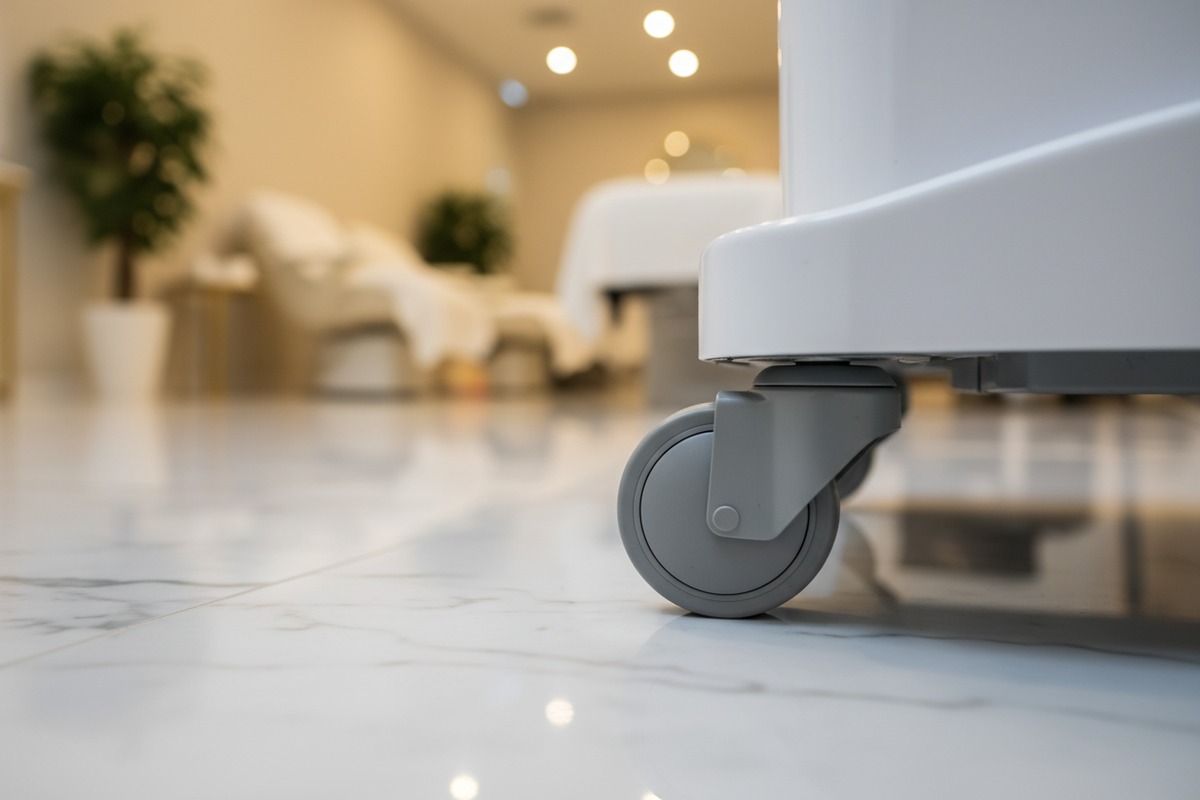
The Science of "Quiet" Mobility
Noise in a classroom is distracting. The sound of a machine rolling is determined by the wheel's hardness and its ability to absorb vibration. Hard wheels (like Nylon or Cast Iron) transmit 100% of the floor's vibration into the machine chassis, creating a rumbling noise. Soft wheels absorb this energy.
We measure wheel hardness using the Shore A Durometer scale.
- Too Soft (< 65 Shore A): Hard to push. It feels like driving on a flat tire.
- Too Hard (> 95 Shore A): Noisy and scratches floors.
- The Sweet Spot (75-85 Shore A): This range, typically found in high-quality Polyurethane (PU) and Thermoplastic Rubber (TPR), offers the perfect balance. It rolls easily but stays quiet.
Protecting Your Floors
Salon and academy floors are expensive investments—usually polished concrete, laminate, or high-gloss tile. A damaged wheel can gouge these surfaces.
- Debris Rejection: Classroom floors accumulate hair and dust. Sticky rubber wheels pick this up, eventually seizing the bearing. PU wheels are slightly less sticky and shed debris better.
- Thread Guards: Look for casters with "thread guards 9"—small plastic caps covering the axle. These prevent hair from winding around the axle, which is the #1 cause of wheel failure in beauty salons.
- Non-Marking Compounds: Black rubber often leaves streak marks (like shoe scuffs). Always verify the caster is specified as "Non-Marking," usually grey, blue, or transparent.
Wheel Profile: Flat vs. Crowned
The shape of the wheel touching the floor changes the maneuverability.
- Flat Tread: More surface area touches the floor. Good for spreading weight, but harder to turn.
- Crowned (Round) Tread: Only a thin strip touches the floor. This makes the machine much easier to pivot in tight classroom spaces and reduces friction noise. We prefer crowned treads for all our mobile units.
Material Performance Comparison
| Material | Noise Level | Floor Protection | Rollability | Best Use Case |
|---|---|---|---|---|
| Nylon (Hard Plastic) | High (Loud) | Low (Can scratch) | High (Easy) | Carpeted offices (Avoid in Salons) |
| Phenolic (Resin) | Alto | Medio | Alto | Industrial factories |
| Polyurethane (PU) | Low (Quiet) | High (Safe) | Medio-Alto | Salons & Hospitals |
| Thermoplastic Rubber (TPR) | Muy bajo | Very High | Medio | Quiet Classrooms |
What features should I check in the locking mechanism to ensure the machine stays securely in place during a demonstration?
During our safety audits, we simulate worst-case scenarios, such as a student bumping into a machine while tubes are connected to a client. If the machine rolls away, it can pull on the suit connections or even tip over. Secure braking is not just a convenience; it is a critical safety requirement for any educational environment.
You should verify that the locking mechanism is a “Total Lock” system, which engages both the wheel rotation and the swivel raceway simultaneously. Check that the brake pedal is made of metal or reinforced composite, is easily accessible with a foot, and requires a deliberate force to disengage, preventing accidental release during active demonstrations.
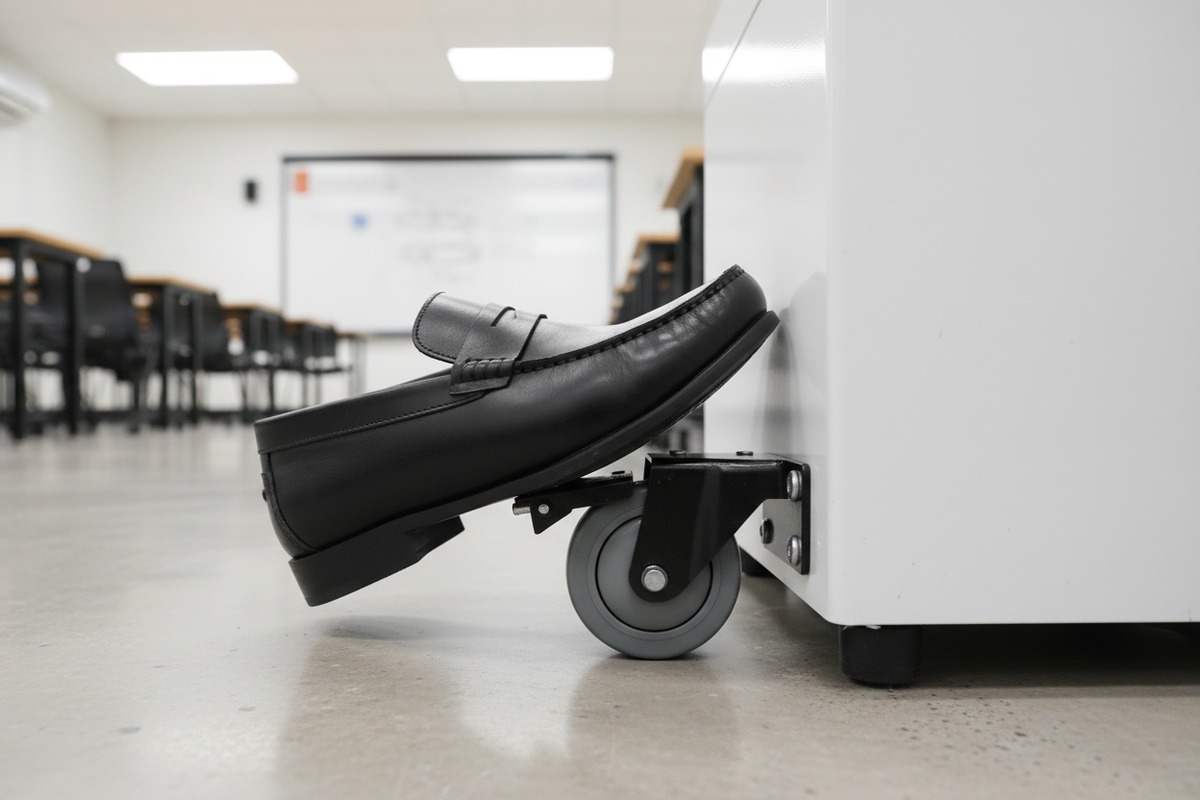
The Danger of "Side Locks"
Many budget machines use a simple side lock. This is a friction brake that presses a piece of metal against the side of the wheel.
- El Problema: It stops the wheel from rolling forward, but it does not stop the caster from swiveling. If you bump the machine, the base can still swing around, causing the machine to shift position.
- La Solución: Total Lock Brakes. When you press the pedal, it locks the wheel axle AND the swivel head. The machine becomes a solid, immovable island. This is essential for precision work like pressotherapy setup.
Ergonomics of Braking
In a classroom, you are often standing over a student, demonstrating how to wrap the compression suit. You don't want to bend down to lock the wheels by hand.
- Pedal Placement: The brake pedal should be on the leading edge of the caster.
- Activation Force: It should be easy to press down (lock) but require a distinct "toe-under" lift or a separate release button to unlock. This prevents accidental unlocking if someone steps on the base.
- Shoe Friendly: The pedal surface should be textured. In salons, staff often wear soft-soled shoes; sharp metal pedals can be painful or damage footwear.
Testing the "Creep" Factor
When evaluating a sample machine, perform the "45-Degree Push Test".
- Lock all four casters.
- Push the machine firmly at a 45-degree angle from the top corner.
- Fail: If the wheels skid across the floor or the swivel turns.
- Pass: If the machine tries to tip before it slides. This indicates the rubber grip and lock integrity are sufficient.
Brake Mechanism Durability
Plastic brake tabs are the first thing to break on imported machines. They become brittle and snap off. We insist on internal metal braking components, even if the pedal cover is plastic.
| Característica | Standard Side Brake | Total Lock Brake | Directional Lock |
|---|---|---|---|
| Stops Rolling? | Sí | Sí | No (Steering only) |
| Stops Swiveling? | No | Sí | Sí |
| Stability Level | Bajo | Alto | Medio |
| Recommended For | Office Chairs | Medical Equipment | Long Corridor Transport |
How do I evaluate a Chinese manufacturer’s quality control standards for the casters used on my private-label beauty machines?
When we source components for our production lines, we don’t just trust the catalog photos; we visit the sub-suppliers to see their testing rigs. For a buyer like you, evaluating QC from a distance can be tricky, but specific questions about testing protocols can reveal whether a manufacturer values durability or is just cutting costs.
Evaluate quality control by requesting specific test reports such as the Salt Spray Test for corrosion resistance and the Dynamic Cycle Test for bearing life. Ask the manufacturer if they perform incoming material inspection (IQC) on casters and if they can provide a Certificate of Conformance ensuring the wheels meet the EN 12531 standard for medical bed casters.
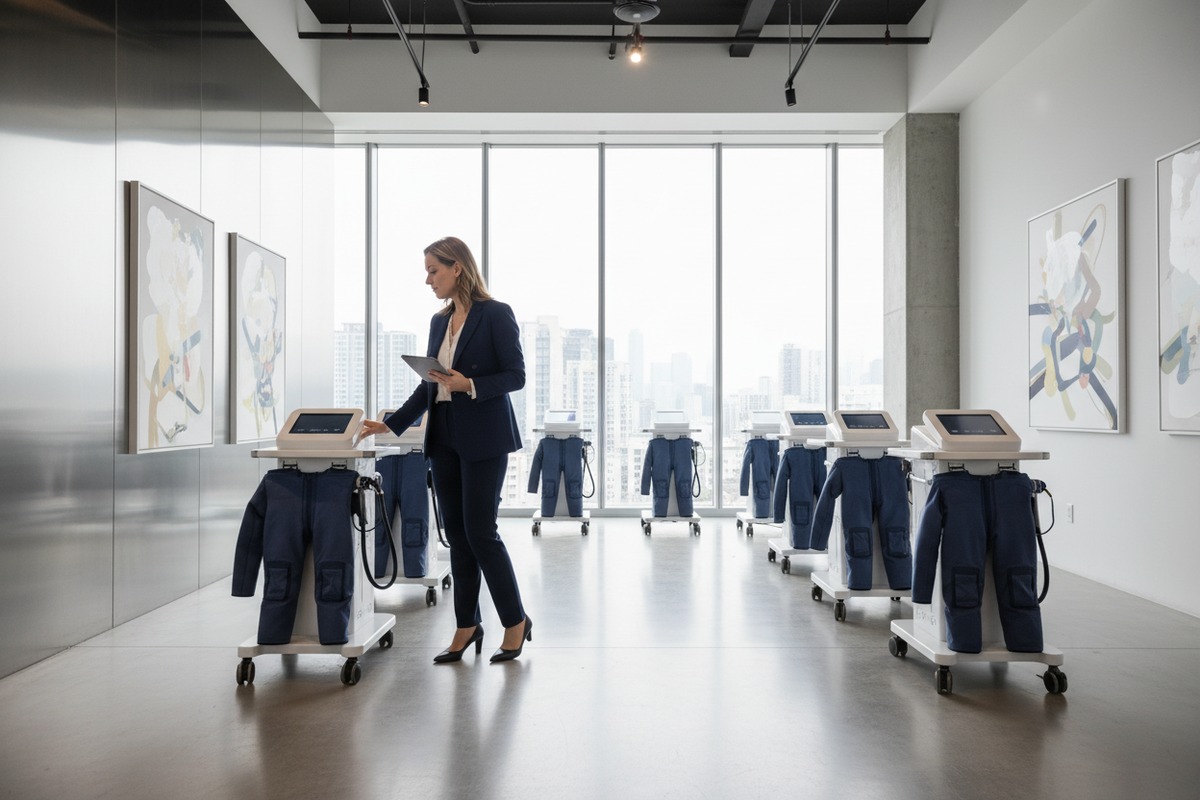
The "Hidden" Supply Chain
In China, a beauty machine factory rarely manufactures its own wheels. We buy them from caster specialists. Low-end assembly shops will buy "furniture grade" casters from the local hardware market. High-end manufacturers order "medical grade" casters directly from certified factories.
How do you tell the difference? You ask for the Component Specification Sheet. If the supplier cannot provide a datasheet detailing the bearing type, load rating, and material composition of the caster specifically, they are likely using generic market parts.
Critical Tests to Request
You don't need to fly to China to verify quality. Ask your supplier for video proof or reports of these three tests:
- Salt Spray Test (ASTM B117): This checks if the metal yoke will rust. In a spa environment with humidity and saline products, rust is a killer. A good caster should pass a 24-hour or 48-hour salt spray test without red rust.
- Obstacle Impact Test: The machine is loaded with weight and run over a small metal bar thousands of times. This tests if the wheel hub will crack.
- Static Load Test: A heavy weight (e.g., 200kg) is placed on the caster for 24 hours to see if the wheel develops a "flat spot."
Lista de Verificación de Inspección Visual
If you have ordered a sample machine, check these physical signs of QC:
- No Wobble: Lift the machine. Wiggle the wheel with your hand. It should feel tight, with no play in the axle.
- Grease Fittings: Higher quality casters often have visible grease points or are clearly "sealed for life." Open bearings with visible grease leakage are a bad sign.
- Uniformity: Do all four casters look identical? Sometimes factories mix batches. The branding on the wheel sidewall should be consistent.
The "Drop Test" Protocol
We recommend you perform a simple test when you receive your sample: lift the machine 5 inches off the ground and drop it (on a non-fragile floor!).
- Result A: A solid "thud." The machine stays composed.
- Result B: A rattling sound or a caster pops out.
This simulates the rough handling of shipping couriers. If the casters survive this, they will likely survive the classroom.
Conclusión
Evaluating caster quality is an often-overlooked but vital step in sourcing pressotherapy machines for educational use. By focusing on dynamic load capacity, insisting on "Total Lock" braking systems, and selecting polyurethane materials that respect salon floors, you ensure your equipment remains a safe, professional asset in the classroom. Always challenge your manufacturer to provide test data—durability starts at the ground level.
Notas al pie
1. Provides a medical overview of the lymphatic system. ↩︎
2. Replaced HTTP 404 Wikipedia link with a relevant, working Wikipedia page on intermittent pneumatic compression, which directly relates to pressotherapy machines. ↩︎
3. Defines the maximum safe operational weight. ↩︎
4. Defines static load in an engineering context. ↩︎
5. Explains the concept of a safety factor in design. ↩︎
6. Explains the standard for measuring material hardness. ↩︎
7. Describes the standard test for corrosion resistance. ↩︎
8. Details the benefits of zinc plating for corrosion resistance. ↩︎
9. Replaced HTTP 403 link with a relevant blog post explaining what thread guards are and how they function on casters. ↩︎

 English
  Español de México
  Deutsch
  Français
  العربية
  Русский