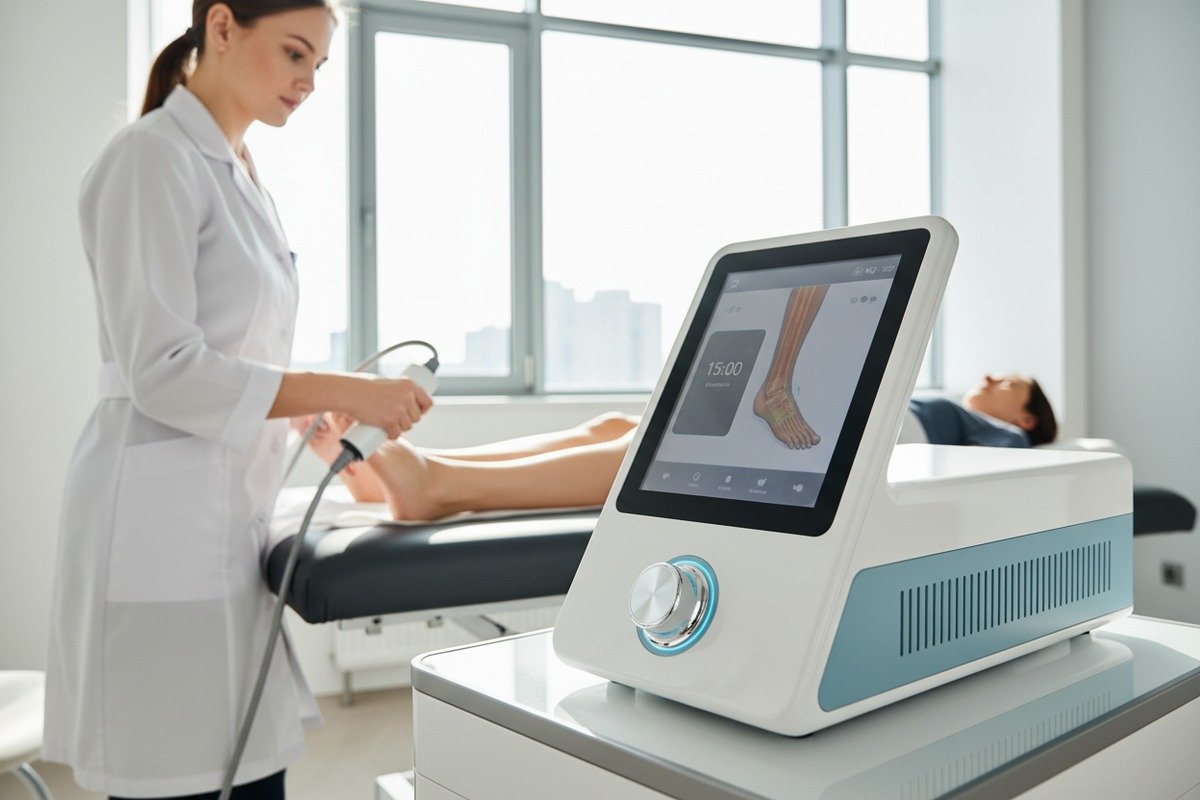
Cuando empezamos a diseñar equipo de terapia de ondas de choque 1 en nuestro piso de producción, los dueños de clínicas nos hacían la misma pregunta. Necesitaban una sincronización precisa para programar citas. Querían maximizar el rendimiento de los pacientes sin sacrificar la calidad del tratamiento. Esta incertidumbre crea verdaderos dolores de cabeza comerciales para los profesionales de todas partes.
Una sesión de tratamiento estándar de terapia de ondas de choque suele durar entre 5 y 30 minutos, y la mayoría de las sesiones se sitúan en el rango de 10 a 20 minutos. La aplicación real de las ondas de choque dura de 3 a 5 minutos, mientras que la cita completa, incluida la preparación y las indicaciones posteriores al tratamiento, amplía el tiempo total en la clínica.
Comprender la duración de la sesión te ayuda a planificar tu horario de clínica de manera efectiva. Permíteme guiarte a través de todo lo que necesitas saber sobre la sincronización del tratamiento, la frecuencia de las sesiones y cómo optimizar el flujo de trabajo de tu práctica.
¿Cuánto tiempo debo esperar que dure una sesión estándar de terapia de ondas de choque?
Nuestro equipo de ingeniería ha probado cientos de protocolos de tratamiento 2 mientras desarrollábamos nuestros dispositivos. Notamos variaciones significativas en cómo diferentes clínicas estructuran sus sesiones. Esta inconsistencia a menudo confunde a los profesionales que son nuevos en la oferta de servicios de terapia de ondas de choque.
Una sesión estándar de terapia de ondas de choque dura entre 10 y 20 minutos para la mayoría de las afecciones. La aplicación activa de ondas de choque generalmente requiere solo de 3 a 5 minutos, pero el tiempo total de la cita incluye la admisión del paciente, la aplicación de gel, el posicionamiento, la administración del tratamiento y las instrucciones posteriores a la sesión.
Desglose del cronograma de tratamiento
La duración de la sesión depende de varios factores interconectados. Permíteme explicar cada componente de una cita típica.
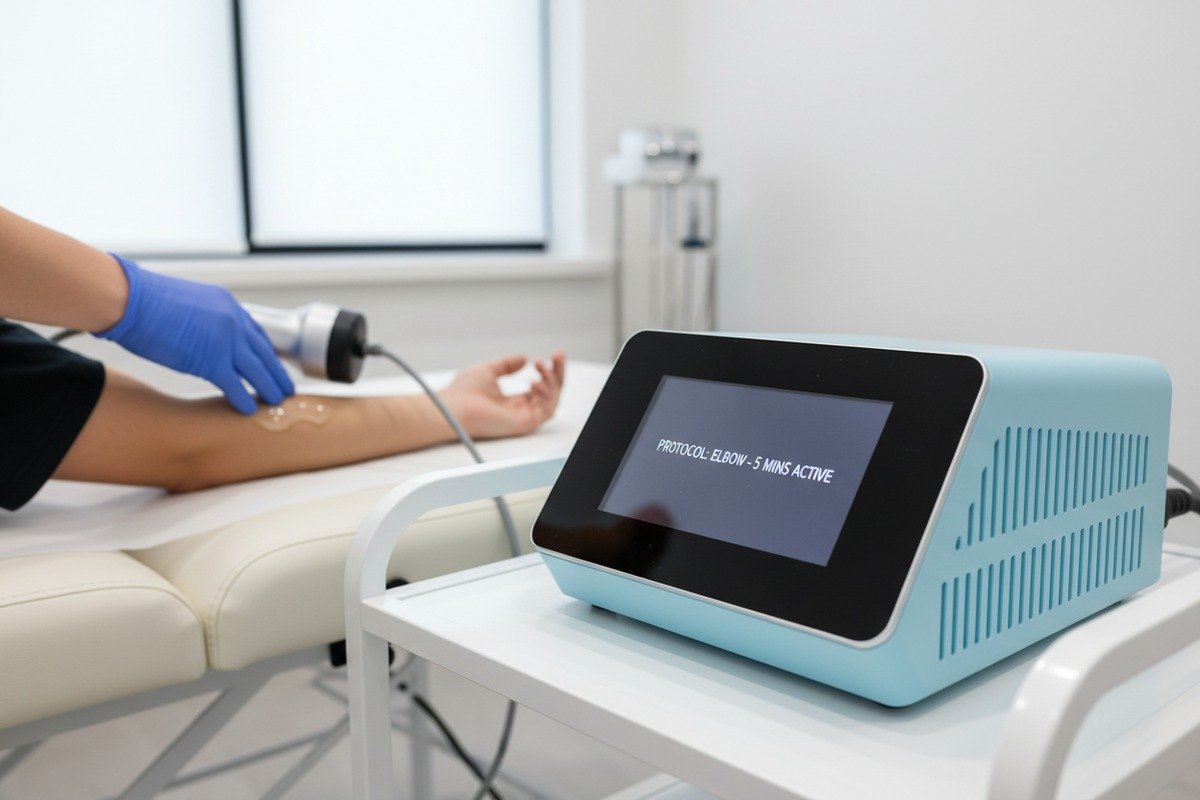
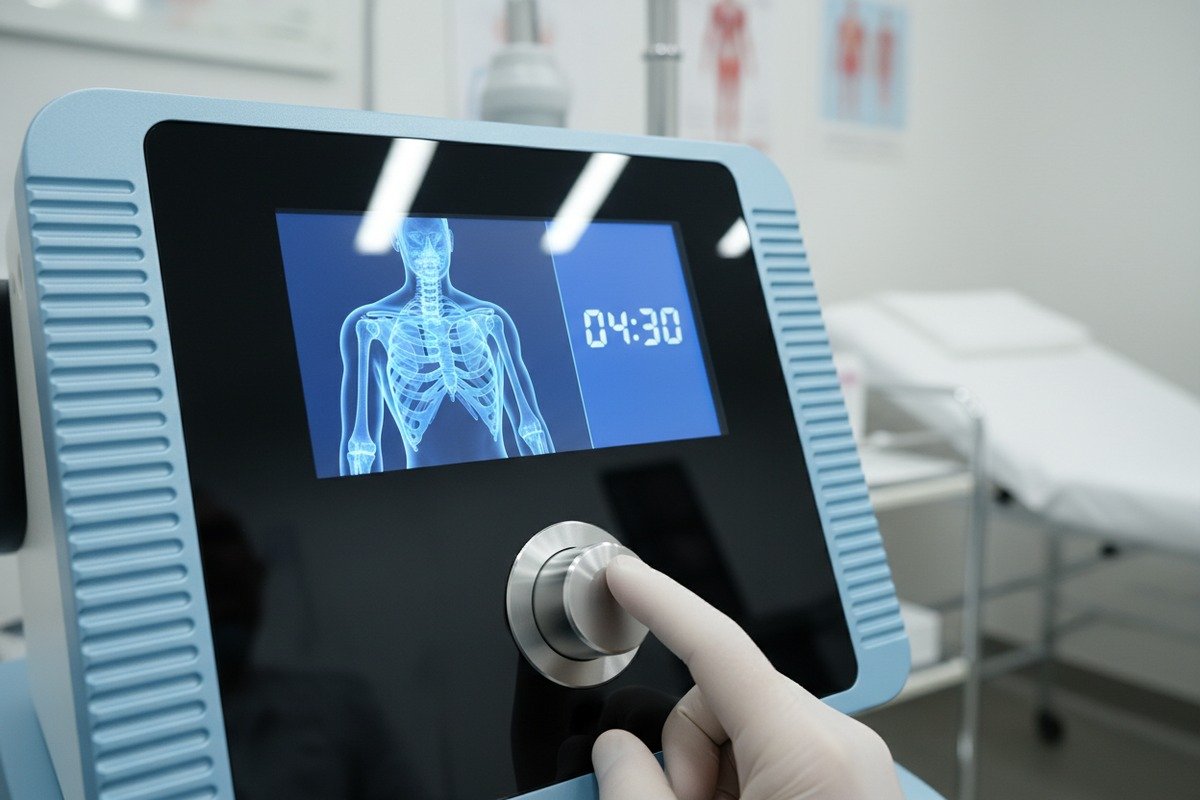
Primero, la preparación del paciente toma de 2 a 5 minutos. Esto incluye revisar el área de tratamiento, aplicar gel conductor 3, y posicionar al paciente correctamente. Nuestros dispositivos cuentan con interfaces intuitivas de pantalla táctil que muestran diagramas anatómicos 4, lo que ayuda a los profesionales a identificar rápidamente las zonas de tratamiento óptimas.
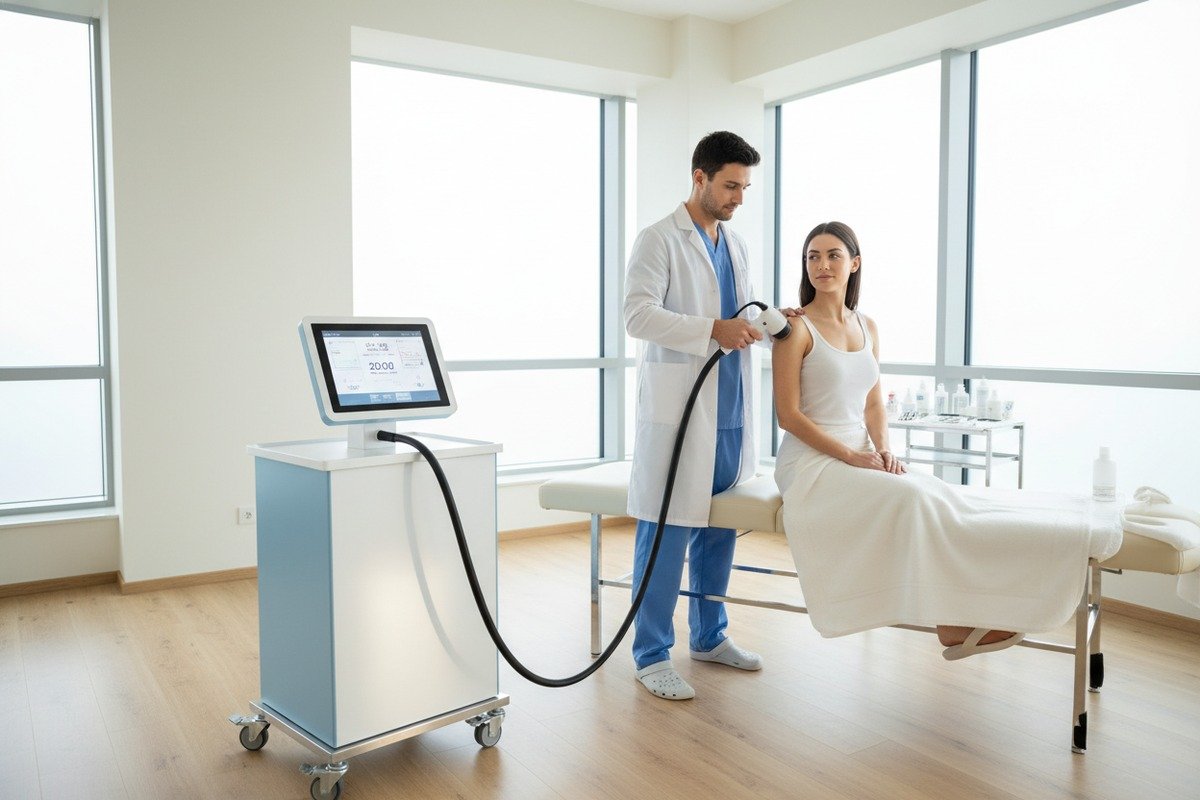
Segundo, la aplicación real de ondas de choque dura de 3 a 10 minutos, dependiendo de la condición. Durante esta fase, el aplicador de mano administra aproximadamente 2000 ondas de choque por sesión. La intensidad se puede ajustar según los comentarios del paciente.
Tercero, la orientación posterior al tratamiento requiere de 3 a 5 minutos. Los profesionales explican las instrucciones de cuidados posteriores y programan citas de seguimiento.
Duración de la sesión por tipo de tratamiento
| Área de Tratamiento | Tiempo de Tratamiento Activo | Tiempo total de la cita |
|---|---|---|
| Dolor de talón (Fascitis plantar) | 3-5 minutes | 15-20 minutos |
| Disfunción eréctil | 5-10 minutos | 15-20 minutos |
| Tendinitis del hombro | 5-8 minutes | 20-25 minutos |
| Codo de Tenista | 3-5 minutes | 15-20 minutos |
| Bursitis de cadera | 5-10 minutos | 20-30 minutos |
Diferencias entre ondas de choque enfocadas y radiales
El tipo de terapia de ondas de choque afecta la duración de la sesión. Terapia de ondas de choque focalizadas 5 penetra más profundamente en el tejido y requiere una focalización más precisa. Este enfoque suele llevar más tiempo porque los profesionales deben dirigir cuidadosamente la energía a estructuras anatómicas específicas.
Terapia de ondas de choque radiales 6 dispersa la energía sobre un área más amplia. Las sesiones tienden a ser más cortas ya que se necesita menos precisión en la focalización. Muchas clínicas de fisioterapia prefieren los dispositivos radiales para tratar afecciones superficiales.
Cuando calibran nuestros dispositivos durante las pruebas de calidad, los protocolos de terapia enfocada promedian de 20 a 30 minutos, mientras que los protocolos radiales suelen terminar en 10 a 20 minutos.
¿Cuántas sesiones necesito programar para que mis clientes vean resultados óptimos?
A través de nuestra experiencia trabajando con propietarios de clínicas en los Estados Unidos y Europa, hemos recopilado comentarios sustanciales sobre los resultados del tratamiento. Muchos profesionales subestiman inicialmente la importancia de múltiples sesiones. Los tratamientos únicos rara vez brindan resultados duraderos para afecciones crónicas.
La mayoría de los pacientes requieren 3-6 sesiones de terapia de ondas de choque para lograr resultados óptimos. Las sesiones suelen espaciarse cada 5-10 días o semanalmente para permitir la curación de los tejidos entre tratamientos. Los estudios muestran tasas de éxito del 87% en el seguimiento a los 6 meses cuando los pacientes completan ciclos de tratamiento completos.

Comprendiendo el Cronograma de Curación
La terapia de ondas de choque funciona estimulando el cuerpo mecanismos de reparación naturales 7. Las ondas acústicas crean microtraumatismos controlados que desencadenan procesos regenerativos. Esta curación lleva tiempo.
El alivio inmediato del dolor se produce en algunos pacientes después de la primera sesión. Sin embargo, la regeneración de tejidos continúa durante semanas. Los beneficios completos suelen aparecer entre 4 y 11 semanas después de completar el ciclo de tratamiento.
Nuestro equipo de control de calidad rastrea los comentarios de las clínicas que utilizan nuestro equipo. Los datos muestran consistentemente que los pacientes que completan de 3 a 6 sesiones informan resultados significativamente mejores que aquellos que se detienen después de 1 a 2 tratamientos.
Protocolos de Tratamiento Recomendados
| Condición | Número de Sesiones | Espaciado de Sesiones | Cronograma de Resultados Esperados |
|---|---|---|---|
| Fascitis Plantar | 3-5 sesiones | Semanal | 4-8 semanas post-tratamiento |
| Tendinitis Crónica | 3-6 sesiones | 5-10 días de diferencia | 6-12 semanas post-tratamiento |
| Disfunción eréctil | 6 sesiones | Dos veces por semana | 4-6 semanas post-tratamiento |
| Hombro Calcificado | 3-4 sesiones | Semanal | 8-12 semanas post-tratamiento |
| Puntos Gatillo Musculares | 2-4 sesiones | Semanal | 2-4 semanas post-tratamiento |
Por qué las sesiones únicas no son suficientes
Algunos profesionales cuestionan si las sesiones múltiples son realmente necesarias. La evidencia apoya firmemente completar los ciclos de tratamiento completos.
Un estudio a largo plazo sobre tendinitis del hombro demostró tasas de éxito del 87% cuando los pacientes recibieron múltiples sesiones a lo largo de un cronograma estructurado. Los tratamientos de sesión única mostraron una efectividad significativamente menor.
El cuerpo necesita tiempo entre sesiones para responder a la estimulación. Espaciar los tratamientos con 5-10 días de diferencia permite que la inflamación disminuya mientras continúan los procesos de curación. Comprimir múltiples sesiones en un corto período puede reducir la efectividad.
Consideraciones sobre el cumplimiento del paciente
De nuestras conversaciones con los dueños de clínicas, el cumplimiento del paciente 8 representa un desafío importante. Explicar la importancia de completar los ciclos de tratamiento completos mejora sustancialmente los resultados.
Los pacientes que se detienen después de experimentar alivio inicial a menudo ven regresar los síntomas. Aquellos que completan las sesiones recomendadas reportan beneficios más duraderos, que a veces se extienden por meses o años.
Recomendamos proporcionar planes de tratamiento por escrito en la primera consulta. Las expectativas claras ayudan a los pacientes a comprometerse con el ciclo completo.
¿Puedo ajustar la duración del tratamiento según la condición específica que estoy tratando?
Cuando diseñamos protocolos de tratamiento para el software de nuestro dispositivo, incorporamos flexibilidad en cada parámetro. Nuestra interfaz de pantalla táctil permite a los profesionales personalizar la duración de la sesión, la intensidad y el número de ondas de choque. Esta adaptabilidad es importante porque las diferentes afecciones realmente requieren diferentes enfoques.
Sí, la duración del tratamiento debe ajustarse según la afección específica que se esté tratando. Las afecciones superficiales como el dolor de talón pueden requerir solo de 3 a 5 minutos de tratamiento activo, mientras que los problemas ortopédicos más profundos pueden necesitar de 10 a 15 minutos. La tolerancia del paciente y los objetivos del tratamiento también influyen en la duración óptima de la sesión.
Directrices de protocolo específicas de la condición
Las diferentes estructuras anatómicas responden a diferentes intensidades y duraciones de tratamiento. Comprender estas diferencias ayuda a los profesionales a brindar una atención efectiva.
Las afecciones superficiales como la fascitis plantar y el codo de tenista responden bien a tratamientos más cortos y enfocados. Los tejidos afectados se encuentran cerca de la superficie de la piel, lo que requiere una menor penetración de energía. Las sesiones suelen completarse en un total de 15 a 20 minutos.
Las estructuras más profundas, como la bursitis de cadera o las afecciones crónicas del hombro, requieren tiempos de tratamiento más largos. Se deben alcanzar más ondas de choque en los tejidos que se encuentran más debajo de la superficie. Estas sesiones a menudo se extienden a 25-30 minutos.
Ajuste según la tolerancia del paciente
La comodidad del paciente juega un papel importante en la efectividad del tratamiento. La mayoría de las personas describen la terapia de ondas de choque como tolerable, experimentando sensaciones de golpeteo y molestias leves.
Sin embargo, la tolerancia al dolor varía significativamente entre individuos. Nuestros dispositivos cuentan con configuraciones de intensidad ajustables controladas a través de una sola perilla metálica. Los profesionales pueden comenzar con intensidades más bajas y aumentar gradualmente según los comentarios del paciente.
Para pacientes con baja tolerancia al dolor, considere estos ajustes:
- Comience con configuraciones de intensidad más bajas
- Utilice sesiones iniciales más cortas para desarrollar tolerancia
- Permita pausas breves durante el tratamiento si es necesario
- Extienda ligeramente las sesiones totales para administrar ondas de choque adecuadas a intensidades cómodas
Parámetros de tratamiento por condición
| Categoría de Condición | Duración del tratamiento activo | Ondas de choque recomendadas | Nivel de intensidad |
|---|---|---|---|
| Tendinopatías superficiales | 3-5 minutes | 1500-2000 | Bajo a medio |
| Afecciones de tejidos profundos | 8-12 minutos | 2500-3500 | Medio a Alto |
| Disfunción eréctil | 5-10 minutos | 2000-3000 | Bajo a medio |
| Depósitos calcificados | 5-8 minutes | 2000-2500 | Medio a Alto |
| Terapia de Puntos Gatillo | 2-4 minutos por área | 500-1000 por punto | Bajo a medio |
Integración con atención integral
Muchas clínicas integran la terapia de ondas de choque en programas de tratamiento más amplios. Cuando se combina con ejercicios de rehabilitación, terapia manual u otras modalidades, la cita general se extiende más allá de la aplicación de ondas de choque por sí sola.
Esta integración puede mejorar los resultados. Una parte de cada sesión puede incluir la demostración de ejercicios complementarios o la discusión de modificaciones de la actividad. La "sesión" se convierte en parte de un enfoque terapéutico integral en lugar de un tratamiento aislado.
Nuestra experiencia trabajando con clínicas de fisioterapia demuestra que los enfoques combinados a menudo producen una mejor satisfacción del paciente y resultados clínicos.
¿Cómo afectará la duración de la sesión a mi capacidad diaria de citas y a la eficiencia de mi negocio?
Nuestro equipo de ventas discute regularmente la optimización de la programación con los propietarios de las clínicas. Este tema surge en casi todas las conversaciones sobre la compra de equipos. Los profesionales inteligentes entienden que la duración del tratamiento impacta directamente el potencial de ingresos y el acceso del paciente.
La duración de la sesión afecta significativamente la capacidad diaria de citas. Con sesiones de 15-20 minutos, una sola sala de tratamiento puede acomodar a 15-20 pacientes de ondas de choque al día. Protocolos eficientes que utilizan sesiones enfocadas de 10-15 minutos pueden aumentar la capacidad a más de 25 pacientes sin comprometer la calidad del tratamiento.
Calculando su capacidad de tratamiento
Comprender las matemáticas de las citas le ayuda a planificar la dotación de personal y las proyecciones de ingresos. Permítame desglosar escenarios de programación realistas.
Un día típico de clínica de 8 horas proporciona aproximadamente 480 minutos de tiempo de tratamiento. Sin embargo, debe tener en cuenta los descansos, las tareas administrativas y la rotación de salas.
El tiempo de tratamiento realista disponible suele oscilar entre 360 y 400 minutos diarios. Dividir esto por la duración media de la sesión revela su capacidad.
Capacidad diaria por duración de la sesión
| Duración media de la sesión | Tiempo de reserva | Citas por hora | Capacidad diaria (8 horas) |
|---|---|---|---|
| 10 minutos | 5 minutos | 4 pacientes | 24-28 pacientes |
| 15 minutos | 5 minutos | 3 pacientes | 18-21 pacientes |
| 20 minutos | 5 minutos | 2.5 pacientes | 15-18 pacientes |
| 30 minutos | 5 minutos | 1.7 pacientes | 10-12 pacientes |
Estrategias de optimización de la eficiencia
Varios enfoques pueden maximizar su capacidad de tratamiento sin sacrificar la calidad.
Primero, optimice los procedimientos de admisión de pacientes. Nuestros dispositivos muestran diagramas anatómicos que aceleran la identificación de la zona de tratamiento. El uso de formularios de admisión estandarizados reduce el tiempo de consulta.
Segundo, prepare las salas de tratamiento entre citas. Tener el gel, las ayudas de posicionamiento y la documentación listos minimiza los retrasos en la transición.
Tercero, considere bloques dedicados de tratamiento con ondas de choque. Agrupar citas similares reduce el cambio mental y mejora la eficiencia del flujo de trabajo.
Cuarto, capacite al personal en protocolos eficientes. Cuando nuestros clientes invierten en capacitación adecuada, los tiempos de sesión a menudo disminuyen entre 3 y 5 minutos sin afectar los resultados.
Análisis de impacto en los ingresos
Las sesiones más cortas con efectividad mantenida aumentan directamente el potencial de ingresos. Considere este ejemplo:
Reducir el tiempo promedio de sesión de 25 minutos a 18 minutos agrega aproximadamente 5-7 espacios de citas adicionales al día. Con las tarifas de tratamiento típicas, esto representa aumentos sustanciales de ingresos mensuales.
Sin embargo, la calidad debe seguir siendo la prioridad. Acelerar los tratamientos para maximizar el volumen daña en última instancia los resultados del paciente y la reputación de la clínica. El objetivo es la eficiencia, no la velocidad.
Equilibrando calidad y rendimiento
Las clínicas más exitosas con las que trabajamos encuentran un punto de equilibrio. Optimizan los flujos de trabajo para reducir el tiempo perdido, al tiempo que garantizan que cada paciente reciba una atención exhaustiva.
Nuestras pantallas LCD integradas que muestran datos técnicos ayudan a los profesionales a monitorear los parámetros de tratamiento en tiempo real. Esta tecnología apoya tanto la eficiencia como el control de calidad.
La experiencia del paciente es importante para el éxito empresarial a largo plazo. Las clínicas que reportan alta satisfacción del paciente tienden a programar citas ligeramente más largas, generando lealtad que produce referencias.
Conclusión
Las sesiones de terapia de ondas de choque suelen durar entre 10 y 20 minutos, y se necesitan entre 3 y 6 tratamientos para obtener resultados óptimos. Ajuste la duración según las condiciones específicas y las necesidades del paciente. La programación inteligente puede aumentar significativamente la eficiencia de su clínica, manteniendo al mismo tiempo excelentes estándares de atención al paciente.
Notas al pie
1. Proporciona una visión general de los dispositivos de terapia de ondas de choque de STORZ Medical, su historia y aplicaciones. ↩︎
2. El artículo de PMC detalla las mejores prácticas y consideraciones para los protocolos de tratamiento de ESWT. ↩︎
3. Página del producto de un gel conductor especialmente desarrollado para dispositivos de terapia de ondas de choque. ↩︎
4. Wikipedia proporciona una visión general completa de los gráficos anatómicos y sus usos. ↩︎
5. El artículo de PMC explica los mecanismos y aplicaciones de la terapia de ondas de choque focalizada. ↩︎
6. El artículo de la revista MDPI detalla el mecanismo de acción de la tecnología de ondas de choque extracorpóreas radiales. ↩︎
7. El artículo de PMC analiza los efectos biológicos de la ESWT en el tejido tendinoso y la regeneración. ↩︎
8. Wikipedia explica la adherencia médica, su importancia y los factores que influyen en el cumplimiento del paciente. ↩︎

 English
  Español de México
  Deutsch
  Français
  العربية
  Русский